

As a seasoned supplier of tempering furnaces, I often encounter inquiries about the suitability of our equipment for different materials. One question that has come up frequently in recent times is whether a tempering furnace can be used for tempering magnesium alloys. In this blog post, I will delve into this topic, exploring the technical aspects, challenges, and potential solutions associated with tempering magnesium alloys in our tempering furnaces.
Understanding Magnesium Alloys and Tempering
Magnesium alloys are known for their high strength-to-weight ratio, excellent casting properties, and good corrosion resistance. These characteristics make them popular in various industries, including automotive, aerospace, and electronics. Tempering is a heat treatment process that involves heating a metal to a specific temperature below its critical point and then cooling it at a controlled rate. This process helps to relieve internal stresses, improve ductility, and enhance the overall mechanical properties of the metal.
Technical Feasibility of Tempering Magnesium Alloys in Tempering Furnaces
The technical feasibility of tempering magnesium alloys in a tempering furnace depends on several factors, including the furnace's temperature control capabilities, atmosphere control, and heating uniformity.
Temperature Control
Magnesium alloys have relatively low melting points compared to other metals, typically ranging from 450°C to 650°C. Therefore, the tempering furnace must be capable of precise temperature control within this range. Our tempering furnaces are equipped with advanced temperature control systems that can maintain a stable temperature with an accuracy of ±1°C, ensuring that the magnesium alloys are tempered at the optimal temperature.
Atmosphere Control
Magnesium is highly reactive and can easily oxidize when exposed to air at high temperatures. To prevent oxidation during the tempering process, an inert atmosphere, such as nitrogen or argon, is required. Our Atmosphere Protection Box Type Tempering Furnace is specifically designed to provide a controlled atmosphere, effectively protecting the magnesium alloys from oxidation and ensuring high-quality tempering results.
Heating Uniformity
Uniform heating is crucial for achieving consistent tempering results across the entire workpiece. Our tempering furnaces are designed with advanced heating elements and airflow systems to ensure uniform temperature distribution throughout the furnace chamber. This helps to minimize thermal gradients and prevent uneven tempering, resulting in improved mechanical properties and dimensional stability of the magnesium alloys.
Challenges and Solutions in Tempering Magnesium Alloys
While tempering magnesium alloys in a tempering furnace is technically feasible, there are some challenges that need to be addressed to ensure successful tempering.
Flammability
Magnesium is highly flammable, especially in the form of fine particles or powder. Therefore, proper safety measures must be taken during the tempering process to prevent the risk of fire or explosion. Our tempering furnaces are equipped with safety features such as explosion-proof doors, fire suppression systems, and gas monitoring devices to ensure safe operation.
Oxidation and Surface Quality
As mentioned earlier, magnesium alloys are prone to oxidation at high temperatures. In addition to using an inert atmosphere, proper surface preparation and cleaning of the magnesium alloys before tempering are essential to prevent oxidation and improve surface quality. Our technical team can provide guidance on the best practices for surface preparation and cleaning to ensure optimal tempering results.
Microstructure and Mechanical Properties
The tempering process can significantly affect the microstructure and mechanical properties of magnesium alloys. Therefore, it is important to carefully select the tempering parameters, such as temperature, time, and cooling rate, to achieve the desired microstructure and mechanical properties. Our experienced engineers can work closely with customers to develop customized tempering processes based on their specific requirements.
Our Range of Tempering Furnaces for Magnesium Alloys
We offer a wide range of tempering furnaces that are suitable for tempering magnesium alloys, including Box Type Tempering Furnace and Trolley Tempering Furnace.

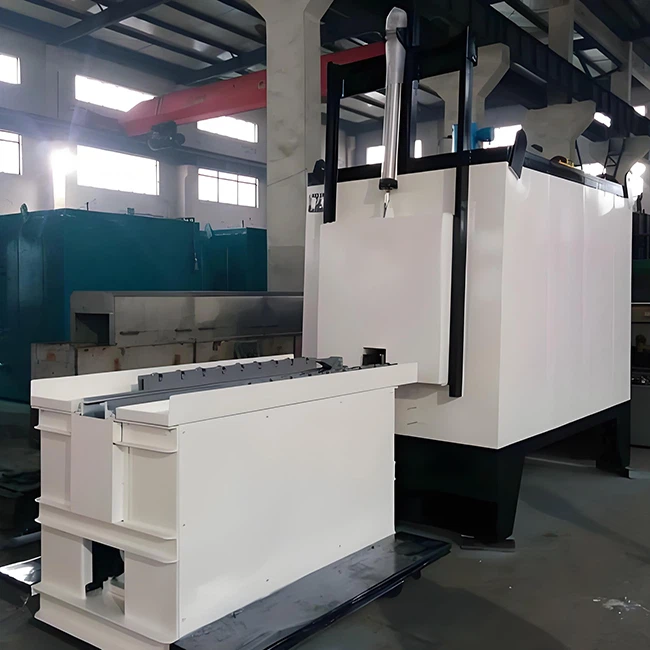
Box Type Tempering Furnace
Our box type tempering furnace is a versatile and cost-effective solution for small to medium-sized workpieces. It features a compact design, easy operation, and high energy efficiency. The furnace is equipped with advanced temperature control and atmosphere control systems, making it suitable for tempering magnesium alloys with precise temperature and atmosphere requirements.
Trolley Tempering Furnace
The trolley tempering furnace is designed for large and heavy workpieces. It features a movable trolley that allows for easy loading and unloading of the workpieces. The furnace is equipped with powerful heating elements and airflow systems to ensure uniform heating and fast tempering cycles. Our trolley tempering furnace is also available with an atmosphere protection option, making it suitable for tempering magnesium alloys in a controlled atmosphere.
Conclusion
In conclusion, a tempering furnace can be used for tempering magnesium alloys, provided that the furnace has the necessary temperature control, atmosphere control, and heating uniformity capabilities. Our range of tempering furnaces, including the Box Type Tempering Furnace, Trolley Tempering Furnace, and Atmosphere Protection Box Type Tempering Furnace, are specifically designed to meet the unique requirements of tempering magnesium alloys.
If you are interested in tempering magnesium alloys or have any questions about our tempering furnaces, please feel free to contact us. Our experienced sales team and technical experts are ready to provide you with detailed information and customized solutions to meet your specific needs.
References
- Davis, J. R. (Ed.). (2001). Magnesium and magnesium alloys. ASM International.
- Totten, G. E., & MacKenzie, D. E. (2003). Handbook of thermal processing of aluminum alloys. CRC Press.
- Lütjering, G., & Williams, J. C. (2007). Titanium. Springer Science & Business Media.


