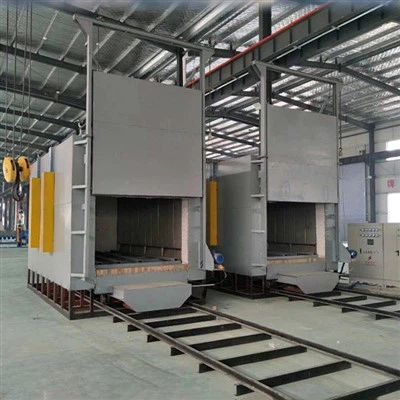
Choosing the right size of a trolley furnace is crucial for ensuring efficient operations and getting the most out of your investment. As a trolley furnace supplier, I've seen firsthand how a well - sized furnace can make a huge difference in a customer's production process. In this blog, I'll share some key factors to consider when picking the right size for your needs.
1. Production Volume
The first thing you need to think about is how much stuff you'll be processing. If you're running a small - scale operation with a low production volume, a large furnace would be overkill. It'd consume more energy than necessary, and you'd end up paying more in operating costs. On the other hand, if your production volume is high and you go for a too - small furnace, you'll have to run multiple batches, which can slow down your production line and increase labor costs.
Let's say you're in the business of heat - treating small metal parts. You might only need a few hundred parts processed per day. In this case, a compact Tumble Car Furnace could be a great fit. It's designed to handle smaller loads efficiently and can save you a lot on energy.
But if you're a large - scale manufacturer that needs to process thousands of parts daily, you'll want a bigger furnace. A Segmented Bogie Furnace is often a good choice here. It can handle large and heavy loads, and its segmented design allows for more flexibility in loading and unloading.
2. Size of the Workpieces
The physical dimensions of the items you'll be heating are also super important. You need to make sure that the furnace has enough space to accommodate your workpieces without overcrowding. Overcrowding can lead to uneven heating, which affects the quality of your products.
For example, if you're working with long, thin metal rods, you'll need a furnace with a sufficient length to hold them without bending. A Trolley Type Forging Furnace might be suitable as it can be customized to fit different lengths and widths of workpieces.
If your workpieces are bulky and irregularly shaped, you'll need to measure their maximum dimensions and choose a furnace with a large enough internal chamber. It's always a good idea to add a little extra space for proper air circulation around the workpieces.
3. Available Space in Your Facility
You can't just pick a furnace based on your production needs; you also have to think about where it's going to fit in your factory. Measure the area where you plan to install the furnace, including any clearance needed for maintenance and operation.


A large furnace might be great for high - volume production, but if you don't have enough space in your facility, it'll be a nightmare to install and operate. You need to consider the footprint of the furnace, as well as any additional space required for the trolley movement, loading and unloading equipment, and ventilation systems.
If space is limited, look for a more compact furnace design. Some models are designed to be more space - efficient without sacrificing too much on performance.
4. Future Expansion Plans
It's always a good idea to think about the future. Your business might grow, and your production needs could change. When choosing a furnace size, consider whether you'll need to increase your production volume or process larger workpieces in the coming years.
If you have plans for expansion, it might be worth investing in a slightly larger furnace than you currently need. This way, you won't have to replace the furnace in the near future when your business grows. However, you also don't want to go too big and end up with a furnace that's under - utilized for a long time.
5. Energy Efficiency
Energy costs can be a significant part of your operating expenses. A larger furnace generally consumes more energy, but that doesn't mean a smaller furnace is always more energy - efficient. The design and insulation of the furnace play a big role in its energy consumption.
Look for a furnace with good insulation materials. A well - insulated furnace will retain heat better, reducing the amount of energy needed to maintain the desired temperature. Some modern furnaces also come with advanced control systems that can optimize energy usage based on the load and temperature requirements.
6. Budget Constraints
Of course, your budget is a major factor. Larger furnaces usually cost more upfront, and they also have higher operating costs. You need to balance your production needs with your budget.
If you're on a tight budget, you might have to start with a smaller furnace and upgrade later as your business grows. However, make sure that the initial furnace you choose can still meet your current production requirements without causing too many bottlenecks.
Conclusion
Choosing the right size of a trolley furnace is a complex decision that involves considering multiple factors. You need to think about your production volume, the size of your workpieces, the available space in your facility, your future expansion plans, energy efficiency, and your budget.
As a trolley furnace supplier, I'm here to help you make the best choice. If you're still unsure about which size of furnace is right for you, don't hesitate to reach out. We can discuss your specific needs in detail and recommend the most suitable furnace for your operation. Whether you're looking for a Tumble Car Furnace, a Segmented Bogie Furnace, or a Trolley Type Forging Furnace, we've got you covered. Contact us today to start the conversation about your furnace needs.
References
- Industry standards and guidelines for furnace selection
- Past customer experiences and case studies
- Technical specifications of different trolley furnace models