

Hey there! As a supplier of tempering furnaces, I often get asked about the cooling rate after tempering in a tempering furnace. So, I thought I'd write this blog to share some insights on this topic.
First off, let's understand what tempering is. Tempering is a heat treatment process that follows hardening. After hardening, the metal is usually very brittle. Tempering helps to reduce this brittleness and improve the toughness and ductility of the metal. It involves reheating the hardened metal to a specific temperature below its critical point and then cooling it.
The cooling rate after tempering is a crucial factor that can significantly affect the properties of the tempered metal. Different cooling rates can lead to different microstructures and mechanical properties in the metal.
Factors Affecting the Cooling Rate
There are several factors that can influence the cooling rate after tempering in a tempering furnace.

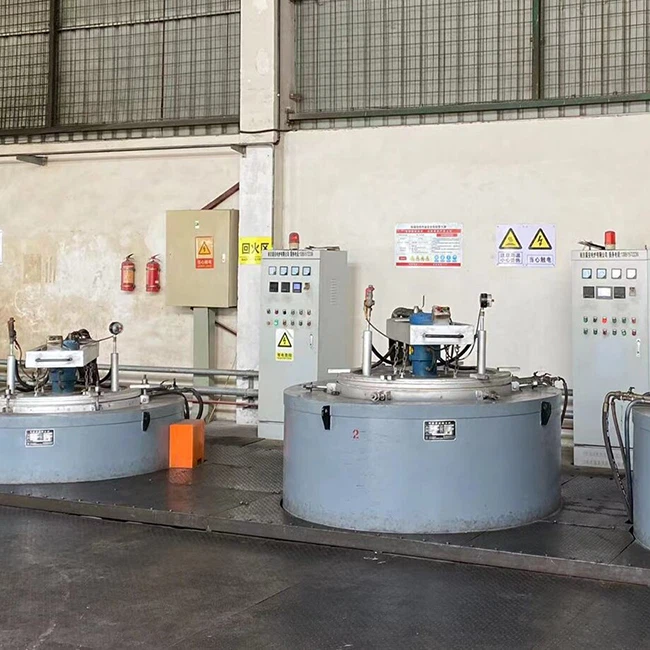
Furnace Type
The type of tempering furnace you use plays a big role. For example, a Vacuum Tempering Furnace offers a unique cooling environment. In a vacuum, there's no air or other gases to conduct heat away from the metal quickly. So, the cooling rate in a vacuum tempering furnace is generally slower compared to other types. This slow cooling can be beneficial for some metals as it allows for a more uniform transformation of the microstructure, reducing internal stresses.
On the other hand, a Box Type Tempering Furnace has a different cooling characteristic. It usually has a relatively larger volume of air inside the box. When the heating element is turned off, the metal cools by transferring heat to the surrounding air. The cooling rate in a box type tempering furnace can be adjusted to some extent by controlling the ventilation or using fans to circulate the air.
A Nitrogen Protection Pit Tempering Furnace uses nitrogen as a protective gas. Nitrogen has different heat transfer properties compared to air. It can help to control the cooling rate and also prevent oxidation of the metal during the cooling process. The cooling rate in this type of furnace can be optimized based on the flow rate of nitrogen and the design of the furnace.
Metal Composition
The composition of the metal being tempered is another important factor. Different metals and alloys have different thermal conductivities. Metals with high thermal conductivity, like copper and aluminum, will cool faster than metals with low thermal conductivity, such as stainless steel. For example, if you're tempering a copper alloy, it will lose heat more rapidly compared to a high - alloy stainless steel in the same tempering furnace.
The carbon content in the metal also affects the cooling rate. High - carbon steels tend to have different phase transformation behaviors during cooling compared to low - carbon steels. High - carbon steels may require a more controlled cooling rate to achieve the desired balance of hardness and toughness.
Part Size and Shape
The size and shape of the metal part being tempered matter too. Larger parts have a larger mass and more volume, which means they have more heat to dissipate. As a result, larger parts will generally cool more slowly than smaller parts. Similarly, parts with complex shapes may have uneven cooling rates. Areas with thicker cross - sections will cool more slowly than thinner areas. This can lead to differences in the microstructure and mechanical properties within the same part.
Different Cooling Rates and Their Effects
Slow Cooling
Slow cooling after tempering is often used when you want to reduce internal stresses in the metal. When the metal cools slowly, the atoms have more time to rearrange themselves, resulting in a more uniform microstructure. This can improve the ductility and toughness of the metal. For example, in some high - strength steels used in aerospace applications, slow cooling after tempering can help to prevent cracking and improve the fatigue resistance of the parts.
However, slow cooling also has its drawbacks. It can be time - consuming, which means lower productivity in a manufacturing setting. Also, in some cases, slow cooling may lead to the formation of certain undesirable phases in the metal, especially if the cooling rate is not carefully controlled.
Fast Cooling
Fast cooling can increase the hardness of the tempered metal. When the metal cools rapidly, the phase transformation occurs more quickly, resulting in a finer microstructure. This can be beneficial for applications where high hardness is required, such as in cutting tools.
But fast cooling also has its challenges. It can generate high internal stresses in the metal, which may lead to cracking or distortion of the part. To counteract this, sometimes a pre - stress relieving step or a controlled quenching process is used before the final tempering and cooling.
Controlling the Cooling Rate
As a tempering furnace supplier, we offer various ways to control the cooling rate. In our furnaces, we can use different cooling media. For example, we can use air, oil, or water as cooling agents. Each cooling medium has a different heat transfer coefficient, which affects the cooling rate.
We also have advanced control systems in our furnaces. These systems can monitor the temperature of the metal during the cooling process and adjust the cooling rate accordingly. For example, we can program the furnace to start with a fast cooling rate for a certain period and then switch to a slow cooling rate to achieve the best combination of hardness and toughness.
Importance of Choosing the Right Cooling Rate
Choosing the right cooling rate after tempering is crucial for achieving the desired properties in the metal. If the cooling rate is too fast, the metal may become too brittle and prone to cracking. On the other hand, if the cooling rate is too slow, the metal may not have the required hardness and strength for its intended application.
For example, in the automotive industry, engine components need to have a good balance of hardness and toughness. If the cooling rate after tempering is not optimized, the components may wear out quickly or fail under stress, leading to costly repairs and safety issues.
Conclusion
In conclusion, the cooling rate after tempering in a tempering furnace is a complex but important aspect of the heat treatment process. It is affected by factors such as the furnace type, metal composition, and part size and shape. Different cooling rates can have different effects on the properties of the metal, and it's essential to choose the right cooling rate based on the specific requirements of the application.
If you're in the market for a tempering furnace or need more information on how to control the cooling rate for your specific metal parts, don't hesitate to reach out. We're here to help you make the best choice for your heat treatment needs. Let's have a chat and see how we can work together to improve your manufacturing process.
References
- ASM Handbook, Volume 4: Heat Treating, ASM International.
- "Heat Treatment Principles and Techniques" by George E. Totten and David Scott MacKenzie.
- "Metallurgy for the Non - Metallurgist" by John D. Verhoeven.


