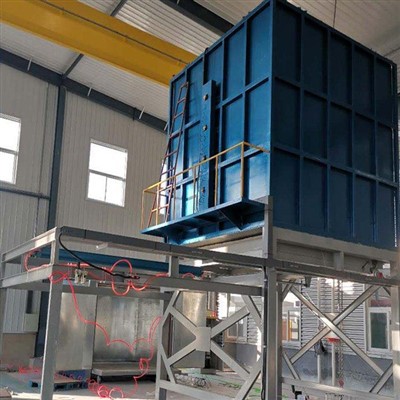
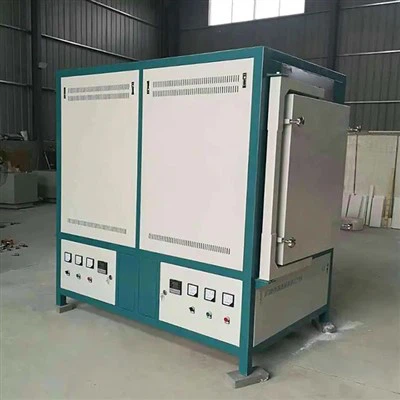
In the realm of metal heat treatment, rapid quenching furnaces play a pivotal role in achieving desired material properties. As a leading rapid quenching furnace supplier, we understand the intricate factors that influence the quenching process, and one such crucial factor is the flow rate of the quenching medium. This blog post delves into the influence of the quenching medium flow rate on the quenching effect in a rapid quenching furnace, exploring its significance, mechanisms, and practical implications.
Understanding the Quenching Process
Quenching is a heat treatment process that involves rapidly cooling a heated metal to transform its microstructure and enhance its mechanical properties. In a rapid quenching furnace, the quenching medium, typically a liquid such as oil or water, is used to remove heat from the metal at a high rate. The choice of quenching medium and its flow rate significantly impact the cooling rate and, consequently, the final properties of the quenched metal.
The Role of Quenching Medium Flow Rate
The flow rate of the quenching medium refers to the speed at which the medium circulates around the metal during the quenching process. It plays a crucial role in determining the cooling rate and uniformity of the quenching process. A higher flow rate generally results in a faster cooling rate, which can lead to the formation of a finer microstructure and improved mechanical properties. However, an excessively high flow rate can also cause issues such as distortion, cracking, and uneven cooling.
Influence on Cooling Rate
The cooling rate is a critical factor in the quenching process as it determines the transformation of the metal's microstructure. A higher flow rate of the quenching medium increases the convective heat transfer coefficient, allowing for more efficient heat removal from the metal surface. This results in a faster cooling rate, which can promote the formation of martensite, a hard and brittle phase, in steels. However, if the cooling rate is too high, it can lead to the formation of excessive internal stresses, which may cause cracking or distortion of the metal.
Influence on Microstructure
The flow rate of the quenching medium also affects the microstructure of the quenched metal. A higher flow rate can promote the formation of a finer and more uniform microstructure, which can improve the mechanical properties of the metal. For example, in steels, a higher flow rate can lead to the formation of a finer martensitic structure, which can increase the hardness and strength of the steel. On the other hand, a lower flow rate may result in the formation of a coarser microstructure, which can reduce the mechanical properties of the metal.
Influence on Distortion and Cracking
Excessive flow rate of the quenching medium can cause distortion and cracking of the metal. When the cooling rate is too high, the metal contracts rapidly, creating internal stresses that can lead to distortion or cracking. This is particularly true for complex-shaped or thick-sectioned parts, where the differential cooling rates can cause significant internal stresses. Therefore, it is important to optimize the flow rate of the quenching medium to minimize the risk of distortion and cracking.


Practical Considerations
In practice, the optimal flow rate of the quenching medium depends on several factors, including the type of metal, the size and shape of the part, the quenching medium used, and the desired properties of the quenched metal. It is important to conduct thorough testing and optimization to determine the optimal flow rate for a specific application.
Our Rapid Quenching Furnaces
As a rapid quenching furnace supplier, we offer a range of high-quality furnaces designed to meet the diverse needs of our customers. Our Natural Gas Rapid Quenching Furnace and Forklift Type Rapid Quenching Furnace are equipped with advanced features and controls to ensure precise and efficient quenching processes. Our furnaces are designed to provide uniform cooling and minimize the risk of distortion and cracking, resulting in high-quality quenched parts.
Conclusion
The flow rate of the quenching medium is a critical factor in the quenching process, influencing the cooling rate, microstructure, and mechanical properties of the quenched metal. As a rapid quenching furnace supplier, we understand the importance of optimizing the flow rate to achieve the desired quenching effect. Our advanced furnaces are designed to provide precise control over the quenching process, ensuring high-quality results. If you are interested in learning more about our rapid quenching furnaces or have any questions about the quenching process, please contact us to discuss your specific requirements.
References
- Smith, J. (2015). Heat Treatment Principles and Techniques. Wiley.
- Davis, J. R. (2001). Heat Treating. ASM International.
- Totten, G. E., & Howes, M. A. (2006). Handbook of Quenchants and Quenching Technology. ASM International.