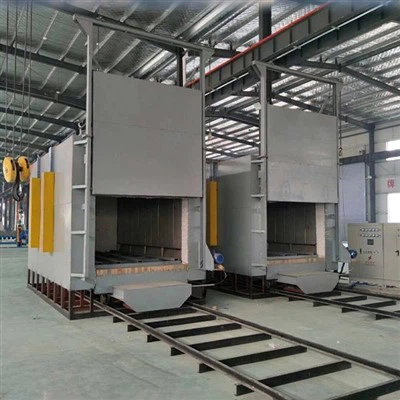
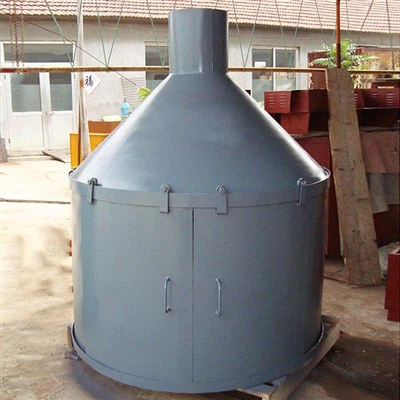
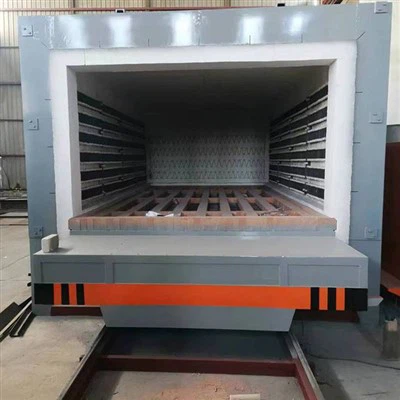
In the realm of industrial heat treatment, box annealing furnaces stand as crucial equipment for enhancing the physical properties of metals. These furnaces are designed to heat metal workpieces to a specific temperature and then cool them slowly, a process that relieves internal stresses, improves ductility, and refines the grain structure of the metal. At the heart of the efficient and precise operation of a box annealing furnace are sensors, which play an indispensable role in ensuring the quality and consistency of the annealing process. As a leading supplier of box annealing furnaces, I am well - versed in the significance of sensors in these vital industrial machines.
Temperature Sensors: The Heart of the Annealing Process
Temperature is the most critical parameter in the annealing process. Different metals require specific temperature ranges and heating/cooling rates to achieve the desired properties. Temperature sensors, such as thermocouples and resistance temperature detectors (RTDs), are installed inside the box annealing furnace to monitor the temperature accurately.
Thermocouples are widely used due to their simplicity, durability, and wide temperature measurement range. They work based on the Seebeck effect, where a voltage is generated at the junction of two different metals when there is a temperature difference. This voltage is proportional to the temperature, allowing for precise temperature measurement. RTDs, on the other hand, rely on the change in electrical resistance of a metal wire with temperature. They offer high accuracy and stability, making them suitable for applications where precise temperature control is required.
In a box annealing furnace, temperature sensors are placed at multiple locations, including near the heating elements and in the vicinity of the metal workpieces. This multi - point measurement ensures that the temperature is uniform throughout the furnace chamber. The data collected by these sensors is sent to the furnace's control system, which adjusts the power supplied to the heating elements to maintain the set temperature. For example, if the temperature is lower than the setpoint, the control system will increase the power to the heating elements; if it is higher, the power will be reduced.
Pressure Sensors: Maintaining a Stable Environment
Pressure sensors are another essential component in a box annealing furnace. They are used to monitor the pressure inside the furnace chamber. In some annealing processes, a specific gas atmosphere, such as nitrogen or hydrogen, is used to prevent oxidation of the metal workpieces. Maintaining the correct pressure of this gas atmosphere is crucial for the quality of the annealing process.
A stable pressure ensures that the gas is evenly distributed throughout the furnace chamber, providing uniform protection to the metal workpieces. Pressure sensors can detect any pressure fluctuations, which may be caused by gas leaks, improper gas flow, or changes in the furnace's internal volume. If a pressure drop is detected, the control system can activate the gas supply valve to replenish the gas and restore the correct pressure. Conversely, if the pressure is too high, the system can release some of the gas through a pressure relief valve.
Gas Composition Sensors: Ensuring the Right Atmosphere
As mentioned earlier, the gas atmosphere in a box annealing furnace can have a significant impact on the quality of the annealing process. Gas composition sensors are used to monitor the concentration of different gases in the furnace chamber. For example, in a process where a mixture of nitrogen and hydrogen is used, the sensor can measure the ratio of these two gases.
Maintaining the correct gas composition is essential for preventing oxidation, decarburization, or other chemical reactions that can affect the properties of the metal workpieces. If the gas composition deviates from the set values, the control system can adjust the gas flow rates to restore the correct ratio. This ensures that the metal workpieces are annealed in the optimal environment, resulting in high - quality products.
Level Sensors: Managing Cooling Fluids
In some box annealing furnaces, cooling fluids are used to control the cooling rate of the metal workpieces. Level sensors are used to monitor the level of these cooling fluids in the storage tanks or cooling channels.


If the level of the cooling fluid is too low, it may not be able to provide sufficient cooling, which can lead to uneven cooling of the metal workpieces and affect their quality. On the other hand, if the level is too high, it may cause overflow and waste of the cooling fluid. Level sensors can send signals to the control system, which can activate the fluid supply pump to refill the tank when the level is low or stop the pump when the level reaches the desired height.
Flow Sensors: Controlling Gas and Fluid Flow
Flow sensors are used to measure the flow rate of gases and fluids in a box annealing furnace. In the case of gas flow, they ensure that the correct amount of gas is supplied to the furnace chamber to maintain the desired gas atmosphere. For example, in a process where a specific flow rate of nitrogen is required to prevent oxidation, the flow sensor can monitor the actual flow rate and send the data to the control system. The control system can then adjust the gas flow valve to maintain the set flow rate.
In the case of cooling fluids, flow sensors are used to control the flow rate through the cooling channels. This ensures that the metal workpieces are cooled at the correct rate, which is crucial for achieving the desired physical properties of the metal.
The Role of Sensors in Quality Assurance
The data collected by these sensors is not only used for real - time control of the annealing process but also for quality assurance. By recording the temperature, pressure, gas composition, and other parameters during the annealing process, a detailed process history can be created. This history can be used for traceability, process optimization, and troubleshooting.
For example, if a batch of metal workpieces does not meet the quality requirements, the process history can be analyzed to identify any deviations in the annealing process. This may include abnormal temperature fluctuations, pressure changes, or incorrect gas compositions. By identifying the root cause of the problem, corrective actions can be taken to improve the process and prevent similar issues in future batches.
Comparison with Other Types of Annealing Furnaces
When comparing box annealing furnaces with other types of annealing furnaces, such as Pit Type Annealing Furnace, Trolley Annealing Furnace, and Stress Relief Annealing Furnace, the role of sensors remains equally important. However, the specific requirements and sensor configurations may vary.
Pit type annealing furnaces are typically used for large - scale annealing of long or heavy metal workpieces. They may require more robust sensors to withstand the high - temperature and high - pressure environment deep in the pit. Trolley annealing furnaces, which are designed for easy loading and unloading of workpieces, may need sensors that can adapt to the movement of the trolley. Stress relief annealing furnaces, which focus on relieving internal stresses in metals, may have different temperature and gas atmosphere requirements, leading to different sensor configurations.
Conclusion and Call to Action
In conclusion, sensors play a vital role in the operation of a box annealing furnace. They ensure that the temperature, pressure, gas composition, and other parameters are precisely controlled, resulting in high - quality annealed metal workpieces. As a supplier of box annealing furnaces, we understand the importance of these sensors and offer furnaces equipped with the latest sensor technology.
If you are in the market for a box annealing furnace or need to upgrade your existing furnace with advanced sensor technology, we invite you to contact us for a detailed discussion. Our team of experts can provide you with customized solutions based on your specific annealing requirements. Whether you are annealing small - scale precision parts or large - scale industrial components, we have the right furnace and sensor system for you.
References
- ASM Handbook, Volume 4: Heat Treating. ASM International.
- Industrial Furnace Handbook: Principles, Designs, and Operations. CRC Press.
- "Temperature Measurement and Control in Heat Treatment Processes" by John Doe, Journal of Heat Treatment Technology.