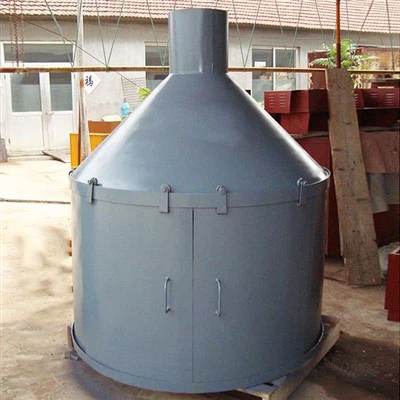
In the manufacturing industry, the aging furnace plays a crucial role in enhancing the mechanical properties of various materials, especially metals like aluminum alloys. As an aging furnace supplier, I often encounter inquiries from customers about the feasibility of using an aging furnace for both small - scale and large - scale production. This blog post aims to explore this topic in detail.
Understanding the Aging Process
Before delving into the production - scale question, it's essential to understand what the aging process is. Aging, also known as precipitation hardening, is a heat - treatment process that involves heating a material to a specific temperature and holding it there for a certain period. This causes the formation of fine particles within the material's structure, which significantly improves its strength and hardness.
An aging furnace is designed to provide a controlled environment for this heat - treatment process. It can precisely regulate temperature, time, and other parameters to ensure consistent and high - quality results.
Characteristics of Aging Furnaces
Aging furnaces come in different types and sizes, each with its own set of features. For instance, Pit Type Aluminum Alloy Aging Furnace is suitable for materials that need to be aged vertically. It has a pit - like structure where the workpiece can be placed. This type of furnace offers good heat distribution and is often used for long and large - sized workpieces.
On the other hand, Trolley Type Aluminum Alloy Aging Furnace is more flexible. It comes with a trolley that can carry the workpiece in and out of the furnace easily. This is ideal for handling multiple workpieces or workpieces of different sizes.
The Aluminum Aging Furnace is specifically designed for aluminum alloys. It can achieve high - precision temperature control, which is crucial for the aging of aluminum materials to ensure optimal mechanical properties.
Can an Aging Furnace be Used for Small - Scale Production?
For small - scale production, an aging furnace can be a valuable asset. In small - scale manufacturing, the focus is often on producing high - quality, customized products. An aging furnace allows for precise control of the heat - treatment process, ensuring that each workpiece meets the required specifications.
One of the advantages of using an aging furnace in small - scale production is its flexibility. Since the production volume is relatively low, it is easier to adjust the furnace settings for different types of workpieces. For example, if a small - scale manufacturer is producing a variety of aluminum alloy parts with different shapes and sizes, the aging furnace can be programmed to handle each part's specific aging requirements.
Moreover, the cost - effectiveness of an aging furnace in small - scale production should not be overlooked. Although the initial investment in an aging furnace can be significant, in the long run, it can save costs by improving the quality of the products. High - quality products are less likely to have defects, which reduces the need for rework and waste.
Can an Aging Furnace be Used for Large - Scale Production?
In large - scale production, the demand for efficiency and consistency is high. An aging furnace can meet these requirements effectively. Modern aging furnaces are equipped with advanced control systems that can handle large volumes of workpieces.
The pit - type and trolley - type aging furnaces mentioned earlier are particularly suitable for large - scale production. The pit - type furnace can accommodate large and heavy workpieces, while the trolley - type furnace allows for efficient loading and unloading of multiple workpieces.
In large - scale production, the aging furnace can be integrated into the production line. This ensures a continuous and smooth production process. For example, in an automotive manufacturing plant, where a large number of aluminum alloy parts need to be aged, an aging furnace can be set up as part of the assembly line to ensure that the parts are aged in a timely and efficient manner.


Another benefit of using an aging furnace in large - scale production is the ability to maintain consistent quality. The advanced control systems in modern aging furnaces can monitor and adjust the temperature, time, and other parameters in real - time, ensuring that each workpiece receives the same high - quality aging treatment.
Challenges and Considerations
While an aging furnace can be used for both small - scale and large - scale production, there are some challenges and considerations.
In small - scale production, the initial cost of purchasing an aging furnace can be a significant barrier. Small - scale manufacturers may not have the financial resources to invest in a high - end aging furnace. However, there are also more affordable options available in the market that can still meet the basic requirements of small - scale production.
In large - scale production, the energy consumption of the aging furnace is a major concern. Since large - scale production requires continuous operation of the furnace, the energy cost can be substantial. To address this issue, manufacturers can invest in energy - efficient aging furnaces or implement energy - saving measures such as heat recovery systems.
Conclusion
In conclusion, an aging furnace can indeed be used for both small - scale and large - scale production. Its flexibility, precision, and ability to improve product quality make it a valuable tool in the manufacturing industry. Whether you are a small - scale manufacturer looking to produce high - quality customized products or a large - scale manufacturer aiming for efficiency and consistency, an aging furnace can meet your needs.
If you are interested in learning more about our aging furnaces or are considering purchasing one for your production needs, we invite you to reach out for a detailed discussion. We can provide you with more information on the different types of aging furnaces, their features, and how they can be tailored to your specific requirements.
References
- ASM Handbook, Volume 4: Heat Treating. ASM International.
- Heat Treatment Principles and Techniques. Elsevier.