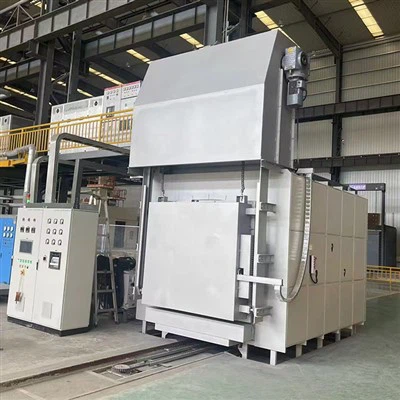
Resistance furnaces are widely used in various industries for sintering processes, which play a crucial role in determining the quality of sintered products. As a resistance furnace supplier, I have witnessed firsthand how these furnaces can significantly impact the final outcome of sintered materials. In this blog, I will delve into the ways in which a resistance furnace affects the quality of sintered products, exploring key factors and providing insights based on my experience in the industry.
Temperature Control
One of the most critical aspects of a resistance furnace is its ability to provide precise temperature control. Temperature is a fundamental parameter in the sintering process, as it directly influences the densification, grain growth, and phase transformations of the sintered material. A well-designed resistance furnace can maintain a stable and uniform temperature throughout the sintering chamber, ensuring consistent heating of the product.
For example, in the sintering of ceramic materials, the temperature must be carefully controlled to avoid thermal shock and cracking. If the temperature rises too quickly, the material may expand unevenly, leading to internal stresses and potential damage. On the other hand, if the temperature is not high enough or is not maintained for a sufficient period, the sintering process may be incomplete, resulting in a porous and weak final product.


Our High Temperature Trolley Resistance Furnace is equipped with advanced temperature control systems that can accurately regulate the temperature within a narrow range. This ensures that the sintered products achieve the desired density, hardness, and other mechanical properties. The furnace also features a uniform heating element distribution, which helps to minimize temperature gradients and ensure consistent quality across the entire batch of sintered products.
Atmosphere Control
In addition to temperature control, the atmosphere inside the resistance furnace can also have a significant impact on the quality of sintered products. Different materials require specific atmospheres during the sintering process to prevent oxidation, promote chemical reactions, or achieve certain microstructural changes.
For instance, in the sintering of metals, an inert or reducing atmosphere is often used to prevent oxidation and ensure the purity of the final product. The presence of oxygen can cause the formation of oxides on the surface of the metal, which can degrade its mechanical properties and reduce its corrosion resistance. By controlling the atmosphere inside the furnace, we can create a protective environment that allows the metal to sinter without oxidation.
Our Large Pit Type Resistance Furnace offers precise atmosphere control capabilities. It can be equipped with gas inlet and outlet systems to introduce and maintain the desired atmosphere, such as nitrogen, hydrogen, or argon. The furnace also has a tight sealing design to prevent leakage of the atmosphere and ensure a stable and controlled environment for the sintering process.
Heating Rate
The heating rate of a resistance furnace is another important factor that affects the quality of sintered products. A rapid heating rate can lead to thermal shock and cracking, especially in materials with low thermal conductivity. On the other hand, a slow heating rate may result in longer processing times and increased energy consumption.
The optimal heating rate depends on the specific material being sintered and the desired properties of the final product. For some materials, a gradual heating rate is preferred to allow for uniform expansion and minimize internal stresses. For others, a faster heating rate may be necessary to achieve certain microstructural changes or to improve the efficiency of the sintering process.
Our Car-type Resistance Furnace allows for adjustable heating rates, giving our customers the flexibility to optimize the sintering process for different materials. The furnace is designed to provide a smooth and controlled heating profile, which helps to prevent thermal shock and ensure the quality of the sintered products.
Furnace Design and Construction
The design and construction of a resistance furnace can also influence the quality of sintered products. A well-designed furnace should have a robust structure, good insulation, and efficient heat transfer characteristics.
The insulation of the furnace is crucial to minimize heat loss and ensure energy efficiency. A furnace with poor insulation will require more energy to maintain the desired temperature, which not only increases operating costs but also can lead to temperature fluctuations and inconsistent sintering results. Our resistance furnaces are built with high-quality insulation materials, such as ceramic fiber, which provide excellent thermal insulation and reduce heat loss.
The heat transfer characteristics of the furnace are also important. A furnace with efficient heat transfer can heat the sintered material more quickly and uniformly, reducing the sintering time and improving the quality of the final product. Our furnaces are designed with optimized heating element arrangements and airflow patterns to ensure efficient heat transfer and uniform temperature distribution.
Post-Sintering Cooling
The cooling process after sintering is just as important as the heating and sintering stages. Rapid cooling can cause thermal stresses and cracking in the sintered product, while slow cooling may lead to grain growth and a decrease in mechanical properties.
A well-designed resistance furnace should have a controlled cooling system that allows for a gradual and uniform cooling rate. This helps to relieve internal stresses and ensure the dimensional stability and mechanical integrity of the sintered product. Our furnaces are equipped with advanced cooling systems that can be adjusted to provide the optimal cooling rate for different materials.
Conclusion
In conclusion, a resistance furnace has a profound impact on the quality of sintered products. By providing precise temperature control, atmosphere control, adjustable heating rates, and efficient cooling, a high-quality resistance furnace can ensure that the sintered products achieve the desired properties and meet the strictest quality standards.
As a resistance furnace supplier, we are committed to providing our customers with the best-in-class products and solutions. Our High Temperature Trolley Resistance Furnace, Large Pit Type Resistance Furnace, and Car-type Resistance Furnace are designed with the latest technology and highest quality materials to ensure reliable performance and excellent product quality.
If you are in the market for a resistance furnace for your sintering process, we invite you to contact us for a detailed discussion of your requirements. Our team of experts will be happy to provide you with personalized solutions and help you make the right choice for your business.
References
- German, R. M. (1996). Sintering Theory and Practice. John Wiley & Sons.
- Kingery, W. D., Bowen, H. K., & Uhlmann, D. R. (1976). Introduction to Ceramics. John Wiley & Sons.
- Lee, W. E., & Rainforth, W. M. (1994). Ceramic Microstructures: Property Control by Processing. Chapman & Hall.