How does a tempering furnace improve the wear resistance of materials?
As a seasoned supplier of tempering furnaces, I've witnessed firsthand the transformative power these remarkable machines have on the wear resistance of various materials. In this blog post, I'll delve into the science behind how tempering furnaces enhance wear resistance and explore the different types of tempering furnaces we offer to meet diverse industrial needs.
Understanding Wear Resistance and Its Importance
Wear resistance is a critical property of materials used in a wide range of applications, from automotive components and aerospace parts to industrial machinery and tools. It refers to a material's ability to withstand the gradual removal of material caused by friction, abrasion, erosion, or other forms of mechanical contact. A material with high wear resistance can maintain its integrity and performance over an extended period, reducing the need for frequent replacements and minimizing downtime.

The Role of Tempering in Improving Wear Resistance
Tempering is a heat treatment process that follows quenching, a rapid cooling process used to harden materials. During quenching, the material's microstructure undergoes a transformation, resulting in a hard and brittle state. While hardness is desirable for many applications, excessive brittleness can lead to cracking and premature failure. Tempering is used to relieve internal stresses, reduce brittleness, and improve the material's toughness and ductility while maintaining a high level of hardness.
The key to improving wear resistance through tempering lies in the controlled modification of the material's microstructure. When a material is tempered, the martensite, a hard and brittle phase formed during quenching, is transformed into a more stable and ductile structure called tempered martensite. This transformation involves the precipitation of fine carbide particles within the martensite matrix, which act as barriers to dislocation movement and enhance the material's resistance to plastic deformation.
In addition to carbide precipitation, tempering also helps to relieve internal stresses generated during quenching. These stresses can cause cracking and reduce the material's fatigue life. By reducing internal stresses, tempering improves the material's overall mechanical properties and enhances its resistance to wear and fatigue.
Types of Tempering Furnaces and Their Benefits
At our company, we offer a wide range of tempering furnaces to suit different materials, production volumes, and application requirements. Here are some of the most popular types of tempering furnaces we supply:
-
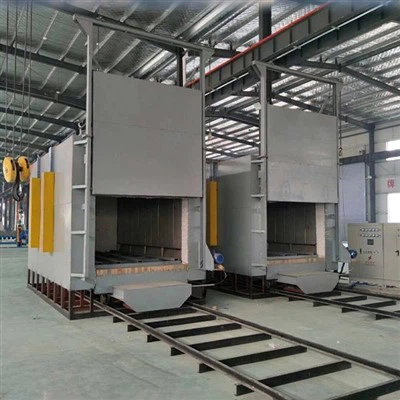
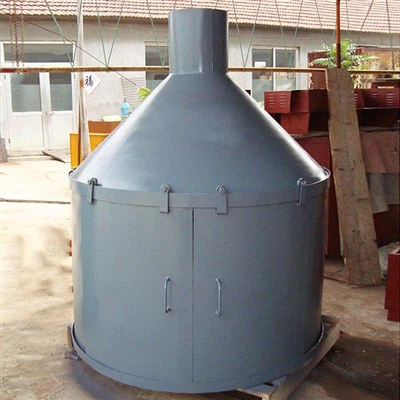
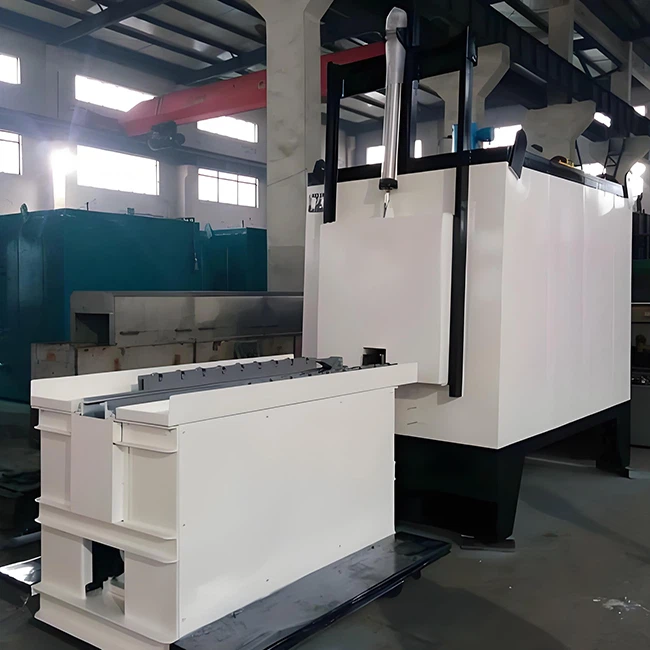
Nitrogen Protection Pit Tempering Furnace: This type of furnace is designed for the heat treatment of large and heavy workpieces. It features a vertical pit design, which allows for easy loading and unloading of workpieces using a crane. The furnace is equipped with a nitrogen protection system, which creates an inert atmosphere inside the furnace to prevent oxidation and decarburization of the workpiece. The nitrogen protection pit tempering furnace is ideal for applications where high precision and uniform heating are required, such as the heat treatment of automotive components, aerospace parts, and industrial machinery. Nitrogen Protection Pit Tempering Furnace
-
Pit Type Tempering Furnace: Similar to the nitrogen protection pit tempering furnace, the pit type tempering furnace is also designed for the heat treatment of large and heavy workpieces. However, it does not have a nitrogen protection system and is typically used for applications where oxidation and decarburization are not a concern. The pit type tempering furnace is a cost-effective solution for industries such as steel manufacturing, forging, and automotive. Pit Type Tempering Furnace
-
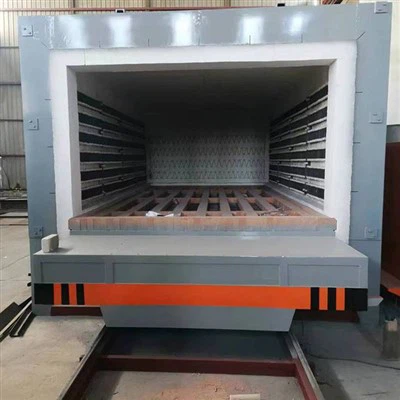
Atmosphere Protection Box Type Tempering Furnace: This type of furnace is suitable for the heat treatment of small to medium-sized workpieces. It features a box-shaped design with a sealed chamber and an atmosphere protection system, which can be filled with a variety of gases, such as nitrogen, argon, or a mixture of gases, to create a controlled atmosphere inside the furnace. The atmosphere protection box type tempering furnace is ideal for applications where precise temperature control and uniform heating are required, such as the heat treatment of tool steels, stainless steels, and non-ferrous metals. Atmosphere Protection Box Type Tempering Furnace
Case Studies: Real-World Examples of Improved Wear Resistance
To illustrate the effectiveness of our tempering furnaces in improving wear resistance, let's take a look at some real-world case studies:
-
Automotive Industry: A leading automotive manufacturer was experiencing premature wear and failure of its engine components, such as pistons and connecting rods. After implementing our nitrogen protection pit tempering furnace, the manufacturer was able to improve the wear resistance of these components by up to 30%. This resulted in a significant reduction in warranty claims and increased customer satisfaction.
-
Tool and Die Industry: A tool and die maker was struggling to achieve consistent hardness and wear resistance in its cutting tools. By using our atmosphere protection box type tempering furnace, the company was able to optimize the tempering process and achieve a more uniform hardness distribution across the tool's surface. This led to a significant improvement in tool life and reduced production costs.
-
Aerospace Industry: An aerospace company was looking for a solution to improve the wear resistance of its turbine blades. Our pit type tempering furnace was selected for the heat treatment of these components. After tempering, the turbine blades exhibited a higher level of hardness and toughness, resulting in improved performance and reliability in high-temperature and high-stress environments.
Conclusion
In conclusion, tempering furnaces play a crucial role in improving the wear resistance of materials by modifying their microstructure and relieving internal stresses. By carefully controlling the tempering process, it is possible to achieve a balance between hardness, toughness, and ductility, which is essential for many applications. At our company, we are committed to providing high-quality tempering furnaces and comprehensive heat treatment solutions to help our customers improve the performance and durability of their products.
If you are interested in learning more about our tempering furnaces or would like to discuss your specific heat treatment requirements, please contact us today. Our team of experts will be happy to assist you in selecting the right furnace for your application and providing you with the support and guidance you need to achieve optimal results.
References
- ASM Handbook, Volume 4: Heat Treating, ASM International, 1991.
- Metals Handbook, Volume 1: Properties and Selection: Irons, Steels, and High-Performance Alloys, ASM International, 1990.
- Heat Treatment Principles and Techniques, by Robert A. Granger, Marcel Dekker, 1984.