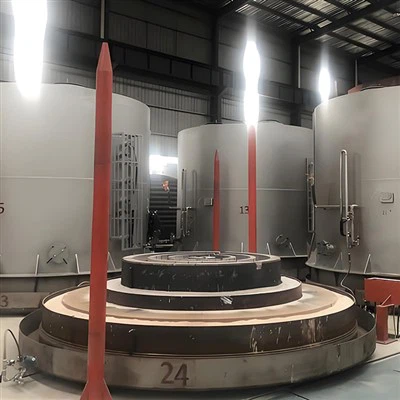
Controlling the stirring of molten materials in a crucible furnace is a critical aspect of achieving high - quality melting and casting processes. As a leading crucible furnace supplier, we have in - depth knowledge and rich experience in this area. In this blog, we will share some effective methods and considerations for controlling the stirring of molten materials in a crucible furnace.
1. Understanding the Importance of Stirring Molten Materials
Stirring molten materials in a crucible furnace serves several important purposes. Firstly, it helps to ensure uniform temperature distribution within the molten metal. In a crucible furnace, heat transfer may not be perfectly even, and without proper stirring, there can be temperature gradients. These gradients can lead to inconsistent melting and affect the quality of the final product. For example, in the production of alloys, uneven temperature can result in non - uniform mixing of different elements, leading to variations in the alloy's mechanical and chemical properties.
Secondly, stirring promotes homogenization of the molten materials. When multiple metals or additives are melted together, stirring helps to disperse these components evenly throughout the melt. This is crucial for achieving the desired composition and properties of the final cast product. For instance, in the manufacturing of high - performance aluminum alloys, proper stirring ensures that alloying elements such as copper, magnesium, and silicon are uniformly distributed, enhancing the alloy's strength and corrosion resistance.
2. Manual Stirring
Manual stirring is one of the simplest and most traditional methods of controlling the stirring of molten materials in a crucible furnace. It involves using a stirring rod or paddle made of a heat - resistant material, such as graphite or ceramic, to physically agitate the molten metal.
Advantages
- Low cost: Manual stirring requires only a basic stirring tool, which is relatively inexpensive. This makes it a cost - effective option for small - scale operations or for those on a tight budget.
- Flexibility: Operators can directly control the stirring process, adjusting the speed and intensity of stirring according to the specific requirements of the melt. They can also focus on areas where more mixing is needed.
Disadvantages
- Labor - intensive: Manual stirring is physically demanding, especially when dealing with large - volume crucible furnaces or high - temperature melts. Operators need to stand close to the furnace for an extended period, exposed to high heat and potential splashes.
- Inconsistency: The quality of stirring can vary depending on the operator's skill and fatigue level. It may be difficult to maintain a consistent stirring speed and pattern over time, which can lead to uneven mixing.
3. Mechanical Stirring
Mechanical stirring systems offer a more efficient and consistent alternative to manual stirring. These systems typically consist of a motor - driven stirrer that is inserted into the molten material in the crucible.
Types of Mechanical Stirrers
- Paddle stirrers: Paddle stirrers are one of the most common types of mechanical stirrers. They consist of a shaft with one or more paddles attached at the end. The paddles rotate within the molten material, creating a flow that promotes mixing. Paddle stirrers can be adjusted to different rotation speeds and angles to optimize the stirring effect.
- Propeller stirrers: Propeller stirrers work on the principle of a propeller, generating a strong axial flow within the molten material. They are particularly effective for promoting vertical mixing in the crucible. Propeller stirrers are often used in applications where rapid and thorough mixing is required.
Advantages
- Consistency: Mechanical stirrers can provide a more consistent stirring pattern and speed compared to manual stirring. This helps to ensure uniform mixing of the molten materials, resulting in more reliable product quality.
- Reduced labor: By automating the stirring process, mechanical stirrers reduce the physical workload on operators. This allows operators to focus on other aspects of the melting and casting process, such as monitoring the furnace temperature and quality control.
Disadvantages
- Higher cost: Mechanical stirring systems are more expensive than manual stirring tools. They require the purchase of a motor, stirrer assembly, and associated control equipment. Additionally, there may be maintenance costs associated with keeping the system in good working condition.
- Limited access: In some cases, the design of the crucible furnace may limit the installation of a mechanical stirrer. For example, if the crucible has a narrow opening or a complex shape, it may be difficult to insert a mechanical stirrer without interfering with other components of the furnace.
4. Gas - Induced Stirring
Gas - induced stirring is a more advanced method of controlling the stirring of molten materials in a crucible furnace. It involves injecting a gas, such as argon or nitrogen, into the molten metal through a porous plug or lance.


How it works
When the gas is injected into the molten metal, it forms bubbles that rise to the surface. As the bubbles rise, they create a convective flow within the melt, causing the molten metal to circulate and mix. The size and frequency of the bubbles can be controlled by adjusting the gas flow rate and pressure.
Advantages
- Non - contact stirring: Gas - induced stirring does not require direct contact with the molten metal, which reduces the risk of contamination. This is particularly important in applications where high - purity metals are being melted, such as in the semiconductor industry.
- Efficient mixing: Gas - induced stirring can create a strong and uniform mixing effect throughout the crucible. The convective flow generated by the rising bubbles helps to distribute heat and components evenly within the melt.
Disadvantages
- Complex equipment: Gas - induced stirring systems require additional equipment, such as gas supply systems, flow controllers, and porous plugs or lances. This increases the complexity and cost of the furnace setup.
- Gas consumption: The continuous injection of gas can result in significant gas consumption, which adds to the operating cost. Additionally, proper ventilation is required to ensure the safe removal of any potentially hazardous gases.
5. Electromagnetic Stirring
Electromagnetic stirring is a state - of - the - art method for controlling the stirring of molten materials in a crucible furnace. It uses electromagnetic fields to induce a flow in the molten metal.
How it works
An electromagnetic field is generated around the crucible by passing an alternating current through a coil. The electromagnetic field interacts with the electrically conductive molten metal, creating a Lorentz force that causes the molten metal to move. The direction and intensity of the flow can be controlled by adjusting the parameters of the electromagnetic field, such as the frequency and amplitude of the current.
Advantages
- High - efficiency mixing: Electromagnetic stirring can provide a very efficient and uniform mixing effect. It can generate strong and controlled flows within the melt, ensuring rapid and thorough homogenization of the molten materials.
- No moving parts in the melt: Since electromagnetic stirring does not require any physical contact with the molten metal, there is no risk of wear and tear of the stirring equipment or contamination of the melt. This makes it suitable for high - quality and high - purity melting applications.
Disadvantages
- High cost: Electromagnetic stirring systems are relatively expensive to install and operate. They require specialized electrical equipment and control systems, which can be a significant investment.
- Technical complexity: The design and operation of electromagnetic stirring systems require a high level of technical expertise. Operators need to have a good understanding of electromagnetic principles and be able to adjust the system parameters accurately to achieve the desired stirring effect.
6. Factors to Consider When Choosing a Stirring Method
- Type of crucible furnace: Different types of crucible furnaces, such as Tilting Crucible Melting Furnace, Crucible Melting Resistance Furnace, and Gas Crucible Aluminum Melting Furnace, may have different requirements for stirring. For example, a tilting crucible furnace may require a stirring method that can accommodate the movement of the crucible during the tilting process.
- Volume of the melt: The volume of the molten material in the crucible is an important factor. Larger volumes may require more powerful stirring methods, such as mechanical or electromagnetic stirring, to ensure proper mixing.
- Type of materials being melted: The properties of the materials being melted, such as their viscosity, density, and melting point, can also influence the choice of stirring method. For example, highly viscous materials may require a more intense stirring action to achieve uniform mixing.
- Quality requirements: If high - quality and high - purity products are required, more advanced stirring methods, such as electromagnetic or gas - induced stirring, may be necessary to ensure thorough homogenization and minimize contamination.
7. Contact for Procurement and Consultation
As a professional crucible furnace supplier, we have a wide range of crucible furnaces and stirring solutions to meet your specific needs. Whether you are looking for a simple manual stirring system or a high - tech electromagnetic stirring solution, we can provide you with the right equipment and technical support.
If you are interested in learning more about our products or have any questions regarding the stirring of molten materials in a crucible furnace, please feel free to contact us. We are committed to helping you optimize your melting and casting processes and achieve the best possible results.
References
- "Foundry Technology Handbook"
- "Metallurgy of Melting and Casting"
- Industry research reports on crucible furnace technology and applications