

As a supplier of Pit Quenching Furnaces, I've had the privilege of witnessing firsthand the transformative power of these remarkable pieces of equipment in various industrial applications. Pit quenching furnaces are essential in heat treatment processes, enabling manufacturers to enhance the mechanical properties of metals by precisely controlling the heating and cooling rates. However, like any complex machinery, their performance can be optimized to achieve even better results. In this blog post, I'll share some valuable insights on how to improve the performance of a Pit Quenching Furnace.
1. Regular Maintenance and Inspection
One of the most fundamental steps in ensuring the optimal performance of a Pit Quenching Furnace is regular maintenance and inspection. Over time, wear and tear can take a toll on the furnace's components, leading to decreased efficiency and potential breakdowns. By implementing a comprehensive maintenance schedule, you can identify and address issues before they escalate.
- Cleaning: Regularly clean the furnace chamber to remove any debris, scale, or contaminants that may accumulate during the heating process. This not only improves the furnace's efficiency but also helps prevent corrosion and damage to the heating elements.
- Inspection of Heating Elements: Check the heating elements for signs of wear, damage, or overheating. Replace any damaged elements promptly to ensure uniform heating and prevent hot spots in the furnace chamber.
- Sealing and Insulation: Inspect the furnace's seals and insulation to ensure they are in good condition. Leaks in the seals can lead to heat loss, while damaged insulation can reduce the furnace's energy efficiency. Repair or replace any damaged seals or insulation as needed.
- Calibration of Controls: Regularly calibrate the furnace's temperature and pressure controls to ensure accurate and consistent operation. This helps maintain the desired heating and cooling rates, which are crucial for achieving the desired mechanical properties of the quenched parts.
2. Optimize Heating and Cooling Cycles
The heating and cooling cycles of a Pit Quenching Furnace play a critical role in determining the quality and performance of the quenched parts. By optimizing these cycles, you can improve the efficiency of the furnace and achieve better results.
- Heating Rate: The heating rate refers to the speed at which the furnace raises the temperature of the parts being quenched. A slower heating rate can help prevent thermal shock and reduce the risk of cracking or distortion in the parts. However, a very slow heating rate can also increase the processing time and energy consumption. Therefore, it's important to find the optimal heating rate based on the material and size of the parts being quenched.
- Soaking Time: The soaking time is the period during which the parts are held at the desired quenching temperature. This allows the material to reach a uniform temperature and ensures that the desired phase transformation occurs. The soaking time depends on factors such as the material, size, and shape of the parts, as well as the quenching medium. It's important to determine the appropriate soaking time through experimentation and testing.
- Cooling Rate: The cooling rate is the speed at which the parts are cooled after being heated to the quenching temperature. A faster cooling rate can result in a harder and more brittle material, while a slower cooling rate can produce a softer and more ductile material. The choice of cooling rate depends on the desired mechanical properties of the quenched parts. It's important to select the appropriate quenching medium and cooling method to achieve the desired cooling rate.
3. Use High-Quality Quenching Media
The choice of quenching medium can have a significant impact on the performance of a Pit Quenching Furnace. Different quenching media have different cooling rates and properties, which can affect the hardness, toughness, and residual stress of the quenched parts.
- Water: Water is a common quenching medium due to its high cooling rate. However, it can also cause severe thermal shock and cracking in some materials, especially those with high carbon content. Therefore, water quenching is typically used for materials that can withstand rapid cooling, such as low-carbon steels.
- Oil: Oil is a popular quenching medium because it provides a slower cooling rate than water, which can help reduce the risk of cracking and distortion in the parts. Oil quenching is commonly used for medium- and high-carbon steels, as well as alloy steels.
- Polymers: Polymer quenching media are synthetic fluids that offer a wide range of cooling rates and can be tailored to specific applications. They provide a more uniform cooling rate than water or oil, which can help improve the quality and consistency of the quenched parts. Polymer quenching is often used for materials that require a controlled cooling rate, such as tool steels and aerospace alloys.
4. Implement Advanced Control Systems
Modern Pit Quenching Furnaces are equipped with advanced control systems that allow for precise control of the heating and cooling processes. By implementing these advanced control systems, you can improve the accuracy and repeatability of the quenching process, resulting in better quality parts and increased productivity.
- Programmable Logic Controllers (PLCs): PLCs are computerized control systems that can be programmed to execute complex heating and cooling cycles. They offer greater flexibility and precision than traditional mechanical or electrical control systems, allowing for more accurate control of the furnace's temperature, pressure, and other parameters.
- Temperature Sensors and Feedback Loops: Temperature sensors are used to monitor the temperature of the furnace chamber and the parts being quenched. The data collected by these sensors is fed back to the control system, which adjusts the heating and cooling rates accordingly to maintain the desired temperature profile. This helps ensure uniform heating and cooling throughout the quenching process.
- Automated Loading and Unloading Systems: Automated loading and unloading systems can significantly improve the efficiency of the quenching process by reducing the time required to load and unload the parts from the furnace. These systems can also help improve the safety of the operation by reducing the risk of manual handling injuries.
5. Train and Educate Operators
The performance of a Pit Quenching Furnace is also influenced by the skills and knowledge of the operators. By providing comprehensive training and education to your operators, you can ensure that they are able to operate the furnace safely and efficiently, and make informed decisions about the quenching process.
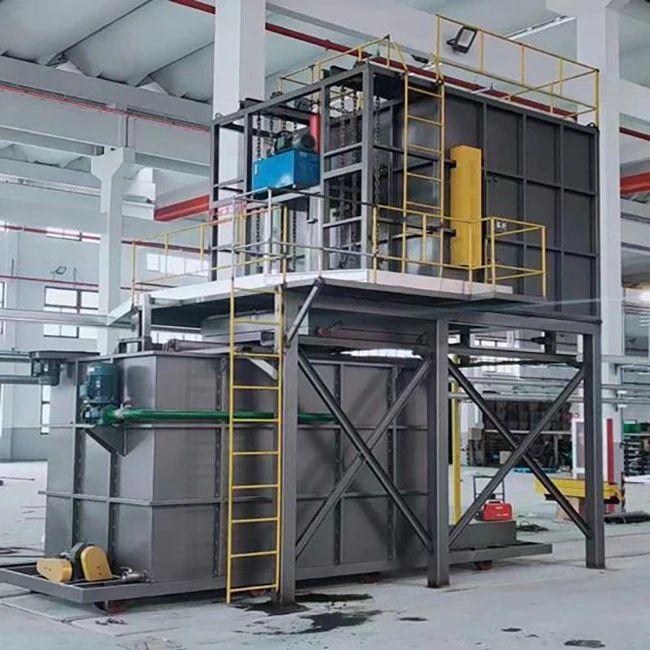

- Technical Training: Provide technical training to your operators on the operation, maintenance, and troubleshooting of the Pit Quenching Furnace. This should include training on the furnace's control system, heating and cooling cycles, quenching media, and safety procedures.
- Process Optimization Training: Train your operators on how to optimize the quenching process to achieve the desired mechanical properties of the parts. This should include training on the selection of the appropriate heating and cooling rates, soaking time, and quenching medium, as well as the use of advanced control systems.
- Safety Training: Ensure that your operators are trained on the safety procedures and regulations related to the operation of the Pit Quenching Furnace. This should include training on the proper use of personal protective equipment (PPE), fire safety, and emergency response procedures.
Conclusion
Improving the performance of a Pit Quenching Furnace requires a comprehensive approach that includes regular maintenance and inspection, optimization of heating and cooling cycles, use of high-quality quenching media, implementation of advanced control systems, and training and education of operators. By following these tips, you can enhance the efficiency, productivity, and quality of your quenching process, and achieve better results for your business.
If you're interested in learning more about our Pit Quenching Furnaces or other heat treatment equipment, such as Mesh Belt Quenching Furnaces and Vertical Aluminum Alloy Quenching Furnaces, please don't hesitate to contact us. We'd be happy to discuss your specific requirements and provide you with a customized solution.
References
- ASM Handbook, Volume 4: Heat Treating, ASM International, 1991.
- Heat Treater's Guide: Practices and Procedures for Irons and Steels, ASM International, 2002.
- Fundamentals of Heat Treating of Steels, ASM International, 2008.


