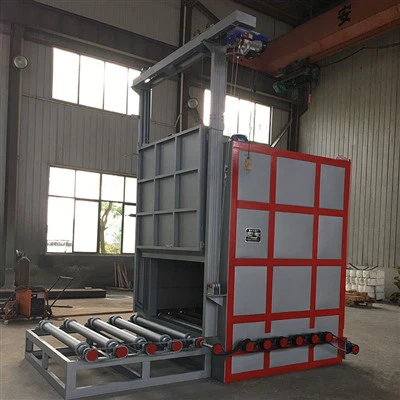
Maintaining a nitriding furnace is crucial for ensuring its optimal performance, longevity, and the quality of the nitriding process. As a nitriding furnace supplier, I understand the significance of proper maintenance in maximizing the efficiency and reliability of these essential industrial tools. In this blog post, I will share some valuable insights and practical tips on how to maintain a nitriding furnace effectively.
Regular Inspection and Cleaning
Regular inspection and cleaning are fundamental aspects of nitriding furnace maintenance. Begin by conducting a visual inspection of the furnace's exterior and interior components. Check for any signs of damage, such as cracks, leaks, or loose connections. Pay close attention to the heating elements, thermocouples, and gas lines, as these components are critical for the proper functioning of the furnace.


Clean the furnace regularly to remove any dirt, debris, or scale that may accumulate over time. Use a soft brush or a vacuum cleaner to clean the interior of the furnace, taking care not to damage any sensitive components. Additionally, clean the furnace's exterior to prevent the buildup of dust and grime, which can affect the furnace's appearance and performance.
Monitoring and Calibration
Monitoring and calibration are essential for ensuring the accuracy and reliability of the nitriding process. Install a reliable monitoring system to track the furnace's temperature, pressure, and gas flow rates. Regularly check the monitoring system to ensure that it is functioning correctly and providing accurate readings.
Calibrate the furnace's temperature and pressure sensors regularly to ensure that they are providing accurate measurements. Use a calibrated thermometer and pressure gauge to verify the accuracy of the sensors. If the sensors are found to be inaccurate, replace them immediately to prevent any issues with the nitriding process.
Gas Supply and Management
The gas supply is a critical component of the nitriding process, and proper management is essential for ensuring its efficiency and safety. Use high-quality gases that are specifically designed for nitriding applications. Regularly check the gas supply lines for any signs of leaks or damage, and replace any damaged components immediately.
Monitor the gas flow rates and pressures to ensure that they are within the recommended range for the nitriding process. Adjust the gas flow rates and pressures as needed to maintain the desired nitriding conditions. Additionally, ensure that the gas supply system is properly ventilated to prevent the accumulation of harmful gases.
Heating Element Maintenance
The heating elements are responsible for providing the heat required for the nitriding process, and proper maintenance is essential for ensuring their longevity and performance. Regularly inspect the heating elements for any signs of damage, such as cracks, breaks, or overheating. If any damage is detected, replace the heating elements immediately to prevent any issues with the nitriding process.
Clean the heating elements regularly to remove any dirt, debris, or scale that may accumulate over time. Use a soft brush or a vacuum cleaner to clean the heating elements, taking care not to damage them. Additionally, ensure that the heating elements are properly installed and connected to prevent any issues with the electrical system.
Furnace Lining Maintenance
The furnace lining is responsible for insulating the furnace and protecting the heating elements and other components from the high temperatures generated during the nitriding process. Regularly inspect the furnace lining for any signs of damage, such as cracks, spalling, or erosion. If any damage is detected, repair or replace the furnace lining immediately to prevent any issues with the nitriding process.
Clean the furnace lining regularly to remove any dirt, debris, or scale that may accumulate over time. Use a soft brush or a vacuum cleaner to clean the furnace lining, taking care not to damage it. Additionally, ensure that the furnace lining is properly installed and sealed to prevent any heat loss or gas leakage.
Operator Training and Safety
Operator training and safety are essential for ensuring the proper operation and maintenance of the nitriding furnace. Provide comprehensive training to all operators on the safe and proper use of the furnace, including the correct procedures for loading and unloading the workpieces, monitoring the furnace's temperature and pressure, and managing the gas supply.
Ensure that all operators are equipped with the necessary personal protective equipment (PPE), such as gloves, goggles, and respirators, to protect them from the high temperatures, gases, and other hazards associated with the nitriding process. Additionally, establish a safety protocol for the operation and maintenance of the furnace, and ensure that all operators are familiar with and follow the protocol at all times.
Types of Nitriding Furnaces
There are several types of nitriding furnaces available on the market, each with its own unique features and advantages. Some of the most common types of nitriding furnaces include Pit Type Nitriding Furnace, Vacuum Nitriding Furnace, and Ion Nitriding Furnace.
- Pit Type Nitriding Furnace: Pit type nitriding furnaces are designed for large-scale nitriding applications. They are typically used for nitriding long and heavy workpieces, such as shafts, gears, and cylinders. Pit type nitriding furnaces are known for their high capacity, uniform heating, and excellent temperature control.
- Vacuum Nitriding Furnace: Vacuum nitriding furnaces are designed for high-quality nitriding applications. They are typically used for nitriding precision components, such as aerospace parts, automotive parts, and medical devices. Vacuum nitriding furnaces are known for their clean and precise nitriding process, which results in a high-quality nitride layer with excellent wear resistance and corrosion resistance.
- Ion Nitriding Furnace: Ion nitriding furnaces are designed for advanced nitriding applications. They are typically used for nitriding complex-shaped components, such as turbine blades, cutting tools, and molds. Ion nitriding furnaces are known for their fast and efficient nitriding process, which results in a high-quality nitride layer with excellent hardness and toughness.
Conclusion
Maintaining a nitriding furnace is essential for ensuring its optimal performance, longevity, and the quality of the nitriding process. By following the tips and guidelines outlined in this blog post, you can effectively maintain your nitriding furnace and ensure that it continues to operate at its best.
If you are in the market for a nitriding furnace or need assistance with the maintenance or repair of your existing furnace, please do not hesitate to contact us. Our team of experts is available to provide you with the information and support you need to make an informed decision and ensure the success of your nitriding operations.
References
- ASM Handbook, Volume 4: Heat Treating. ASM International, 1991.
- Heat Treating: Principles and Processes. Robert C. Reed-Hill and Robert E. Smallman. Butterworth-Heinemann, 1992.
- Nitriding: Fundamentals and Industrial Applications. R. A. Rapp and G. R. Belton. The Institute of Materials, 1992.