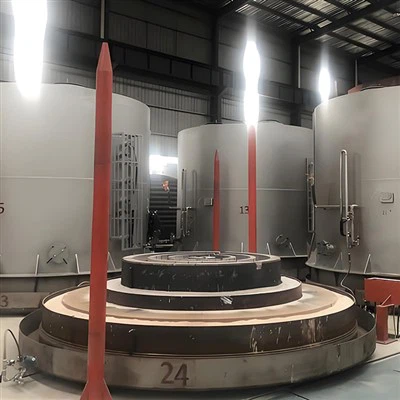
Aging, in the context of materials science, refers to the process where a material's properties change over time, often influenced by factors such as temperature, stress, and environmental conditions. As an aging furnace supplier, I've witnessed firsthand how aging impacts material strength, and I'm excited to share these insights with you.
The Basics of Material Aging
Before delving into the effects of aging on material strength, it's essential to understand the concept of aging itself. Aging can occur naturally over time, or it can be accelerated through heat treatment processes using specialized equipment like aging furnaces. There are two main types of aging: natural aging and artificial aging.
Natural aging happens at room temperature and is a slow process. It occurs when a supersaturated solid solution formed during rapid cooling (such as quenching) gradually decomposes, leading to the precipitation of fine particles within the material's matrix. These precipitates can impede the movement of dislocations, which are defects in the crystal structure of the material, thereby increasing its strength.
Artificial aging, on the other hand, involves heating the material to a specific temperature for a controlled period using an aging furnace. This process speeds up the precipitation process and allows for more precise control of the material's properties. The temperature and time parameters are carefully selected based on the material's composition and the desired properties.
Effects of Aging on Material Strength
Strengthening through Precipitation
One of the most significant effects of aging on material strength is the strengthening that occurs through precipitation hardening. When a material is aged, fine precipitates form within the matrix, which act as barriers to dislocation movement. Dislocations are responsible for plastic deformation in materials, and by impeding their movement, the material becomes stronger and more resistant to deformation.
For example, in aluminum alloys, artificial aging can significantly increase the strength of the material. Aluminum alloys are widely used in the aerospace and automotive industries due to their high strength-to-weight ratio. By using an Trolley Type Aluminum Alloy Aging Furnace, manufacturers can precisely control the aging process to achieve the desired strength and hardness properties.
Overaging and Softening
While aging generally leads to an increase in material strength, overaging can have the opposite effect. Overaging occurs when the material is aged for too long or at too high a temperature. During overaging, the precipitates grow larger and coarsen, which reduces their effectiveness in impeding dislocation movement. As a result, the material's strength and hardness decrease, and it becomes more ductile.
To avoid overaging, it's crucial to carefully control the aging parameters. This is where high-quality aging furnaces come in. Our Box Type Aging Furnace is equipped with advanced temperature control systems that allow for precise regulation of the aging process, ensuring optimal material properties.
Creep and Stress Relaxation
Aging can also affect a material's resistance to creep and stress relaxation. Creep is the slow, time-dependent deformation of a material under a constant load, while stress relaxation is the decrease in stress over time in a material held at a constant strain.
As a material ages, its microstructure changes, which can either increase or decrease its resistance to creep and stress relaxation. In some cases, aging can lead to the formation of a more stable microstructure, which improves the material's creep resistance. However, in other cases, overaging can cause the material to become more susceptible to creep and stress relaxation.
For materials that are subjected to high temperatures and long-term loads, such as those used in power generation and aerospace applications, it's essential to consider the effects of aging on creep and stress relaxation. Our Pit Type Aluminum Alloy Aging Furnace can be used to optimize the aging process for these materials, ensuring they have the necessary strength and creep resistance.


Factors Affecting the Aging Process
Material Composition
The composition of the material plays a crucial role in the aging process. Different elements have different solubilities in the matrix and can form different types of precipitates. For example, in aluminum alloys, the addition of copper, magnesium, and silicon can significantly affect the aging behavior and the resulting material properties.
Alloys with higher concentrations of alloying elements generally have a greater potential for precipitation hardening. However, the exact composition and the interactions between the elements need to be carefully considered to achieve the desired properties.
Temperature and Time
The temperature and time of the aging process are critical factors that determine the material's properties. Higher temperatures generally lead to faster precipitation and shorter aging times. However, too high a temperature can cause overaging and a decrease in strength.
Similarly, longer aging times can lead to more extensive precipitation and higher strength, but overaging can also occur if the time is too long. Therefore, it's essential to optimize the temperature and time parameters based on the material's composition and the desired properties.
Environmental Conditions
The environmental conditions during aging can also affect the material's properties. For example, exposure to moisture or corrosive substances can cause oxidation or corrosion, which can degrade the material's strength and durability.
In some cases, protective coatings or atmospheres can be used to prevent environmental damage during the aging process. Our aging furnaces can be equipped with features such as inert gas atmospheres to protect the material from oxidation and other environmental factors.
Importance of High-Quality Aging Furnaces
As an aging furnace supplier, I understand the importance of using high-quality equipment to achieve optimal material properties. A well-designed aging furnace can provide precise temperature control, uniform heating, and a stable environment, which are essential for consistent and reliable aging results.
Our aging furnaces are designed with the latest technology and high-quality components to ensure accurate temperature control and long-term reliability. They are available in different types and sizes to meet the diverse needs of our customers, including the Trolley Type Aluminum Alloy Aging Furnace, Box Type Aging Furnace, and Pit Type Aluminum Alloy Aging Furnace.
Conclusion
In conclusion, aging has a significant impact on material strength, primarily through precipitation hardening. However, overaging can lead to a decrease in strength, and the effects of aging on creep and stress relaxation need to be carefully considered. The composition of the material, the temperature and time of the aging process, and the environmental conditions all play important roles in determining the material's properties.
As an aging furnace supplier, I'm committed to providing high-quality equipment and technical support to help our customers achieve the best possible results. If you're interested in learning more about our aging furnaces or have any questions about the aging process, please don't hesitate to contact us. We look forward to discussing your specific needs and providing you with a customized solution.
References
- ASM Handbook, Volume 4: Heat Treating, ASM International.
- Callister, W. D., & Rethwisch, D. G. (2017). Materials Science and Engineering: An Introduction. Wiley.
- Porter, D. A., Easterling, K. E., & Sherif, M. Y. (2009). Phase Transformations in Metals and Alloys. CRC Press.