

Hey there! As a supplier of Pit Quenching Furnaces, I often get asked about the differences between vertical and horizontal pit quenching furnaces. So, I thought I'd break it down for you in this blog post.
What's a Pit Quenching Furnace Anyway?
First off, let's quickly explain what a Pit Quenching Furnace is. It's a specialized piece of equipment used in the heat treatment process. The main goal of a pit quenching furnace is to heat up metal workpieces to a specific temperature and then rapidly cool them down (quench them). This process changes the physical properties of the metal, making it stronger, more durable, and better suited for various applications.
Vertical Pit Quenching Furnaces
Let's start with vertical pit quenching furnaces. These bad boys are designed with the heating chamber arranged vertically. Think of them like a big, tall cylinder that goes deep into the ground.
One of the biggest advantages of a vertical pit quenching furnace is its space efficiency. Since it goes down into the ground, it doesn't take up much floor space in your workshop. This is great if you're working in a facility with limited space. You can have a powerful heat treatment system without sacrificing too much room for other equipment or operations.
Another plus is the way it handles long and slender workpieces. If you're dealing with things like shafts, rods, or tubes, a vertical pit quenching furnace is ideal. The vertical orientation allows these long pieces to be suspended vertically inside the furnace, which helps prevent any bending or warping during the heating and quenching process. This ensures that your workpieces come out with the right shape and dimensions, meeting the high - quality standards you need.
The vertical design also offers better control over the quenching process. The quenching medium (usually oil or water) can flow more evenly around the workpiece when it's suspended vertically. This uniform flow helps to achieve a more consistent cooling rate across the entire surface of the workpiece, resulting in more predictable and reliable heat treatment results.
For example, our Vertical Aluminum Alloy Quenching Furnace is a type of vertical pit quenching furnace specifically designed for aluminum alloys. It's built with advanced temperature control systems and high - quality insulation materials to ensure precise and efficient heat treatment of aluminum workpieces.
Horizontal Pit Quenching Furnaces
Now, let's talk about horizontal pit quenching furnaces. These furnaces have a horizontally arranged heating chamber. Picture a long, horizontal tube lying on the ground.
One of the key benefits of a horizontal pit quenching furnace is its ease of loading and unloading. You can simply roll the workpieces in and out of the furnace on a trolley. This makes it much quicker and more convenient to handle large and heavy workpieces compared to a vertical furnace, where you might need to use a crane to lift the workpieces in and out.
Horizontal pit quenching furnaces are also great for handling irregularly shaped workpieces. Since the workpieces can be placed flat on the trolley, there's more flexibility in terms of the size and shape of the items you can heat treat. You don't have to worry about the length or slenderness of the workpiece as much as you would with a vertical furnace.
In addition, horizontal furnaces often have better access for maintenance. The horizontal layout allows technicians to easily reach different parts of the furnace for inspection, cleaning, and repairs. This can save you time and money in the long run, as you can keep your furnace in top - notch condition with less hassle.
If you're interested in a similar type of furnace, you might want to check out our Trolley Quenching Furnace. It's a type of horizontal furnace that offers efficient and reliable heat treatment for a wide range of workpieces.
Key Differences in Operation
When it comes to operation, there are some notable differences between vertical and horizontal pit quenching furnaces.

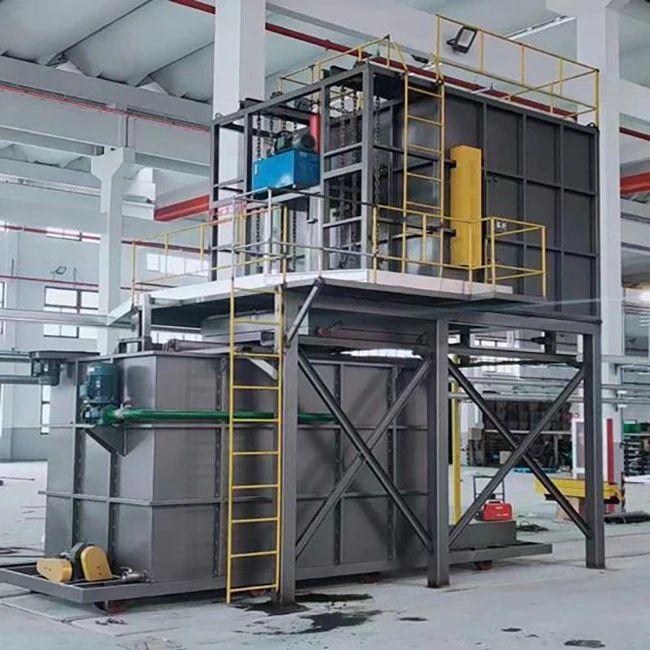
In a vertical pit quenching furnace, the loading and unloading process can be a bit more involved. You usually need a hoist or crane to lift the workpieces in and out of the furnace. This requires some skill and careful handling to ensure the safety of the operators and the integrity of the workpieces. However, once the workpiece is in place, the vertical design allows for a smooth and efficient heating and quenching process.
On the other hand, a horizontal pit quenching furnace is generally easier to load and unload. You can use a trolley to roll the workpieces in and out, which is a simpler and faster process. But the horizontal layout might require more floor space for the trolley movement and the loading and unloading area.
The heating and cooling rates can also vary between the two types of furnaces. As mentioned earlier, the vertical furnace can provide a more uniform cooling rate for long and slender workpieces. In a horizontal furnace, the cooling rate might be affected by the position of the workpiece on the trolley and the flow pattern of the quenching medium. However, with proper design and control systems, both types of furnaces can achieve good heat treatment results.
Which One Should You Choose?
So, how do you decide whether a vertical or horizontal pit quenching furnace is right for you? Well, it all depends on your specific needs and circumstances.
If you have limited floor space and deal with a lot of long and slender workpieces, a vertical pit quenching furnace is probably your best bet. It will save you space and ensure high - quality heat treatment for your specific workpieces.
On the other hand, if you need to handle large, heavy, or irregularly shaped workpieces and want an easier loading and unloading process, a horizontal pit quenching furnace is the way to go. It offers more flexibility in terms of workpiece size and shape and is generally more convenient for day - to - day operations.
Let's Talk Business
If you're in the market for a pit quenching furnace, whether it's a vertical or horizontal one, we're here to help. We've got a wide range of high - quality pit quenching furnaces that are designed to meet the diverse needs of different industries. Our team of experts can work with you to understand your specific requirements and recommend the best furnace for your application.
We're committed to providing top - notch products and excellent customer service. So, if you're interested in learning more about our pit quenching furnaces or want to discuss a potential purchase, don't hesitate to reach out. We're looking forward to working with you to take your heat treatment operations to the next level.
References
- ASM Handbook Volume 4: Heat Treating. ASM International.
- Heat Treating Principles and Processes. American Foundry Society.


