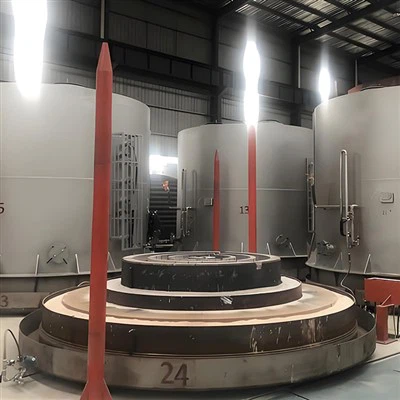
Hey there! As a supplier of tempering furnaces, I've seen firsthand how crucial it is to ensure the uniformity of the tempering effect. A consistent tempering process can significantly improve the quality and performance of your products, whether you're working with metals, glass, or other materials. In this blog post, I'll share some tips and tricks on how to achieve that uniformity in your tempering furnace.
Understanding the Basics of Tempering
Before we dive into the details of ensuring uniformity, let's quickly go over what tempering is. Tempering is a heat treatment process that involves heating a material to a specific temperature and then cooling it at a controlled rate. This process helps to relieve internal stresses, improve toughness, and enhance the material's overall mechanical properties.
In a tempering furnace, the key is to make sure that every part of the material being treated reaches the desired temperature and is cooled at the same rate. Any variations in temperature or cooling speed can lead to uneven tempering, which can result in inconsistent product quality.


Choosing the Right Furnace
The first step in ensuring uniform tempering is to choose the right type of tempering furnace for your needs. At our company, we offer a variety of tempering furnaces, including the Mesh Belt Tempering Furnace, Box Type Tempering Furnace, and Nitrogen Protection Pit Tempering Furnace.
- Mesh Belt Tempering Furnace: This type of furnace is ideal for continuous tempering of small to medium-sized parts. The mesh belt allows for easy loading and unloading of parts, and the conveyor system ensures that the parts move through the furnace at a consistent speed.
- Box Type Tempering Furnace: Box furnaces are great for batch tempering of larger parts or a large number of small parts. They offer excellent temperature uniformity and can be customized to meet specific temperature and capacity requirements.
- Nitrogen Protection Pit Tempering Furnace: If you're working with materials that are prone to oxidation, a nitrogen protection pit furnace is a good choice. The nitrogen atmosphere helps to prevent oxidation and ensures a clean, uniform tempering process.
When selecting a furnace, consider factors such as the size and shape of your parts, the required temperature range, and the production volume. It's also important to choose a furnace that is equipped with advanced temperature control and monitoring systems to ensure accurate and consistent tempering.
Proper Loading and Arrangement of Parts
Once you've chosen the right furnace, the next step is to load and arrange the parts properly. How you load the parts can have a significant impact on the uniformity of the tempering effect.
- Avoid Overloading: Overloading the furnace can restrict the flow of hot air and prevent uniform heating. Make sure to follow the manufacturer's guidelines for the maximum load capacity of your furnace.
- Uniform Spacing: Arrange the parts in the furnace with uniform spacing between them. This allows for proper air circulation and ensures that each part receives an equal amount of heat.
- Use Fixtures or Racks: For complex-shaped parts or parts that need to be held in a specific position, use fixtures or racks. This helps to keep the parts in place and ensures consistent heating.
Temperature Control and Monitoring
Accurate temperature control is essential for achieving uniform tempering. Modern tempering furnaces are equipped with advanced temperature control systems that allow you to set and maintain the desired temperature within a narrow range.
- Calibrate the Temperature Sensors: Regularly calibrate the temperature sensors in your furnace to ensure accurate temperature readings. Inaccurate sensors can lead to overheating or underheating of the parts, resulting in uneven tempering.
- Use Multiple Temperature Sensors: Install multiple temperature sensors throughout the furnace to monitor the temperature at different locations. This helps to identify any temperature variations and allows you to make adjustments as needed.
- Implement a Temperature Profile: Develop a temperature profile for your specific tempering process. This profile should include the heating rate, holding time, and cooling rate. Follow the profile closely to ensure consistent tempering.
Air Circulation and Ventilation
Proper air circulation and ventilation are crucial for uniform heat distribution in the furnace. Without adequate air movement, hot spots can develop, leading to uneven tempering.
- Check the Fan and Blower: Make sure the fan and blower in your furnace are working properly. These components are responsible for circulating the hot air and ensuring uniform heating.
- Clean the Air Ducts: Regularly clean the air ducts in the furnace to remove any debris or blockages. This helps to maintain proper air flow and prevents the formation of hot spots.
- Adjust the Airflow Direction: Some furnaces allow you to adjust the direction of the airflow. Experiment with different airflow settings to find the optimal configuration for uniform heating.
Cooling Process
The cooling process is just as important as the heating process in achieving uniform tempering. The rate at which the parts are cooled can affect their mechanical properties and the overall tempering effect.
- Controlled Cooling: Use a controlled cooling method, such as air cooling or quenching in a specific medium. This helps to ensure that the parts cool at a consistent rate and prevents the formation of internal stresses.
- Cooling Uniformity: Make sure that the cooling is uniform across all parts. If necessary, use fixtures or racks to hold the parts in a specific position during cooling.
- Monitor the Cooling Rate: Monitor the cooling rate to ensure that it is within the desired range. Adjust the cooling parameters as needed to achieve consistent tempering.
Regular Maintenance and Inspection
Regular maintenance and inspection of your tempering furnace are essential for ensuring its long-term performance and the uniformity of the tempering effect.
- Clean the Furnace Regularly: Clean the interior of the furnace regularly to remove any dirt, scale, or debris. This helps to maintain proper heat transfer and prevents the formation of hot spots.
- Inspect the Heating Elements: Check the heating elements for signs of wear or damage. Replace any damaged elements to ensure consistent heating.
- Lubricate Moving Parts: Lubricate the moving parts in the furnace, such as the conveyor belts and fans, to reduce friction and ensure smooth operation.
Training and Operator Skill
Finally, the skill and knowledge of the operators play a crucial role in ensuring uniform tempering. Provide comprehensive training to your operators on the proper use and maintenance of the tempering furnace.
- Understand the Process: Make sure the operators understand the tempering process, including the temperature requirements, loading and unloading procedures, and safety precautions.
- Follow Standard Operating Procedures: Develop and enforce standard operating procedures (SOPs) for the tempering process. This helps to ensure consistency and reduces the risk of human error.
- Encourage Continuous Learning: Encourage the operators to stay updated on the latest tempering techniques and technologies. Provide opportunities for them to attend training courses or workshops.
Conclusion
Ensuring the uniformity of the tempering effect in a tempering furnace requires a combination of the right equipment, proper loading and arrangement of parts, accurate temperature control, adequate air circulation, and a well-maintained furnace. By following the tips and tricks outlined in this blog post, you can achieve consistent, high-quality tempering results.
If you're in the market for a tempering furnace or need help improving the uniformity of your tempering process, don't hesitate to contact us. Our team of experts is here to assist you in choosing the right furnace and providing the support you need to ensure successful tempering.
References
- ASM Handbook Volume 4: Heat Treating. ASM International.
- Heat Treating Principles and Processes. Robert C. Reed-Hill, Robert Abbaschian.