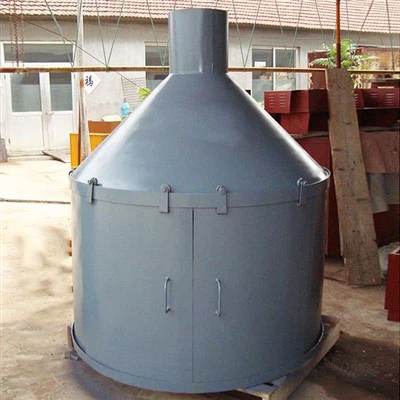
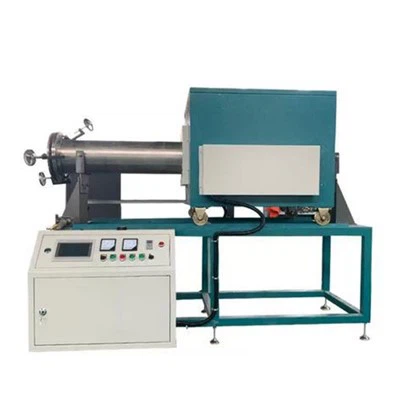
Quenching is a fundamental heat treatment process used to enhance the mechanical properties of metals, particularly steels and aluminum alloys. A Pit Quenching Furnace is a specialized piece of equipment designed for this purpose, offering unique advantages such as uniform heating and the ability to handle large or irregularly shaped workpieces. However, the quenching process is not complete once the workpiece is removed from the furnace. Post-treatment after quenching plays a crucial role in ensuring the final product meets the desired quality and performance standards. As a Pit Quenching Furnace supplier, I will delve into the significance of post-treatment and its various aspects.
Residual Stress Relief
One of the primary reasons for post-treatment after quenching is to relieve residual stresses. During the quenching process, rapid cooling causes uneven contraction within the workpiece, leading to the development of internal stresses. These residual stresses can have detrimental effects on the material's properties, including reduced fatigue life, increased susceptibility to cracking, and dimensional instability.
To alleviate these issues, stress relieving is often performed. This involves heating the quenched workpiece to a specific temperature below its critical point and holding it for a predetermined time. The heat allows the atoms within the material to rearrange, reducing the internal stresses. The temperature and time parameters for stress relieving depend on the material type, size, and shape of the workpiece. For example, for steel components, stress relieving temperatures typically range from 550°C to 650°C, while for aluminum alloys, lower temperatures around 150°C to 200°C may be sufficient.
Tempering for Improved Ductility and Toughness
Quenching often results in a hard and brittle microstructure. While high hardness is desirable in some applications, excessive brittleness can lead to catastrophic failure. Tempering is a post-treatment process that aims to balance hardness and toughness by reducing the brittleness of the quenched material.


During tempering, the quenched workpiece is heated to a temperature between 150°C and 650°C, depending on the material and the desired properties. At these temperatures, the martensite (the hard and brittle phase formed during quenching) begins to transform into a more ductile and tough structure. The tempering process not only improves the material's ductility but also enhances its impact resistance and reduces the risk of cracking.
For instance, in the case of high-carbon steels, tempering at relatively low temperatures (around 150°C - 200°C) can increase the toughness without significantly reducing the hardness. On the other hand, for medium-carbon steels, higher tempering temperatures (around 500°C - 650°C) may be used to achieve a better balance between hardness and toughness.
Surface Treatment for Corrosion Resistance
In addition to improving the mechanical properties, post-treatment after quenching can also enhance the corrosion resistance of the workpiece. Quenching can sometimes leave the surface of the material vulnerable to corrosion due to the presence of residual stresses and changes in the surface microstructure.
One common surface treatment method is passivation. Passivation involves treating the quenched workpiece with a chemical solution to form a protective oxide layer on the surface. This oxide layer acts as a barrier, preventing the underlying metal from coming into contact with corrosive agents. For aluminum alloys, anodizing is another popular surface treatment technique. Anodizing creates a thick, porous oxide layer on the surface, which can be further sealed to improve its corrosion resistance.
Microstructure Refinement
Post-treatment processes can also be used to refine the microstructure of the quenched material. A fine and uniform microstructure is often associated with improved mechanical properties, such as higher strength and better ductility.
One way to achieve microstructure refinement is through a process called normalizing. Normalizing involves heating the quenched workpiece to a temperature above its critical point and then allowing it to cool in still air. This process helps to eliminate any coarse or non-uniform microstructures formed during quenching and promotes the formation of a more refined and homogeneous structure.
Importance in Different Industries
The role of post-treatment after quenching is significant across various industries. In the automotive industry, for example, quenched and post-treated components such as gears, shafts, and suspension parts need to have high strength, toughness, and wear resistance to ensure reliable performance. Post-treatment processes help to achieve these properties, improving the overall quality and durability of the automotive components.
In the aerospace industry, where weight reduction and high performance are critical, post-treatment after quenching is essential for optimizing the properties of aluminum alloys. The use of advanced post-treatment techniques can enhance the strength-to-weight ratio of aerospace components, leading to improved fuel efficiency and performance.
Our Pit Quenching Furnaces and Post-Treatment Solutions
As a Pit Quenching Furnace supplier, we understand the importance of post-treatment in the heat treatment process. Our Pit Quenching Furnaces are designed to provide precise and uniform heating, ensuring consistent quenching results. In addition, we offer a range of post-treatment solutions to meet the specific needs of our customers.
Our Fully Automatic Aluminum Alloy Quenching Furnace is equipped with advanced control systems that allow for accurate temperature and time control during the quenching process. This ensures that the workpieces are quenched to the desired hardness and microstructure. After quenching, our customers can utilize our post-treatment facilities to perform stress relieving, tempering, and surface treatment processes.
We also offer the Aluminum Alloy Solution Treatment Furnace, which is specifically designed for the solution treatment of aluminum alloys. This process is often followed by quenching and post-treatment to achieve the desired mechanical properties. Our Vertical Aluminum Alloy Quenching Furnace](/heat-treatment-furnace/quenching-furnace/vertical-aluminum-alloy-quenching-furnace.html) is another option for customers who require a compact and efficient quenching solution.
Conclusion
In conclusion, post-treatment after quenching in a Pit Quenching Furnace is a crucial step in the heat treatment process. It helps to relieve residual stresses, improve ductility and toughness, enhance corrosion resistance, and refine the microstructure of the quenched material. By understanding the role of post-treatment and utilizing appropriate techniques, manufacturers can ensure that their products meet the highest quality and performance standards.
If you are interested in learning more about our Pit Quenching Furnaces and post-treatment solutions, or if you have any specific requirements for your heat treatment processes, please feel free to contact us for a detailed discussion. We are committed to providing high-quality products and services to meet your needs.
References
- ASM Handbook Volume 4: Heat Treating. ASM International.
- Metals Handbook Desk Edition, 3rd Edition. ASM International.
- Heat Treatment Principles and Techniques. John C. Ion.