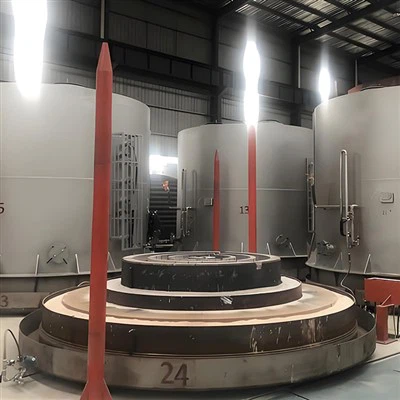
Hey there! As a supplier of rapid quenching furnaces, I often get asked about how to choose the right quenching tank for these furnaces. It's a crucial decision because the quenching tank plays a vital role in the overall performance and efficiency of the rapid quenching process. In this blog, I'll share some key factors to consider when making this choice.
1. Size and Capacity
The first thing you need to think about is the size and capacity of the quenching tank. It should be large enough to accommodate the workpieces you'll be quenching. If the tank is too small, the workpieces might not be fully submerged, which can lead to uneven quenching and affect the quality of the final product. On the other hand, an overly large tank can waste quenching media and energy.
You need to measure the maximum dimensions of the workpieces you'll be processing and then choose a tank that can comfortably hold them with some extra space for proper circulation of the quenching media. For example, if you're dealing with long and large components, a rectangular tank might be a better option than a circular one.
2. Quenching Media
The type of quenching media you use is another important factor. There are several options available, such as water, oil, and polymer solutions. Each has its own advantages and disadvantages.
- Water: It's a common and cost - effective quenching media. Water has a high cooling rate, which is great for achieving high hardness in the workpieces. However, it can also cause cracking in some materials due to the rapid cooling.
- Oil: Oil has a slower cooling rate compared to water. It's suitable for materials that are prone to cracking. But oil can be more expensive and requires proper maintenance to prevent oxidation and contamination.
- Polymer solutions: These offer a balance between the cooling rates of water and oil. They can be adjusted to achieve different cooling rates depending on the requirements of the workpiece.
When choosing a quenching tank, make sure it's compatible with the quenching media you plan to use. Some tanks are specifically designed for certain types of media. For instance, a tank used with oil might need better sealing to prevent leaks, while a water - based tank might need corrosion - resistant materials.
3. Cooling System
A good cooling system is essential for a quenching tank. The cooling system helps maintain the temperature of the quenching media within the desired range. If the temperature of the media gets too high, it can affect the cooling rate and the quality of the quenching process.
There are different types of cooling systems, such as air - cooled and water - cooled. Air - cooled systems are relatively simple and cost - effective, but they might not be as efficient as water - cooled systems, especially for large - scale operations. Water - cooled systems can provide more precise temperature control, but they require a reliable water supply and proper plumbing.
4. Material and Construction
The material and construction of the quenching tank are also important. The tank should be made of a material that is resistant to corrosion, especially if you're using water or certain chemical - based quenching media. Stainless steel is a popular choice because it's durable and corrosion - resistant.
The construction of the tank should also be sturdy. It should be able to withstand the weight of the workpieces and the pressure of the quenching media. Look for tanks with reinforced walls and a well - designed base to ensure stability.
5. Circulation and Agitation
Proper circulation and agitation of the quenching media are crucial for uniform quenching. Without good circulation, the temperature of the media can vary in different parts of the tank, leading to uneven cooling of the workpieces.
Most quenching tanks come with built - in circulation systems, such as pumps and agitators. These help to keep the media moving and ensure that the temperature is evenly distributed. When choosing a tank, make sure the circulation system is powerful enough to handle the volume of the media and the size of the tank.
6. Safety Features
Safety is always a top priority. A good quenching tank should have several safety features. For example, it should have a proper lid to prevent splashing of the quenching media. There should also be emergency shut - off valves in case of any problems.
Some tanks are equipped with temperature sensors and alarms to alert operators if the temperature of the media goes out of the safe range. Additionally, the tank should be designed in a way that minimizes the risk of spills and leaks.


Our Rapid Quenching Furnaces
As a supplier, we offer a variety of rapid quenching furnaces, such as the Natural Gas Rapid Quenching Furnace and the Forklift Type Rapid Quenching Furnace. These furnaces are designed to work efficiently with different types of quenching tanks.
When you choose a quenching tank for our rapid quenching furnaces, you can be assured of a seamless integration. Our technical team can also provide you with expert advice on which tank is the best fit for your specific needs.
Conclusion
Choosing the right quenching tank for a rapid quenching furnace is a complex but important decision. By considering factors such as size, quenching media, cooling system, material, circulation, and safety features, you can make an informed choice that will improve the quality of your quenching process and ultimately, the quality of your products.
If you're interested in purchasing a rapid quenching furnace or need more information about choosing the right quenching tank, don't hesitate to get in touch with us. We're here to help you make the best decision for your business.
References
- ASM Handbook Volume 4: Heat Treating. ASM International.
- Heat Treating Principles and Processes. John Wiley & Sons.