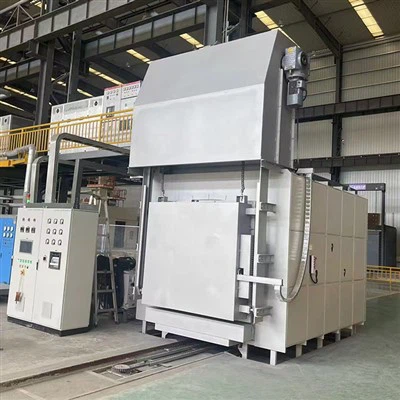
Do energy furnaces require a lot of space for installation? That's a question I get asked quite often as an energy furnace supplier. And the answer isn't as straightforward as you might think.
Let's start by looking at the different types of energy furnaces out there. We've got natural gas furnaces, resistance furnaces, and a whole bunch of other options. Each type has its own unique characteristics when it comes to installation space requirements.
Take the Natural Gas Trolley Furnace for example. This bad boy is designed to be pretty flexible in terms of installation. It's got a trolley system that allows it to be moved around easily, which means you don't necessarily need a huge dedicated space for it. You can set it up in a corner of your workshop or even move it to different locations as needed.
On the other hand, the Car - type Resistance Furnace is a bit more of a space - hog. It's a larger unit that's built on a car - like structure. The car - type design gives it a certain stability and capacity, but it also means you need to have enough room to accommodate its size. You can't just tuck it away in a small nook. You'll need a proper area with enough clearance around it for maintenance and operation.
Then there's the Natural Gas Forging Heating Furnace. This furnace is used for forging operations, which require high - temperature heating. Due to its high - power requirements and the need for proper ventilation, it usually needs a relatively large space. You need to make sure there's enough room for the furnace itself, as well as space for the workers to move around safely and for the exhaust systems to function properly.
Now, let's talk about some of the factors that influence the space requirements for energy furnace installation.
First off, the size of the furnace is a major factor. Larger furnaces obviously need more space. But it's not just about the physical dimensions of the furnace. You also need to consider the space needed for loading and unloading materials. For example, if you're using a furnace for metalworking, you'll need to have enough room to move large pieces of metal in and out of the furnace.
Ventilation is another crucial factor. Energy furnaces generate a lot of heat and often produce exhaust gases. Proper ventilation is essential to keep the working environment safe and to ensure the efficient operation of the furnace. This means you'll need to set aside space for ventilation ducts and fans. In some cases, you might even need to install a dedicated ventilation system, which can take up additional space.
Maintenance is also something to think about. You need to have enough space around the furnace to perform regular maintenance tasks. This includes things like checking the heating elements, cleaning the filters, and inspecting the electrical connections. If there's not enough space for maintenance, it can be difficult to keep the furnace in good working condition.
Safety is a top priority when it comes to energy furnace installation. You need to have enough space to prevent accidents. This means keeping a safe distance from flammable materials, ensuring there's enough room for emergency exits, and having clear pathways for workers to move around.
So, do energy furnaces require a lot of space for installation? Well, it depends. Some furnaces can be installed in relatively small spaces, while others need a large area. It's important to carefully consider the type of furnace you need, the materials you'll be working with, and the safety and maintenance requirements.
If you're in the market for an energy furnace and you're not sure about the space requirements, don't worry. Our team of experts is here to help. We can assess your needs, recommend the right furnace for your situation, and provide guidance on the installation process. Whether you're a small - scale workshop or a large industrial facility, we've got the solutions for you.
If you're interested in learning more about our energy furnaces or have any questions about installation, don't hesitate to reach out. We're always happy to have a chat and help you make the best decision for your business.
References:


- Industry standards for energy furnace installation
- Technical manuals of various energy furnace models