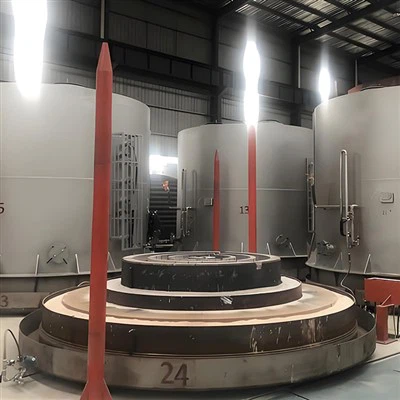
An aging furnace is a crucial piece of equipment in various industries, especially those dealing with metal alloys. It plays a significant role in heat treatment processes, which can enhance the mechanical properties of materials. However, the performance and condition of an aging furnace can have a profound impact on the dimensional stability of materials. As an aging furnace supplier, I have witnessed firsthand how these factors interact and the importance of understanding their relationship.
The Basics of Aging Furnaces
Aging furnaces are designed to subject materials to controlled heat treatment cycles. The process typically involves heating the material to a specific temperature and holding it there for a set period, followed by a controlled cooling phase. This heat treatment can cause changes in the microstructure of the material, leading to improvements in strength, hardness, and other mechanical properties.
There are different types of aging furnaces available, each with its own advantages and applications. For example, the Pit Type Aluminum Alloy Aging Furnace is suitable for treating large and heavy workpieces. It allows for vertical loading, which can be beneficial for maintaining the shape of the material during the aging process. On the other hand, the Trolley Type Aluminum Alloy Aging Furnace is more flexible in terms of loading and unloading, making it ideal for batch processing. The Aluminum Aging Furnace is specifically designed for aluminum alloys, which are widely used in the aerospace, automotive, and electronics industries.
How Aging Furnaces Affect Dimensional Stability
Dimensional stability refers to the ability of a material to maintain its shape and size under various conditions. In the context of aging furnaces, several factors can influence the dimensional stability of materials during the heat treatment process.
Temperature Uniformity
One of the most critical factors is temperature uniformity within the furnace. If the temperature varies significantly across the furnace chamber, different parts of the material will experience different thermal stresses. This can lead to uneven expansion and contraction, causing distortion and dimensional changes in the material. For example, if one end of a metal rod is exposed to a higher temperature than the other end, it will expand more, resulting in bending or warping.
Modern aging furnaces are equipped with advanced heating and control systems to ensure better temperature uniformity. These systems use multiple heating elements and sensors to monitor and adjust the temperature in real - time. However, over time, the heating elements may degrade, and the sensors may become less accurate, leading to a decrease in temperature uniformity.
Heating and Cooling Rates
The rate at which the material is heated and cooled also affects its dimensional stability. Rapid heating can cause thermal shock, which is the sudden expansion of the material due to a large temperature difference between the surface and the interior. This can result in cracking or internal stresses that may lead to dimensional changes over time. Similarly, rapid cooling can cause uneven contraction, leading to warping and distortion.
A well - designed aging furnace allows for controlled heating and cooling rates. The operator can set the appropriate ramp - up and ramp - down times based on the material's properties and the desired heat treatment outcome. However, if the furnace's control system malfunctions or if the operator makes incorrect settings, it can have a negative impact on the dimensional stability of the material.
Furnace Atmosphere
The atmosphere inside the aging furnace can also play a role in dimensional stability. In some cases, an inert atmosphere may be required to prevent oxidation or other chemical reactions that could affect the material's properties. For example, in the heat treatment of aluminum alloys, a nitrogen or argon atmosphere is often used to protect the surface of the material.
If the furnace atmosphere is not properly controlled, oxidation or other chemical reactions can occur, which may cause changes in the material's composition and structure. This can lead to changes in its physical properties, including dimensional stability. For instance, oxidation can cause the formation of a brittle oxide layer on the surface of the material, which may crack and flake off, resulting in dimensional changes.
The Impact of Aging Furnace Condition
As an aging furnace supplier, I understand that the condition of the furnace itself is crucial for ensuring the dimensional stability of materials. An aging furnace that is not properly maintained can have several issues that affect its performance.
Wear and Tear
Over time, the components of the aging furnace, such as the heating elements, insulation, and seals, will experience wear and tear. The heating elements may burn out or lose their efficiency, leading to uneven heating. The insulation may deteriorate, causing heat loss and temperature variations within the furnace. The seals may become damaged, allowing air leakage, which can affect the furnace atmosphere and temperature control.
Regular maintenance and inspection of the aging furnace are essential to identify and address these issues. Replacing worn - out components in a timely manner can help maintain the furnace's performance and ensure the dimensional stability of the materials being treated.
Calibration
The control systems of aging furnaces need to be calibrated regularly to ensure accurate temperature and process control. If the temperature sensors are not calibrated correctly, the furnace may not reach the desired temperature or may maintain an incorrect temperature during the heat treatment process. This can have a significant impact on the dimensional stability of the materials.


Calibration should be performed by trained technicians using accurate calibration equipment. It is also important to keep records of the calibration results to track the performance of the furnace over time.
Importance of Choosing the Right Aging Furnace
Selecting the right aging furnace is crucial for achieving the desired dimensional stability of materials. Different materials have different heat treatment requirements, and the furnace should be able to meet these requirements accurately.
When choosing an aging furnace, factors such as temperature range, temperature uniformity, heating and cooling rates, and furnace atmosphere control should be considered. For example, if you are treating high - precision components that require strict dimensional stability, a furnace with high - precision temperature control and excellent temperature uniformity is essential.
As an aging furnace supplier, I can provide customers with detailed information about the features and capabilities of different types of aging furnaces. I can also offer technical support and advice to help customers select the most suitable furnace for their specific applications.
Conclusion
In conclusion, an aging furnace has a significant impact on the dimensional stability of materials. Temperature uniformity, heating and cooling rates, furnace atmosphere, and the condition of the furnace itself are all factors that need to be carefully considered. As an aging furnace supplier, I am committed to providing high - quality aging furnaces and excellent after - sales service to ensure that our customers can achieve the best results in their heat treatment processes.
If you are in need of an aging furnace or have any questions about how to ensure the dimensional stability of your materials during heat treatment, please feel free to contact us for a consultation. We are here to help you make the right choice and achieve optimal results in your production.
References
- ASM Handbook Volume 4: Heat Treating. ASM International.
- Metals Handbook: Properties and Selection: Nonferrous Alloys and Pure Metals. ASM International.
- Heat Treatment Principles and Techniques. Butterworth - Heinemann.