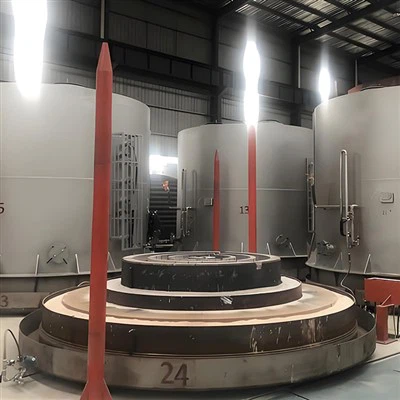
How to Control the Deformation of Materials in a Pit Quenching Furnace?
As a supplier of Pit Quenching Furnaces, I've witnessed firsthand the challenges manufacturers face when it comes to controlling material deformation during the quenching process. Deformation can lead to dimensional inaccuracies, reduced part quality, and even scrap, which can significantly impact production costs and efficiency. In this blog post, I'll share some insights and strategies on how to effectively control the deformation of materials in a Pit Quenching Furnace.
Understanding the Causes of Deformation
Before we delve into the solutions, it's essential to understand the root causes of deformation during quenching. Several factors contribute to this issue, including:
- Thermal Stress: Rapid cooling during quenching creates significant temperature gradients within the material, leading to uneven thermal expansion and contraction. This results in internal stresses that can cause the material to deform.
- Phase Transformation: During quenching, the material undergoes a phase transformation from austenite to martensite, which is accompanied by a volume change. This volume change can also contribute to deformation.
- Material Properties: The composition, microstructure, and mechanical properties of the material can influence its susceptibility to deformation during quenching. For example, materials with high carbon content or alloying elements are more prone to deformation.
- Quenching Medium: The choice of quenching medium, such as oil, water, or polymer, can affect the cooling rate and the resulting deformation. Different quenching media have different cooling characteristics, which can impact the formation of internal stresses.
Strategies for Controlling Deformation
Now that we understand the causes of deformation, let's explore some strategies for controlling it in a Pit Quenching Furnace:
- Optimize Quenching Parameters: The quenching parameters, such as the quenching temperature, quenching time, and cooling rate, play a crucial role in controlling deformation. By carefully selecting these parameters based on the material properties and part geometry, you can minimize the formation of internal stresses and reduce deformation. For example, using a slower cooling rate or a stepped quenching process can help to reduce thermal stress and prevent excessive deformation.
- Use Preheating and Post-Quenching Heat Treatment: Preheating the material before quenching can help to reduce the temperature gradient and minimize thermal stress. Post-quenching heat treatment, such as tempering, can also help to relieve internal stresses and improve the mechanical properties of the material. By using these heat treatment processes in combination with quenching, you can effectively control deformation and improve the quality of the final product.
- Design the Part Geometry Carefully: The part geometry can also influence the deformation during quenching. Parts with complex shapes or thin sections are more prone to deformation due to the uneven distribution of thermal stress. By designing the part geometry carefully, you can minimize the stress concentration and reduce the likelihood of deformation. For example, using fillets and radii instead of sharp corners can help to distribute the stress more evenly and prevent cracking.
- Select the Right Quenching Medium: The choice of quenching medium is critical for controlling deformation. Different quenching media have different cooling characteristics, which can impact the formation of internal stresses. For example, oil quenching provides a slower cooling rate than water quenching, which can help to reduce thermal stress and prevent excessive deformation. However, oil quenching may not be suitable for all materials, so it's essential to select the right quenching medium based on the material properties and part requirements.
- Use Fixturing and Support: Fixturing and support can help to prevent deformation during quenching by holding the part in place and distributing the stress evenly. By using appropriate fixturing and support, you can minimize the movement of the part during quenching and reduce the likelihood of deformation. For example, using a custom-designed fixture can help to hold the part in the correct position and prevent it from warping or bending.
The Role of Pit Quenching Furnaces in Deformation Control
As a supplier of Pit Quenching Furnaces, we understand the importance of providing high-quality equipment that can help our customers control deformation during the quenching process. Our Pit Quenching Furnaces are designed with advanced features and technologies that allow for precise control of the quenching parameters, such as temperature, time, and cooling rate. This ensures that the material is quenched under optimal conditions, minimizing the formation of internal stresses and reducing deformation.


In addition, our Pit Quenching Furnaces are equipped with advanced control systems that allow for real-time monitoring and adjustment of the quenching process. This ensures that the quenching parameters are maintained within the specified range, providing consistent and reliable results. Our furnaces also feature a robust construction and high-quality insulation, which helps to reduce heat loss and improve energy efficiency.
Conclusion
Controlling the deformation of materials in a Pit Quenching Furnace is a complex but essential task for manufacturers. By understanding the causes of deformation and implementing the strategies outlined in this blog post, you can minimize the formation of internal stresses and reduce deformation, improving the quality and reliability of your products. As a supplier of Pit Quenching Furnaces, we are committed to providing our customers with the highest quality equipment and support to help them achieve their goals. If you have any questions or need further information about our Pit Quenching Furnaces or deformation control strategies, please don't hesitate to [contact us for procurement and negotiation].
References
- Totten, G. E., & MacKenzie, D. S. (2003). Handbook of Quenching: Theory and Practice. CRC Press.
- Liscic, B., & Totten, G. E. (2006). Quenching Theory and Technology. ASM International.
3.ASM Handbook Volume 4: Heat Treating. ASM International.
For more information about other types of quenching furnaces, you can visit our Box Type Quenching Furnace, Fully Automatic Aluminum Alloy Quenching Furnace, and Aluminum Alloy Quenching Furnace pages.