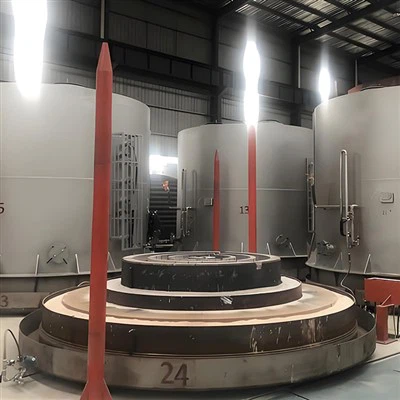
Yo, folks! As a supplier of Ion Nitriding Furnaces, I've been in the nitriding game for quite a while. One question that often pops up is, "What's the influence of the furnace wall material on the ion nitriding process?" Well, let's dive right into it.
First off, let's talk about what ion nitriding is. Ion nitriding is a surface - hardening process where nitrogen ions are bombarded onto the surface of a metal workpiece to form a nitride layer. This process can significantly improve the wear resistance, corrosion resistance, and fatigue strength of the metal. And the furnace is the heart of this operation.
Now, the furnace wall material plays a crucial role in the ion nitriding process. Different materials have different properties, and these properties can have a big impact on how well the process works.
Thermal Conductivity
One of the key factors is thermal conductivity. The furnace wall needs to have a proper level of thermal conductivity. If the thermal conductivity is too high, a lot of heat will be lost through the furnace wall. This means that the furnace will have to consume more energy to maintain the required temperature for the ion nitriding process. On the other hand, if the thermal conductivity is too low, it can be difficult to heat up the furnace evenly. Uneven heating can lead to inconsistent nitriding results on the workpiece. For example, some parts of the workpiece might not reach the optimal nitriding temperature, resulting in a weaker nitride layer.


Chemical Inertness
Chemical inertness is another important property. During the ion nitriding process, there are various chemical reactions going on. The furnace wall material should be chemically inert so that it doesn't react with the nitrogen ions or other gases in the furnace. If the wall material reacts, it can contaminate the nitriding atmosphere. This contamination can affect the quality of the nitride layer on the workpiece. For instance, if the wall material releases impurities into the atmosphere, these impurities can get incorporated into the nitride layer, reducing its hardness and other beneficial properties.
Electrical Insulation
Since ion nitriding involves the use of an electrical field to accelerate the nitrogen ions, the furnace wall material needs to have good electrical insulation properties. If the wall material conducts electricity, it can cause electrical short - circuits or other electrical problems. This can disrupt the ion nitriding process and even damage the furnace equipment. Good electrical insulation ensures that the electrical field is properly maintained within the furnace, allowing the nitrogen ions to be effectively accelerated towards the workpiece.
Different Furnace Wall Materials and Their Impacts
Let's take a look at some common furnace wall materials and how they affect the ion nitriding process.
Refractory Bricks
Refractory bricks are a popular choice for furnace walls. They have relatively good thermal insulation properties, which helps to reduce heat loss. They are also quite chemically inert, so they don't react easily with the nitriding atmosphere. However, refractory bricks can be a bit brittle. If there are sudden temperature changes, they might crack. Cracks in the furnace wall can lead to heat leakage and even allow air to enter the furnace, which can disrupt the nitriding process.
Ceramic Fibers
Ceramic fibers are lightweight and have excellent thermal insulation properties. They can help to save energy by reducing heat loss. They are also flexible, which makes them easier to install. But ceramic fibers can be a bit more expensive than refractory bricks. And over time, they can break down and release fine particles. These particles can contaminate the nitriding atmosphere and affect the quality of the nitride layer.
Stainless Steel
Stainless steel is sometimes used for the outer shell of the furnace. It has good strength and corrosion resistance. However, stainless steel has relatively high thermal conductivity compared to refractory materials. So, if it is used as the main furnace wall material, it will result in higher energy consumption. Also, stainless steel might react with the nitrogen ions under certain conditions, especially at high temperatures, which can lead to contamination.
Impact on the Quality of Ion Nitriding
The choice of furnace wall material can have a direct impact on the quality of the ion nitriding process. As we've discussed, a good furnace wall material helps to maintain a stable temperature, a clean atmosphere, and a proper electrical field. When these conditions are met, the nitride layer formed on the workpiece will be more uniform, harder, and more corrosion - resistant.
For example, if the furnace wall material provides good thermal insulation, the temperature inside the furnace will be more stable. A stable temperature is essential for the formation of a consistent nitride layer. If the temperature fluctuates too much, the nitride layer might have different thicknesses and hardness levels in different areas of the workpiece.
A chemically inert furnace wall material ensures that the nitriding atmosphere remains pure. A pure atmosphere allows the nitrogen ions to react with the workpiece surface in a controlled manner, resulting in a high - quality nitride layer.
Our Ion Nitriding Furnaces
At our company, we understand the importance of choosing the right furnace wall material. That's why we offer a range of Ion Nitriding Furnaces with carefully selected furnace wall materials. Our engineers have years of experience in optimizing the furnace design to ensure the best ion nitriding results.
We also offer Nitrogen Protection Copper Bright Annealing Furnaces and Pit Type Nitriding Furnaces. Each of these furnaces is designed with the specific requirements of the heat - treatment process in mind, and the choice of furnace wall material is a key part of that design.
Conclusion
In conclusion, the furnace wall material has a significant influence on the ion nitriding process. It affects the energy consumption, temperature control, chemical stability, and electrical performance of the furnace. By choosing the right furnace wall material, we can ensure a high - quality ion nitriding process and produce workpieces with excellent surface properties.
If you're in the market for an ion nitriding furnace or other heat - treatment furnaces, don't hesitate to contact us for a detailed discussion. We're here to help you find the best solution for your specific needs.
References
- "Handbook of Heat Treatment of Steels" by George E. Totten, David Scott MacKenzie
- "Heat Treatment Furnaces: Design, Control, and Energy Efficiency" by John C. Holowaychuk