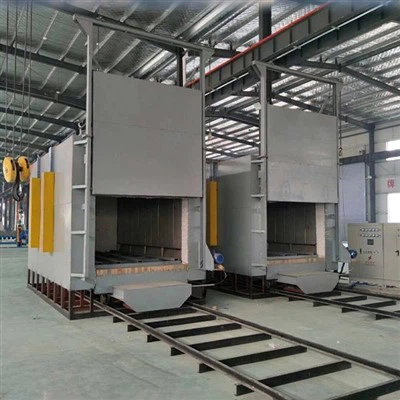
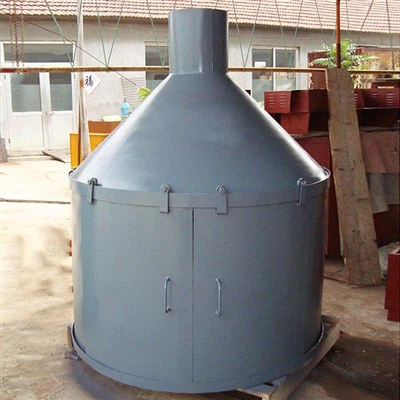
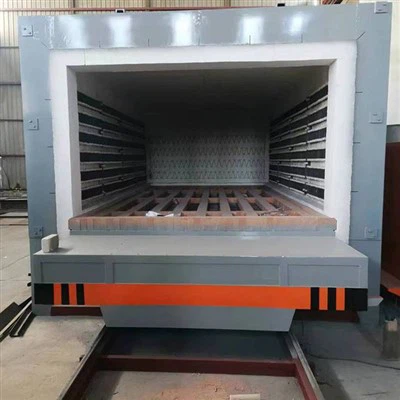
Hey there! As a supplier of Pit Quenching Furnaces, I often get asked about how to select the appropriate quenching medium for these furnaces. It's a crucial aspect of the heat treatment process, and getting it right can make a huge difference in the quality of the final product. So, let's dive into it!
Understanding Quenching and Its Importance
First off, let's quickly go over what quenching is. Quenching is a rapid cooling process that's used to harden metals. When a metal is heated to a specific temperature and then rapidly cooled, its internal structure changes, which can increase its hardness and strength. But the key to a successful quenching process lies in choosing the right quenching medium.
Factors to Consider When Selecting a Quenching Medium
There are several factors you need to take into account when picking a quenching medium for your Pit Quenching Furnace.
1. Material of the Workpiece
The type of metal you're working with is probably the most important factor. Different metals have different cooling requirements. For example, steels generally require a faster cooling rate to achieve the desired hardness, while some non - ferrous metals like aluminum alloys need a more controlled cooling process. If you're dealing with aluminum alloys, you might want to check out our Aluminum Alloy Solution Treatment Furnace, which is specifically designed for this type of material.


2. Desired Properties of the Final Product
What kind of properties do you want your finished product to have? If you need high hardness and wear resistance, you'll likely need a quenching medium that provides a fast cooling rate. On the other hand, if you're more concerned about minimizing distortion and residual stresses, a slower - cooling medium might be a better choice.
3. Cooling Rate
The cooling rate of the quenching medium is critical. A fast - cooling medium will cause the metal to harden quickly, but it can also lead to cracking and distortion. A slow - cooling medium, on the other hand, will reduce the risk of cracking but might not achieve the desired hardness. You need to find a balance based on the material and the requirements of your product.
4. Cost and Availability
Let's face it, cost matters. Some quenching media can be quite expensive, and their availability can also be an issue. You need to consider the long - term cost of using a particular medium, including its disposal costs. Water is one of the cheapest and most readily available quenching media, but it might not be suitable for all applications.
Common Quenching Media and Their Characteristics
Water
Water is the most basic and widely used quenching medium. It has a very high cooling rate, which makes it great for achieving high hardness in steels. However, it can also cause severe distortion and cracking, especially in complex - shaped workpieces. The high cooling rate can create large thermal gradients within the metal, leading to internal stresses.
Oil
Oil is a popular alternative to water. It has a slower cooling rate than water, which reduces the risk of cracking and distortion. There are different types of quenching oils available, each with its own cooling characteristics. Mineral oils are commonly used for general - purpose quenching, while synthetic oils offer better performance and longer service life. If you're using a Box Type Quenching Furnace, oil can be a good choice as it provides a more controlled cooling environment.
Polymer Solutions
Polymer solutions are becoming increasingly popular. They offer a range of cooling rates that can be adjusted by changing the concentration of the polymer in the solution. This allows for more precise control of the cooling process, reducing the risk of cracking and distortion. Polymer solutions are also more environmentally friendly than some other quenching media.
Salt Baths
Salt baths are used for specific applications where a very high - temperature quenching is required. They provide a uniform cooling rate and can be used to achieve specific microstructures in the metal. However, they are more expensive and require special handling due to the high temperatures and corrosive nature of the salts. If you're dealing with large - scale workpieces, our Trolley Quenching Furnace can be paired with a salt bath quenching system for efficient processing.
Testing and Optimization
Once you've selected a quenching medium, it's important to test it on a small scale before using it for large - scale production. You can perform hardness tests, microstructure analysis, and dimensional checks to ensure that the quenching process is meeting your requirements. If necessary, you can make adjustments to the quenching medium, such as changing its temperature or concentration, to optimize the results.
Conclusion
Selecting the appropriate quenching medium for a Pit Quenching Furnace is a complex but crucial decision. It requires a good understanding of the material, the desired properties of the final product, and the characteristics of different quenching media. By considering all these factors and conducting proper testing, you can ensure that your quenching process is efficient and produces high - quality products.
If you're in the market for a Pit Quenching Furnace or need more advice on quenching media selection, don't hesitate to reach out. We're here to help you make the best choices for your heat treatment needs.
References
- "Heat Treatment Principles and Techniques" by George E. Totten
- "Metallurgy for the Non - Metallurgist" by John D. Verhoeven