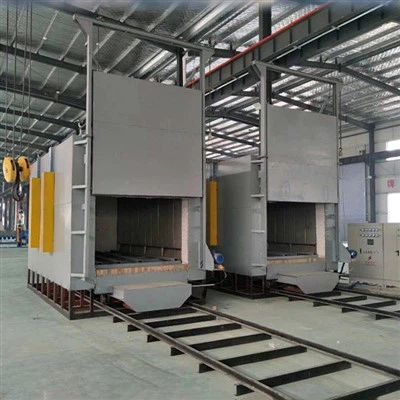
Annealing is a crucial heat treatment process used to enhance the properties of metals, such as improving ductility, reducing hardness, and relieving internal stresses. A Box Annealing Furnace is a popular choice for annealing various metals due to its versatility and efficiency. As a Box Annealing Furnace supplier, I have witnessed firsthand the significance of adjusting annealing parameters according to different metals. In this blog, I will delve into the differences in annealing parameters for various metals when using a Box Annealing Furnace.
Understanding Box Annealing Furnaces
Before we explore the annealing parameters for different metals, let's briefly understand what a Box Annealing Furnace is. A Box Annealing Furnace is a type of batch furnace designed for annealing operations. It consists of a sealed chamber where the metal workpieces are placed and heated to specific temperatures for a predetermined period. The furnace is equipped with heating elements, temperature controls, and insulation to ensure uniform heating and precise temperature regulation.
Factors Affecting Annealing Parameters
Several factors influence the annealing parameters for different metals, including the metal's composition, initial microstructure, and desired properties after annealing. The following are the key parameters that need to be adjusted based on the metal being annealed:
- Annealing Temperature: The annealing temperature is one of the most critical parameters. Different metals have different critical temperatures at which the desired microstructural changes occur. For example, low-carbon steels typically require lower annealing temperatures compared to high-carbon steels.
- Heating Rate: The rate at which the metal is heated to the annealing temperature can affect the final properties. A slow heating rate allows for more uniform heating and reduces the risk of thermal stress.
- Holding Time: The holding time at the annealing temperature is necessary to ensure that the desired microstructural changes are completed. The holding time depends on the metal's thickness, composition, and the desired level of annealing.
- Cooling Rate: The cooling rate after annealing also plays a crucial role in determining the final properties of the metal. A slow cooling rate is often preferred to avoid the formation of new internal stresses.
Annealing Parameters for Different Metals
Steel
Steel is one of the most commonly annealed metals. The annealing parameters for steel depend on its carbon content and alloying elements.
- Low-Carbon Steel: Low-carbon steel, which contains less than 0.3% carbon, is relatively easy to anneal. The annealing temperature for low-carbon steel typically ranges from 600°C to 700°C. A slow heating rate of around 100°C per hour is recommended to ensure uniform heating. The holding time at the annealing temperature is usually 1 to 3 hours, depending on the thickness of the workpiece. After annealing, low-carbon steel is cooled slowly in the furnace to room temperature.
- High-Carbon Steel: High-carbon steel, with a carbon content greater than 0.6%, requires higher annealing temperatures, typically between 750°C and 850°C. The heating rate should be slower than that of low-carbon steel to prevent cracking. The holding time at the annealing temperature is longer, usually 3 to 6 hours. After annealing, high-carbon steel is cooled slowly in the furnace or in a controlled environment to avoid the formation of hard martensite.
Aluminum
Aluminum is a lightweight metal with excellent corrosion resistance. The annealing parameters for aluminum are different from those of steel.


- Pure Aluminum: Pure aluminum is annealed at relatively low temperatures, typically between 300°C and 450°C. The heating rate can be relatively fast, around 200°C per hour. The holding time at the annealing temperature is usually 1 to 2 hours. After annealing, pure aluminum is cooled in air.
- Aluminum Alloys: Aluminum alloys, which contain various alloying elements such as copper, magnesium, and zinc, require different annealing parameters. The annealing temperature for aluminum alloys ranges from 350°C to 500°C, depending on the alloy composition. The heating rate and holding time are similar to those of pure aluminum. After annealing, aluminum alloys are cooled in air or water, depending on the desired properties.
Copper
Copper is a highly conductive metal with good ductility. The annealing parameters for copper are as follows:
- Pure Copper: Pure copper is annealed at temperatures between 500°C and 650°C. A slow heating rate of around 150°C per hour is recommended. The holding time at the annealing temperature is usually 1 to 3 hours. After annealing, pure copper is cooled slowly in the furnace or in a controlled environment.
- Copper Alloys: Copper alloys, such as brass and bronze, have different annealing parameters depending on their composition. For example, brass, which is an alloy of copper and zinc, is annealed at temperatures between 550°C and 700°C. The heating rate and holding time are similar to those of pure copper. After annealing, brass is cooled slowly in the furnace or in a controlled environment.
Comparison with Other Annealing Furnaces
In addition to the Box Annealing Furnace, there are other types of annealing furnaces available, such as the Bell Type Annealing Furnace and the Roller Annealing Furnace. Each type of furnace has its own advantages and disadvantages, and the choice of furnace depends on the specific requirements of the annealing process.
- Bell Type Annealing Furnace: The Bell Type Annealing Furnace is suitable for annealing large batches of workpieces. It uses a bell-shaped cover to enclose the workpieces and provides a more uniform heating environment. However, the Bell Type Annealing Furnace is relatively expensive and requires more space.
- Roller Annealing Furnace: The Roller Annealing Furnace is designed for continuous annealing of long workpieces, such as strips and wires. It uses rollers to transport the workpieces through the furnace, providing a high production rate. However, the Roller Annealing Furnace is less flexible compared to the Box Annealing Furnace.
Conclusion
In conclusion, the annealing parameters for different metals in a Box Annealing Furnace need to be carefully adjusted based on the metal's composition, initial microstructure, and desired properties after annealing. By understanding the factors affecting annealing parameters and the specific requirements of each metal, it is possible to achieve the desired results. As a Box Annealing Furnace supplier, we are committed to providing high-quality furnaces and technical support to help our customers optimize their annealing processes.
If you are interested in purchasing a Box Annealing Furnace or have any questions about annealing parameters for different metals, please feel free to contact us for further discussion and negotiation. We look forward to working with you to meet your heat treatment needs.
References
- ASM Handbook, Volume 4: Heat Treating, ASM International.
- Metals Handbook: Properties and Selection: Irons, Steels, and High-Performance Alloys, ASM International.
- Heat Treatment Principles and Techniques, R. A. Grange, H. W. Paxton, and H. J. McQueen.