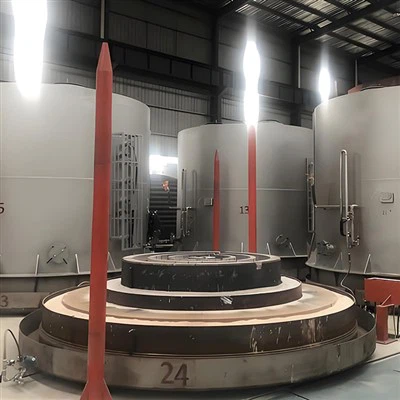
As a resistance furnace supplier, I've seen firsthand how integrating these furnaces with other equipment can revolutionize industrial processes. Resistance furnaces are versatile workhorses in many industries, from metalworking to ceramics. But when they're paired with the right equipment, they can take efficiency, productivity, and quality to a whole new level. So, let's dive into the integration options for a resistance furnace with other equipment.
1. Integration with Material Handling Equipment
One of the most common integration options is with material handling equipment. This includes conveyors, robots, and hoists. When a resistance furnace is integrated with a conveyor system, it allows for a continuous flow of materials in and out of the furnace. This is especially useful in mass production environments where time is of the essence.
For example, in a metal heat treatment facility, a conveyor can carry metal parts into the Box Type Resistance Furnace for heating. Once the heat treatment process is complete, the conveyor can then move the parts out of the furnace to the next stage of production, such as quenching or tempering. This seamless flow of materials reduces manual handling, minimizes the risk of human error, and increases overall production speed.
Robots can also be integrated with resistance furnaces. They can be programmed to load and unload parts from the furnace with high precision. This is particularly beneficial when dealing with complex or delicate parts that require careful handling. Robots can work 24/7 without getting tired, which means increased productivity and reduced labor costs.
Hoists, on the other hand, are useful for lifting heavy materials into and out of the furnace. In a foundry, for instance, a hoist can lift large metal ingots into a Large Pit Type Resistance Furnace for melting. After melting, the hoist can then transfer the molten metal to a casting mold.
2. Integration with Temperature Control and Monitoring Systems
Accurate temperature control is crucial in resistance furnace operations. That's why integrating a resistance furnace with temperature control and monitoring systems is essential. These systems can ensure that the furnace maintains the desired temperature throughout the heating process, which is vital for achieving consistent product quality.
A temperature controller can be connected to the resistance furnace to regulate the power input based on the set temperature. If the temperature inside the furnace drops below the set point, the controller will increase the power to the heating elements to bring the temperature back up. Conversely, if the temperature exceeds the set point, the controller will reduce the power.
In addition to temperature control, monitoring systems can provide real - time data on the furnace's temperature, power consumption, and other important parameters. This data can be used for process optimization, predictive maintenance, and quality control. For example, if the monitoring system detects a sudden increase in power consumption, it could indicate a problem with the heating elements, allowing for timely maintenance to prevent costly breakdowns.


3. Integration with Gas Supply Systems
Some resistance furnaces, especially those used in specific heat treatment processes, require a controlled atmosphere. This is where integrating the furnace with gas supply systems comes in. Gas supply systems can provide gases such as nitrogen, hydrogen, or argon to create the desired atmosphere inside the furnace.
In a metal annealing process, for example, a nitrogen gas supply system can be connected to the Car - type Resistance Furnace. Nitrogen is an inert gas that can prevent oxidation of the metal parts during the annealing process, resulting in a better - quality finish.
The gas supply system can be equipped with flow meters and regulators to ensure a precise and consistent flow of gas into the furnace. This is important for maintaining the correct atmosphere and achieving the desired heat treatment results.
4. Integration with Cooling Systems
After the heating process in a resistance furnace, the parts often need to be cooled down quickly and uniformly. This is where integrating the furnace with cooling systems becomes necessary. Cooling systems can include water - cooled jackets, air - cooling fans, or quenching tanks.
Water - cooled jackets can be installed around the furnace to remove excess heat. The water circulates through the jacket, absorbing heat from the furnace walls and carrying it away. This helps to prevent overheating of the furnace and extends its lifespan.
Air - cooling fans can be used to blow air over the heated parts as they exit the furnace. This provides a rapid and even cooling effect, which is important for some heat treatment processes.
Quenching tanks are used for rapid cooling of parts in a liquid medium. After the parts are heated in the resistance furnace, they can be transferred directly to the quenching tank. The type of liquid used in the quenching tank, such as oil or water, depends on the specific requirements of the heat treatment process.
5. Integration with Data Management and Automation Systems
In today's digital age, integrating resistance furnaces with data management and automation systems can offer significant advantages. These systems can collect, analyze, and store data from the furnace and other integrated equipment. This data can be used to optimize the entire production process.
Automation systems can also be used to control multiple pieces of equipment simultaneously. For example, an automation system can coordinate the operation of the conveyor, the temperature controller, and the gas supply system. This reduces the need for manual intervention, improves process consistency, and increases overall efficiency.
Data management systems can generate reports on furnace performance, energy consumption, and product quality. These reports can be used for decision - making, such as identifying areas for improvement or predicting future maintenance needs.
Conclusion
Integrating a resistance furnace with other equipment offers numerous benefits, including increased productivity, improved product quality, reduced labor costs, and enhanced process control. Whether it's material handling equipment, temperature control systems, gas supply systems, cooling systems, or data management and automation systems, each integration option plays a crucial role in optimizing the performance of the resistance furnace.
If you're interested in exploring these integration options for your resistance furnace or have any questions about our products, feel free to reach out to us. We're here to help you find the best solutions for your industrial needs.
References
- Industrial Furnace Handbook: Principles, Design, and Operation.
- Heat Treatment Principles and Techniques.