

Hey there! As a supplier of tempering furnaces, I often get asked by customers, "How do I choose the right size of a tempering furnace for my production?" It's a crucial question because getting the size wrong can lead to inefficiencies, higher costs, and even quality issues. So, let's dive into this topic and figure out how you can make the best choice.
Understanding Your Production Needs
The first step in choosing the right size of a tempering furnace is to have a clear understanding of your production requirements. You need to consider factors like the volume of workpieces you need to process, the size and shape of those workpieces, and your production schedule.
Volume of Workpieces
How many parts do you need to temper per day, week, or month? This is a fundamental question. If you have a high - volume production, you'll need a larger furnace that can handle more workpieces at once. For example, if you're a large automotive parts manufacturer producing thousands of components daily, a small - scale tempering furnace won't cut it. On the other hand, if you're a small - scale job shop doing custom orders with a lower volume, a smaller furnace might be sufficient.
Size and Shape of Workpieces
The physical dimensions of your workpieces are also vital. You need to make sure that the furnace has enough space to accommodate the largest workpiece you'll be tempering. Some workpieces might be long and thin, while others could be large and bulky. You might need to look for a furnace with a specific interior layout or design to fit your unique workpieces. For instance, if you have long shafts to temper, a Pit Type Tempering Furnace could be a great option as it provides a vertical space for long objects.
Production Schedule
Your production schedule plays a big role in furnace sizing. If you need to run continuous production, a larger furnace with a high - throughput capacity is necessary. However, if your production is more sporadic or you have a flexible schedule, you might be able to get away with a smaller furnace and run it in batches.
Considering the Furnace Capacity
Once you have a good grasp of your production needs, it's time to look at the furnace capacity. The capacity of a tempering furnace is usually measured in terms of the maximum weight or number of workpieces it can hold.
Weight Capacity
When it comes to weight capacity, you need to know the average weight of your workpieces and how many you want to process at once. A furnace with a higher weight capacity can handle more massive workpieces or a larger quantity of lighter workpieces. But keep in mind that overloading the furnace can lead to uneven heating and affect the quality of the tempering process.
Loading and Unloading Efficiency
Another aspect related to capacity is how easy it is to load and unload the workpieces. A well - designed furnace should allow for quick and efficient loading and unloading, which can save you a lot of time in the long run. Some furnaces come with features like automated loading systems that can significantly improve productivity.
Energy Efficiency and Operating Costs
The size of the tempering furnace also has a direct impact on energy efficiency and operating costs.
Energy Consumption
Larger furnaces generally consume more energy than smaller ones. However, if you have a high - volume production, a larger furnace might be more energy - efficient in the long run because it can process more workpieces per cycle. On the other hand, if your production volume is low, a smaller furnace will use less energy and be more cost - effective.
Maintenance Costs
Maintenance costs are also something to consider. Larger furnaces might require more maintenance due to their complex systems and larger components. You need to factor in the cost of regular maintenance, replacement parts, and any potential downtime for repairs.
Types of Tempering Furnaces and Their Sizing Considerations
There are different types of tempering furnaces available in the market, and each has its own sizing characteristics.
Atmosphere Protection Box Type Tempering Furnace
This type of furnace is great for applications where you need to protect the workpieces from oxidation during the tempering process. When choosing the size of an atmosphere protection box - type tempering furnace, you need to consider the interior space for the workpieces and the capacity of the atmosphere control system. A larger furnace might require a more powerful atmosphere control system to maintain the right conditions.
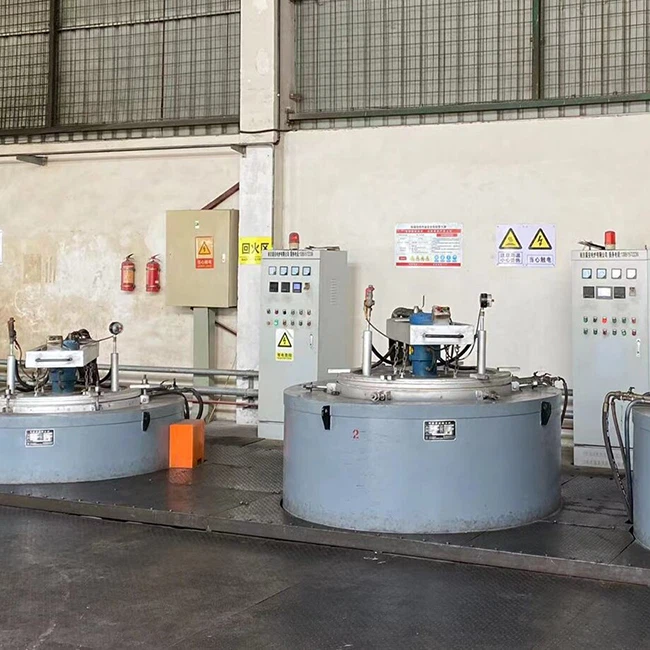

Nitrogen Protection Pit Tempering Furnace
As mentioned earlier, pit - type furnaces are suitable for long or tall workpieces. When sizing a nitrogen protection pit tempering furnace, you need to focus on the depth and diameter of the pit to ensure it can accommodate your workpieces. You also need to consider the nitrogen supply system and its capacity to provide the necessary protection during the tempering process.
Future Growth and Flexibility
It's always a good idea to think about your future production needs when choosing a tempering furnace size. If you plan to expand your business or increase your production volume in the future, it might be wise to invest in a slightly larger furnace now. This way, you won't have to replace the furnace as soon as your production grows.
Making the Final Decision
After considering all these factors, you should be able to make an informed decision about the right size of a tempering furnace for your production. It's also a good idea to consult with a professional or an experienced supplier like us. We can provide you with more detailed information, perform on - site assessments, and help you choose the best furnace for your specific needs.
If you're still unsure or have any questions about choosing the right size of a tempering furnace, don't hesitate to reach out to us. We're here to assist you in making the best decision for your production. Whether you're a small business or a large industrial operation, we have the expertise and the range of products to meet your requirements. Contact us today to start the conversation about finding the perfect tempering furnace for your business.
References
- "Heat Treatment Furnaces: Principles and Applications" by John Doe
- "Advanced Manufacturing Processes" by Jane Smith
- Industry reports on tempering furnace technology and sizing trends


