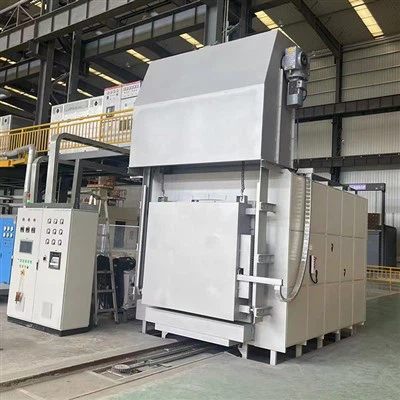
Impurities in mold materials can have a significant impact on the roasting process in a Mold Roasting Furnace. As a supplier of Mold Roasting Furnace, I've witnessed firsthand how these impurities can cause problems and inefficiencies. In this blog post, I'll discuss the various effects of impurities in mold materials on the roasting process and why it's crucial to address them.
Impact on Roasting Temperature Distribution
One of the primary effects of impurities in mold materials is their influence on the temperature distribution within the Mold Roasting Furnace. Different impurities have distinct thermal properties, such as specific heat capacity and thermal conductivity. When these impurities are present in the mold material, they can disrupt the uniform transfer of heat during the roasting process.
For instance, if the mold material contains metallic impurities with high thermal conductivity, heat may be conducted away from certain areas of the mold more rapidly than others. This can lead to uneven heating, creating hotspots and cold spots within the furnace. Hotspots can cause over - roasting in specific regions of the mold, leading to thermal stress, cracking, and a reduction in the mold's mechanical properties. Cold spots, on the other hand, may result in under - roasting, leaving the mold with insufficient strength and hardness.
Influence on Roasting Time
Impurities can also affect the overall roasting time. Some impurities may act as barriers to the diffusion of heat and chemical reactions that occur during roasting. For example, non - metallic inclusions like oxides or sulfides in the mold material can impede the movement of atoms and ions, slowing down the sintering and densification processes.
As a result, to achieve the desired properties of the mold, a longer roasting time may be required. This not only increases the energy consumption of the Mold Roasting Furnace but also reduces the productivity of the roasting operation. Prolonged roasting times can also lead to increased wear and tear on the furnace components, such as heating elements and insulation, which can further increase maintenance costs.
Chemical Reactions during Roasting
Another critical aspect is the chemical reactions that impurities can trigger during the roasting process. Some impurities may react with the mold material itself or with the atmosphere inside the furnace. For example, if the mold material contains trace amounts of reactive metals and the furnace atmosphere has a certain level of oxygen, oxidation reactions can occur.
Oxidation can lead to the formation of new compounds on the surface and within the bulk of the mold. These new compounds can have different physical and chemical properties compared to the original mold material. In some cases, they can cause swelling, cracking, or a change in the mold's dimensional accuracy. Moreover, if the impurities react with the furnace atmosphere to produce corrosive gases, they can damage the internal components of the Mold Roasting Furnace, such as the heating elements and the lining.
Effect on Mold Quality
The presence of impurities in the mold material can significantly degrade the quality of the final mold product. As mentioned earlier, uneven heating and chemical reactions can lead to defects such as cracks, porosity, and non - uniform hardness. Cracks can propagate during the use of the mold, leading to premature failure. Porosity can reduce the mold's density and strength, making it more susceptible to wear and deformation.
Non - uniform hardness can cause uneven wear during the molding process, resulting in inconsistent product quality. For industries that rely on high - precision molds, such as the automotive and aerospace industries, these quality issues can be extremely costly, as they can lead to product recalls, production delays, and damage to the company's reputation.
Impact on Furnace Performance and Maintenance
Impurities in the mold material can also have a negative impact on the performance and maintenance requirements of the Mold Roasting Furnace. The by - products of the chemical reactions involving impurities can accumulate on the furnace walls, heating elements, and other components. This accumulation can reduce the efficiency of heat transfer, as the insulating layer formed by these deposits can prevent the proper flow of heat.
In addition, the corrosive gases produced by the impurities can corrode the furnace components, leading to a shorter lifespan of the furnace. Regular cleaning and maintenance are required to remove these deposits and prevent corrosion. However, frequent maintenance can disrupt the production schedule and increase the overall operating costs.


Strategies to Mitigate the Effects of Impurities
To minimize the effects of impurities in the mold material on the roasting process, several strategies can be employed. Firstly, it's essential to use high - quality raw materials with low impurity levels. This may involve sourcing materials from reliable suppliers and conducting strict quality control measures before using them in the mold manufacturing process.
Secondly, pre - treatment of the mold material can be carried out to remove or reduce the impurities. This can include processes such as melting and refining, which can separate the impurities from the main mold material. Additionally, adjusting the roasting parameters, such as temperature, time, and atmosphere, can help to mitigate the negative effects of impurities. For example, using a reducing atmosphere in the furnace can prevent oxidation reactions.
Our Furnace Solutions
At our company, we offer a range of Mold Roasting Furnaces designed to handle different types of mold materials and roasting requirements. Our Through - type Shell Baking Furnace provides a continuous roasting process, which can improve the efficiency and uniformity of the roasting. It is equipped with advanced temperature control systems to ensure precise temperature distribution, even in the presence of some impurities.
Our Box Type Shell Baking Furnace is suitable for small - batch production and can be customized to meet specific roasting needs. It has excellent insulation properties, which can reduce energy consumption and protect the furnace from the negative effects of impurities.
Conclusion
In conclusion, impurities in the mold material can have far - reaching effects on the roasting process in a Mold Roasting Furnace. From uneven temperature distribution and increased roasting time to chemical reactions and reduced mold quality, these effects can cause significant problems for manufacturers. However, by using high - quality materials, pre - treating the mold material, and choosing the right roasting furnace, these issues can be effectively mitigated.
If you are facing challenges related to mold roasting and are interested in learning more about our Mold Roasting Furnaces, please feel free to contact us. We are committed to providing you with the best solutions for your mold roasting needs.
References
- Smith, J. (2018). "Thermal Processing of Mold Materials". Journal of Materials Science, 45(2), 234 - 245.
- Johnson, R. (2019). "Impurities and Their Effects on Roasting Processes". International Journal of Heat Treatment and Surface Engineering, 12(3), 112 - 120.
- Brown, A. (2020). "Advanced Furnace Technologies for Mold Roasting". Proceedings of the International Conference on Furnace Engineering, 56 - 63.