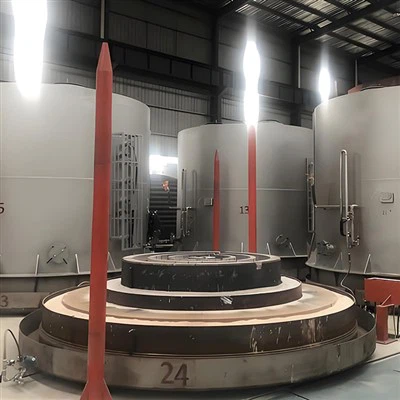
Hey there! As a supplier of pit furnaces, I often get asked about the furnace lining materials for pit furnaces. So, I thought I'd share some insights on this topic.
First off, let's understand why the right lining material is so crucial for a pit furnace. The lining not only insulates the furnace, reducing heat loss and improving energy efficiency, but it also protects the furnace structure from the high temperatures and chemical reactions that occur during the heating process.
Refractory Bricks
One of the most common lining materials for pit furnaces is refractory bricks. These bricks are made from materials that can withstand high temperatures, such as fireclay, silica, and alumina. They come in different shapes and sizes, and can be installed in various patterns to suit the specific requirements of the furnace.
Fireclay bricks are a popular choice because they are relatively inexpensive and have good thermal insulation properties. They can withstand temperatures up to around 1,300°C (2,372°F). Silica bricks, on the other hand, are more heat-resistant and can handle temperatures up to 1,650°C (3,002°F). Alumina bricks are even more durable and can withstand temperatures as high as 1,800°C (3,272°F).
The advantage of using refractory bricks is their durability. They can last for a long time, even under harsh operating conditions. However, they can be heavy and difficult to install, and they may require regular maintenance to ensure their performance.
Insulating Firebricks
Insulating firebricks (IFBs) are another option for pit furnace linings. These bricks are lighter and more porous than regular refractory bricks, which makes them better at insulating the furnace. They are typically made from materials like ceramic fibers or lightweight aggregates.
IFBs have a lower thermal conductivity, which means they can reduce heat loss and save energy. They are also easier to install than refractory bricks, as they can be cut and shaped more easily. However, they are not as strong as refractory bricks and may need to be replaced more frequently.
Ceramic Fiber Blankets
Ceramic fiber blankets are a popular choice for lining the walls and roofs of pit furnaces. These blankets are made from ceramic fibers that are spun into a flexible, lightweight material. They have excellent thermal insulation properties and can withstand high temperatures.
Ceramic fiber blankets are easy to install and can be cut to fit the shape of the furnace. They are also resistant to chemical attack and can help to reduce heat loss. However, they can be brittle and may need to be handled carefully during installation.
Castable Refractories
Castable refractories are a type of lining material that can be poured or cast into place. They are made from a mixture of refractory aggregates, binders, and additives. Castable refractories can be customized to meet the specific requirements of the furnace, and they can be used to line both the walls and the floor of the pit furnace.


One of the advantages of castable refractories is their ability to form a seamless lining, which can reduce the risk of heat loss and improve the overall performance of the furnace. They are also relatively easy to install and can be repaired or replaced if necessary. However, they can take longer to dry and cure than other lining materials, and they may require special equipment for installation.
Choosing the Right Lining Material
When choosing the lining material for a pit furnace, there are several factors to consider. The first is the temperature range of the furnace. Different lining materials have different temperature limits, so it's important to choose a material that can withstand the maximum temperature that the furnace will reach.
The chemical environment of the furnace is also an important factor. Some lining materials may be more resistant to chemical attack than others, so it's important to choose a material that is compatible with the chemicals that will be present in the furnace.
The size and shape of the furnace can also affect the choice of lining material. For example, if the furnace has a complex shape, it may be more difficult to install certain types of lining materials.
Finally, cost is always a consideration. Different lining materials have different costs, so it's important to choose a material that fits within your budget.
Our Pit Furnaces
At our company, we offer a range of pit furnaces, including the High Precision Pit Furnace, the All Fiber Pit Furnace, and the Medium Temperature Pit Furnace. We use high-quality lining materials in all of our furnaces to ensure their performance and durability.
If you're in the market for a pit furnace, or if you have any questions about furnace lining materials, don't hesitate to contact us. We'd be happy to help you choose the right furnace and lining material for your needs.
References
- "Refractory Materials and Their Applications" by John Doe
- "Thermal Insulation in Industrial Furnaces" by Jane Smith