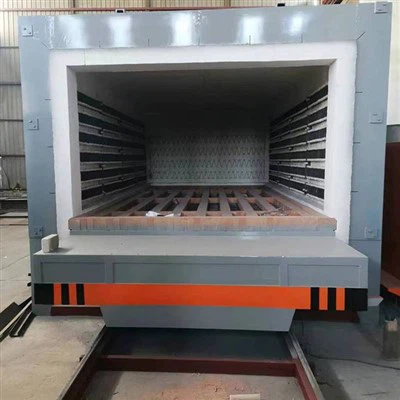
What are the insulation materials used in an annealing furnace?
As an established annealing furnace supplier, I've witnessed firsthand the critical role that insulation materials play in the efficiency and performance of these industrial workhorses. Annealing furnaces are designed to heat materials to specific temperatures and then cool them slowly, a process that helps relieve internal stresses, increase ductility, and improve the overall mechanical properties of the material. To achieve this, the furnace must maintain a consistent and precise temperature, and that's where high - quality insulation materials come into play.
The Importance of Insulation in Annealing Furnaces
Insulation in an annealing furnace serves multiple vital functions. Firstly, it reduces heat loss. Heat loss not only wastes energy, which translates into higher operating costs, but it can also make the working environment around the furnace uncomfortable and potentially dangerous for operators. Secondly, proper insulation helps maintain a uniform temperature inside the furnace chamber. This is crucial because uneven temperatures can lead to inconsistent annealing results, affecting the quality of the processed materials.
Common Insulation Materials
Fiberglass
Fiberglass is one of the most widely used insulation materials in annealing furnaces. It is made from fine glass fibers that are woven or matted together. Fiberglass has several advantages. It is relatively inexpensive, which makes it an attractive option for budget - conscious customers. It also has good thermal insulation properties, effectively reducing heat transfer through the furnace walls.
Fiberglass insulation can withstand moderate temperatures, typically up to around 500 - 600 degrees Celsius. This makes it suitable for many types of annealing processes where lower to medium temperatures are required. For example, in some small - scale Box Annealing Furnace applications, fiberglass insulation can provide adequate thermal protection.


However, fiberglass also has some limitations. It can be brittle and may break down over time, especially if exposed to mechanical vibrations or high - velocity airflows inside the furnace. In addition, the fine glass fibers can be a health hazard if inhaled, so proper handling and installation procedures are essential.
Ceramic Fiber
Ceramic fiber insulation is a popular choice for high - temperature annealing furnaces. It is made from alumina - silica fibers and can withstand temperatures up to 1600 degrees Celsius or even higher, depending on the specific composition.
One of the main advantages of ceramic fiber is its excellent thermal insulation performance. It has a very low thermal conductivity, which means it can effectively reduce heat loss even at extremely high temperatures. This makes it ideal for applications such as Bell Type Annealing Furnace, where high - temperature processes are common.
Ceramic fiber is also lightweight, which can reduce the overall weight of the furnace. This is beneficial for mobile or trolley - based furnaces like the Trolley Annealing Furnace, as it can make them more maneuverable.
On the downside, ceramic fiber is more expensive than fiberglass. It also requires careful handling during installation to prevent fiber breakage and the release of fine particles, which can be a health risk.
Mineral Wool
Mineral wool is another type of insulation material used in annealing furnaces. It is made from natural minerals such as basalt or diabase, which are melted and spun into fibers. Mineral wool can withstand temperatures up to around 800 - 1000 degrees Celsius, making it suitable for medium - to high - temperature annealing processes.
Mineral wool has good fire - resistance properties, which is an important safety feature in an industrial furnace environment. It also has excellent acoustic insulation properties, which can help reduce noise levels around the furnace.
However, like fiberglass, mineral wool can release fine fibers if damaged, which can pose a health risk. It also has a relatively high thermal conductivity compared to ceramic fiber, so it may not be as effective in reducing heat loss at very high temperatures.
Refractory Bricks
Refractory bricks are solid insulation materials made from refractory clay or other high - temperature - resistant materials. They are commonly used to line the interior walls of annealing furnaces, especially in large - scale industrial applications.
Refractory bricks have excellent heat - retention properties. They can absorb and store a large amount of heat during the heating phase of the annealing process and then release it slowly during the cooling phase, helping to maintain a more consistent temperature inside the furnace.
They are also very durable and can withstand mechanical wear and tear, as well as chemical attacks from some of the materials being annealed. However, refractory bricks are heavy, which can increase the overall weight and cost of the furnace. They also require more complex installation procedures compared to fibrous insulation materials.
Factors to Consider When Choosing Insulation Materials
When selecting insulation materials for an annealing furnace, several factors need to be taken into account.
- Temperature Requirements: The maximum operating temperature of the furnace is the most crucial factor. Different insulation materials have different temperature limits, and choosing a material that can withstand the required temperature is essential for the furnace's performance and safety.
- Cost: The cost of the insulation material is an important consideration, especially for small - to medium - sized businesses. While high - performance materials like ceramic fiber may offer better insulation, they can be more expensive. A balance needs to be struck between cost and performance.
- Installation and Maintenance: Some insulation materials are easier to install and maintain than others. Fibrous materials like fiberglass and ceramic fiber may require special handling during installation to prevent fiber release, while refractory bricks need more complex installation techniques.
- Environmental and Safety Considerations: As mentioned earlier, some insulation materials can release fine particles that can be a health hazard. It's important to choose materials that are safe for operators and comply with environmental regulations.
Conclusion
In conclusion, the choice of insulation materials in an annealing furnace is a complex decision that depends on multiple factors. As a supplier, I understand the importance of providing our customers with the right insulation solutions to ensure the best performance and cost - effectiveness of their furnaces. Whether it's the cost - effective fiberglass for lower - temperature applications, the high - performance ceramic fiber for extreme heat, or the durable refractory bricks for large - scale industrial use, we are committed to helping our customers make informed choices.
If you are in the market for an annealing furnace or need advice on insulation materials, we are here to help. Our team of experts can provide you with detailed information and guidance based on your specific requirements. Contact us today to start a discussion about your annealing furnace needs and explore how we can work together to achieve your production goals.
References
- ASM Handbook Volume 4: Heat Treating. ASM International.
- Industrial Furnaces: Principles and Operations. John Wiley & Sons.
- Insulation Materials: Properties and Applications. CRC Press.