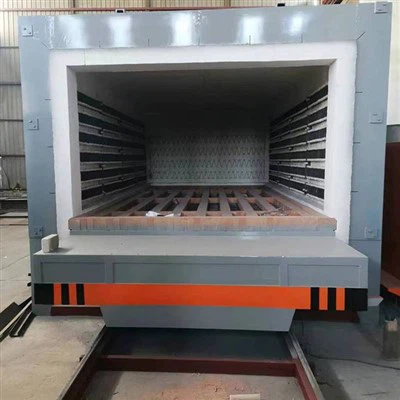
The carburizing process is a crucial heat treatment method used in the manufacturing industry to enhance the surface hardness and wear resistance of metal components. As a leading carburizing furnace supplier, we understand the intricate details of this process and the factors that can significantly influence its outcome. One such factor that often goes unnoticed but plays a vital role is the furnace pressure. In this blog post, we will delve into the impact of furnace pressure on the carburizing process in a carburizing furnace.
Understanding the Carburizing Process
Before we discuss the impact of furnace pressure, it's essential to have a basic understanding of the carburizing process. Carburizing is a thermochemical process in which carbon is introduced into the surface layer of a metal component at an elevated temperature. This is typically done by exposing the component to a carbon-rich environment, such as a gas or a solid medium. The carbon atoms diffuse into the metal lattice, forming a hard and wear-resistant surface layer.
The carburizing process involves several steps, including heating the component to the carburizing temperature, maintaining the temperature for a specific period, and then quenching the component to harden the surface layer. The quality of the carburized layer depends on various factors, such as the carburizing temperature, time, carbon potential, and furnace pressure.
The Role of Furnace Pressure in the Carburizing Process
Furnace pressure plays a crucial role in the carburizing process as it affects the diffusion of carbon atoms into the metal surface. The pressure inside the furnace can influence the rate of carbon transfer, the uniformity of the carburized layer, and the overall quality of the carburized component.
1. Carbon Diffusion
The diffusion of carbon atoms into the metal surface is a critical step in the carburizing process. The rate of carbon diffusion is influenced by several factors, including the temperature, carbon potential, and furnace pressure. A higher furnace pressure can increase the concentration of carbon atoms at the metal surface, which in turn enhances the rate of carbon diffusion. This can result in a thicker and more uniform carburized layer.
2. Uniformity of the Carburized Layer
The uniformity of the carburized layer is essential for ensuring the performance and durability of the carburized component. A non-uniform carburized layer can lead to variations in hardness and wear resistance, which can affect the component's performance. Furnace pressure can play a significant role in achieving a uniform carburized layer. By maintaining a consistent pressure inside the furnace, the carbon atoms can diffuse evenly into the metal surface, resulting in a more uniform carburized layer.
3. Quality of the Carburized Component
The quality of the carburized component is directly related to the quality of the carburized layer. A well-carburized component should have a hard and wear-resistant surface layer, while the core of the component should remain tough and ductile. Furnace pressure can affect the quality of the carburized component by influencing the carbon diffusion and the uniformity of the carburized layer. A proper furnace pressure can ensure that the carburized layer has the desired hardness and thickness, while the core of the component remains unaffected.
Effects of Different Furnace Pressures on the Carburizing Process
The furnace pressure can be classified into three main categories: low pressure, atmospheric pressure, and high pressure. Each type of pressure has its own advantages and disadvantages, and the choice of pressure depends on the specific requirements of the carburizing process.
1. Low Pressure Carburizing
Low pressure carburizing (LPC) is a process in which the furnace pressure is maintained at a low level, typically below 10 mbar. LPC offers several advantages, including reduced oxidation, improved surface finish, and enhanced carbon diffusion. At low pressures, the carbon atoms can diffuse more easily into the metal surface, resulting in a thinner and more uniform carburized layer. However, LPC requires specialized equipment and a higher level of technical expertise, which can increase the cost of the carburizing process.
2. Atmospheric Pressure Carburizing
Atmospheric pressure carburizing (APC) is a traditional carburizing process in which the furnace pressure is maintained at atmospheric pressure. APC is a relatively simple and cost-effective process, but it has some limitations. At atmospheric pressure, the carbon atoms can react with the oxygen in the air, resulting in oxidation and decarburization of the metal surface. This can lead to a non-uniform carburized layer and a reduced quality of the carburized component.


3. High Pressure Carburizing
High pressure carburizing (HPC) is a process in which the furnace pressure is maintained at a high level, typically above 1 bar. HPC offers several advantages, including increased carbon diffusion, improved uniformity of the carburized layer, and reduced processing time. At high pressures, the carbon atoms can diffuse more quickly into the metal surface, resulting in a thicker and more uniform carburized layer. However, HPC requires specialized equipment and a higher level of technical expertise, which can increase the cost of the carburizing process.
Our Carburizing Furnaces and the Impact of Furnace Pressure
As a leading carburizing furnace supplier, we offer a wide range of carburizing furnaces, including Box Type Gas Carburizing Furnace and Carburizing Pit Furnace. Our furnaces are designed to provide precise control over the furnace pressure, temperature, and carbon potential, ensuring optimal carburizing results.
Our box type gas carburizing furnace is a versatile and efficient furnace that can be used for a variety of carburizing applications. It offers precise control over the furnace pressure, temperature, and carbon potential, allowing for the production of high-quality carburized components. Our carburizing pit furnace is a large-scale furnace that is suitable for the carburizing of large and heavy components. It offers a high degree of flexibility and can be customized to meet the specific requirements of the carburizing process.
Conclusion
In conclusion, furnace pressure plays a crucial role in the carburizing process. It affects the diffusion of carbon atoms into the metal surface, the uniformity of the carburized layer, and the overall quality of the carburized component. By understanding the impact of furnace pressure on the carburizing process, manufacturers can optimize the carburizing process and produce high-quality carburized components.
As a leading carburizing furnace supplier, we are committed to providing our customers with the best possible solutions for their carburizing needs. Our furnaces are designed to provide precise control over the furnace pressure, temperature, and carbon potential, ensuring optimal carburizing results. If you are interested in learning more about our carburizing furnaces or have any questions about the carburizing process, please feel free to contact us. We look forward to working with you to meet your carburizing needs.
References
- Smith, J. (2018). Heat Treatment Principles and Techniques. Wiley.
- Davis, J. R. (2004). Heat Treating of Steels. ASM International.
- Totten, G. E., & Howes, M. A. (2006). Handbook of Aluminum Alloy Temper Designations and Heat Treating. ASM International.