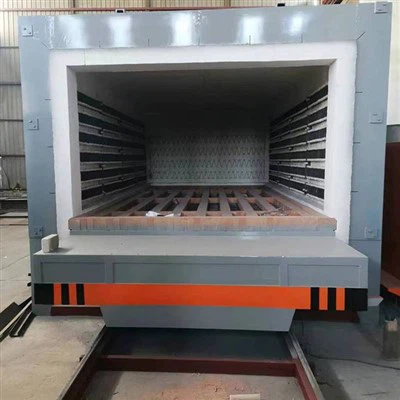
Yo, folks! As a supplier of Aluminum Aging Furnace, I've seen firsthand how the aging temperature can have a huge impact on the hardness of aluminum. So, let's dive into this topic and see what's going on.
What's Aluminum Aging All About?
First off, let's talk about what aluminum aging is. Aging is a heat treatment process that helps improve the mechanical properties of aluminum alloys. When we heat aluminum in an aging furnace, we're essentially changing its internal structure. This process makes the aluminum stronger and harder.
There are two main types of aging: natural aging and artificial aging. Natural aging happens at room temperature over a long period. But in the industry, we usually go for artificial aging because it's faster and more controllable. That's where our Aluminum Aging Furnace comes in handy.
How Temperature Affects Hardness
Now, let's get to the main point: how does the aging temperature affect the hardness of aluminum? Well, it's all about the precipitation of different phases in the aluminum alloy.
When we heat the aluminum in the aging furnace, the atoms start to move around. At a certain temperature, small particles called precipitates start to form. These precipitates act like tiny pins that prevent the movement of dislocations in the aluminum's crystal structure. Dislocations are like defects in the crystal lattice, and when they can't move easily, the aluminum becomes harder.
Low Temperatures
If we use a relatively low aging temperature, the precipitation process is slow. The precipitates that form are small and well - dispersed. This leads to a gradual increase in hardness over time. But it takes a long time to reach the maximum hardness. For example, at around 100 - 150°C, the aluminum will start to harden, but it might take several hours or even days to get to the desired hardness level.
High Temperatures
On the other hand, if we crank up the temperature, say to 200 - 250°C, the precipitation happens much faster. The precipitates grow larger, and the hardness increases rapidly. However, there's a catch. If the temperature is too high, the precipitates can start to coarsen. Coarsening means that the precipitates grow too large and start to lose their effectiveness in pinning the dislocations. As a result, the hardness might actually start to decrease after reaching a peak.
Different Types of Aging Furnaces
We offer different types of aging furnaces to suit different needs. For example, our Pit Type Aluminum Alloy Aging Furnace is great for large - scale operations. It can handle big pieces of aluminum and provides uniform heating. The pit design allows for easy loading and unloading of heavy parts.
Our Box Type Aging Furnace is more suitable for smaller parts or when you need more precise temperature control. It's compact and easy to operate, making it a popular choice for many workshops.
Real - World Applications
The impact of aging temperature on aluminum hardness has real - world implications. In the aerospace industry, for example, high - strength aluminum parts are crucial. By carefully controlling the aging temperature in our furnaces, we can produce aluminum components that meet the strict requirements of the aerospace sector. These parts need to be hard and strong to withstand the extreme conditions of flight.
In the automotive industry, aluminum is used to make lighter parts, which helps improve fuel efficiency. The hardness of these parts is important for their durability and performance. Our aging furnaces can help manufacturers produce high - quality aluminum parts that are both hard and lightweight.


Tips for Optimal Aging
If you're using our Aluminum Aging Furnace, here are some tips to get the best results. First, make sure you know the specific alloy you're working with. Different aluminum alloys have different optimal aging temperatures. You can usually find this information in the alloy's technical data sheet.
Second, monitor the temperature carefully. Use a reliable temperature sensor to ensure that the temperature in the furnace is stable. Fluctuations in temperature can lead to inconsistent hardness results.
Finally, follow the recommended aging time. The time required for aging depends on the temperature and the alloy. Don't rush the process, as it might not achieve the desired hardness.
Conclusion
In conclusion, the aging temperature plays a crucial role in determining the hardness of aluminum. By choosing the right temperature and using our high - quality Aluminum Aging Furnace, you can produce aluminum parts with the perfect balance of hardness and other mechanical properties.
If you're in the market for an aging furnace, whether it's a Pit Type Aluminum Alloy Aging Furnace or a Box Type Aging Furnace, we're here to help. Contact us to discuss your specific needs and start your journey towards high - quality aluminum heat treatment.
References
- ASM Handbook, Volume 4: Heat Treating.
- "Aluminum Alloys: Structure and Properties" by H. Baker.