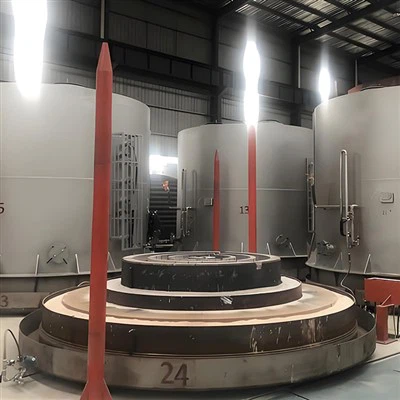
As a supplier of Aluminum Aging Furnaces, I've witnessed firsthand the crucial role these furnaces play in the aluminum industry. They are widely used for heat treatment processes, including aging, which can enhance the mechanical properties of aluminum alloys. However, like any technology, Aluminum Aging Furnaces have their limitations when it comes to defect repair. In this blog, I'll explore these limitations in detail to help you make more informed decisions when using our products.
1. Inability to Repair Severe Structural Defects
One of the primary limitations of using an Aluminum Aging Furnace for defect repair is its inability to address severe structural defects. Aging furnaces work by subjecting aluminum alloys to specific temperatures and holding times to promote precipitation hardening. This process can improve the material's strength and hardness but cannot physically reconstruct or repair major cracks, voids, or other significant structural flaws.
For example, if an aluminum component has a large crack that extends through a significant portion of its cross - section, the heat treatment process in an aging furnace will not close the crack. The thermal cycling in the furnace may even exacerbate the problem by causing the crack to propagate further due to thermal stresses. In such cases, more invasive repair methods like welding or machining may be required to restore the structural integrity of the component.


2. Limited Impact on Chemical Composition Defects
Aluminum Aging Furnaces are designed to modify the microstructure of aluminum alloys through heat treatment, but they have limited ability to correct chemical composition defects. Chemical composition plays a vital role in determining the properties of aluminum alloys. If the alloy has an incorrect chemical composition, such as an improper ratio of alloying elements or the presence of impurities, the aging process may not be able to fully compensate for these issues.
For instance, if an aluminum alloy has a lower than specified amount of a critical alloying element like copper, the aging process may not achieve the desired level of precipitation hardening. The furnace can only work within the constraints of the existing chemical composition, and it cannot add or remove elements from the alloy. To address chemical composition defects, remelting and proper alloying during the casting process are usually necessary.
3. Surface Defect Repair Challenges
Surface defects on aluminum components, such as scratches, pits, or oxidation layers, pose significant challenges for Aluminum Aging Furnaces. The heat treatment process in an aging furnace is not designed to smooth out surface irregularities or remove oxidation. In fact, the high - temperature environment in the furnace may cause further oxidation of the aluminum surface if proper protective measures are not taken.
For example, a scratched aluminum part will still have the scratch after the aging process. The furnace can only affect the internal microstructure of the material, leaving the surface defects intact. To repair surface defects, additional surface treatment processes like polishing, grinding, or chemical etching may be required before or after the aging process.
4. Uniformity and Temperature Gradient Issues
Achieving uniform heat distribution within an Aluminum Aging Furnace is crucial for consistent defect repair. However, it is often difficult to eliminate temperature gradients completely, especially in large - scale furnaces or when treating complex - shaped components. Temperature gradients can lead to uneven aging, which may result in inconsistent mechanical properties across the component.
In a Pit Type Aluminum Alloy Aging Furnace, for example, the temperature at the bottom of the pit may be slightly different from that at the top. This can cause variations in the precipitation hardening process, leading to differences in hardness and strength between different parts of the component. Similarly, in a Trolley Type Aluminum Alloy Aging Furnace, the position of the component on the trolley can affect its exposure to the heat source, resulting in non - uniform aging.
5. Size and Shape Limitations
The size and shape of the aluminum components can also limit the effectiveness of defect repair using an Aluminum Aging Furnace. Large - sized components may require longer heating and cooling times to reach the desired temperature throughout the entire part. This can increase the risk of thermal stresses and uneven aging. Additionally, complex - shaped components may have areas that are difficult to heat uniformly, leading to inconsistent defect repair.
For example, a large aluminum casting with intricate internal cavities may experience uneven temperature distribution during the aging process. The heat may not penetrate evenly into the cavities, resulting in incomplete aging in those areas. In such cases, special fixtures or heating techniques may be required to ensure uniform heat treatment, but these solutions can be costly and time - consuming.
6. Cost - Benefit Considerations
Using an Aluminum Aging Furnace for defect repair can be costly, especially when considering the limitations mentioned above. The energy consumption during the heat treatment process, the cost of furnace maintenance, and the time required for the aging cycle all contribute to the overall cost. If the defect repair using the aging furnace is not effective or requires additional post - treatment steps, the cost - benefit ratio may become unfavorable.
For small - scale defect repair, the cost of operating the furnace may outweigh the benefits, especially when compared to alternative repair methods. In some cases, it may be more cost - effective to replace the defective component rather than attempting to repair it using an aging furnace.
Conclusion
While Aluminum Aging Furnaces are valuable tools in the aluminum industry for improving the properties of aluminum alloys, they have significant limitations when it comes to defect repair. Understanding these limitations is essential for making informed decisions about the appropriate repair methods for aluminum components.
At our company, we offer a range of Aluminum Aging Furnaces, including Pit Type Aluminum Alloy Aging Furnace, Trolley Type Aluminum Alloy Aging Furnace, and Box Type Aging Furnace. Our team of experts can provide you with detailed information about the capabilities and limitations of our products to help you choose the most suitable solution for your needs.
If you are facing challenges in defect repair or are considering purchasing an Aluminum Aging Furnace, we encourage you to contact us for a detailed discussion. We are committed to providing high - quality products and professional advice to help you optimize your aluminum processing operations.
References
- ASM Handbook Volume 4: Heat Treating. ASM International.
- Aluminum Alloys: Structure and Properties. John E. Hatch.
- Heat Treatment Principles and Techniques for Metals. George E. Totten, David Scott MacKenzie.