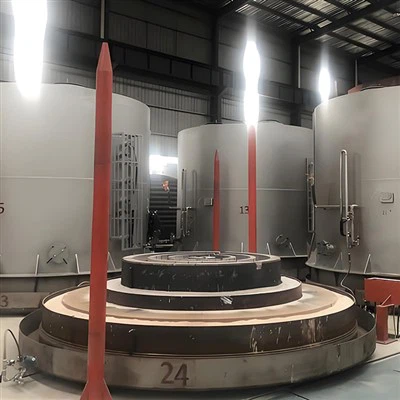
Aging treatment is a crucial process in various industries, especially for materials like aluminum alloys and wires. A Box Type Aging Furnace plays a vital role in this process, as it provides a controlled environment for aging materials to enhance their mechanical properties. One of the key aspects of operating a Box Type Aging Furnace is adjusting the aging time correctly. In this blog, as a supplier of Box Type Aging Furnace, I'll share some insights on how to adjust the aging time effectively.


Understanding the Basics of Aging Time
Before delving into the adjustment methods, it's essential to understand what aging time means. Aging time refers to the duration for which the material is kept at a specific temperature inside the aging furnace. During this time, the internal structure of the material undergoes changes, leading to improved hardness, strength, and other mechanical properties.
The optimal aging time depends on several factors, including the type of material, its initial state, the desired final properties, and the aging temperature. For example, different aluminum alloys may require different aging times to achieve the best results.
Factors Affecting Aging Time
- Material Composition: Different materials have different atomic structures and diffusion rates. For instance, aluminum alloys with different alloying elements will age at different rates. High - strength aluminum alloys may need longer aging times compared to pure aluminum to develop the desired strength and hardness.
- Initial Condition of the Material: The material's initial state, such as its grain size, cold - working history, and heat treatment prior to aging, can significantly affect the aging time. A material that has been severely cold - worked may age faster than an annealed one because the cold - working introduces defects and dislocations that act as nucleation sites for the aging process.
- Aging Temperature: Temperature and aging time are inversely related to a certain extent. Higher aging temperatures generally accelerate the aging process, reducing the required aging time. However, extremely high temperatures can also lead to over - aging, where the material's properties start to deteriorate.
Methods to Adjust Aging Time
- Refer to Material Specifications: Most materials come with recommended aging parameters provided by the manufacturer or based on industry standards. These specifications usually include the optimal aging temperature and time range. As a starting point, you can follow these guidelines when using a Box Type Aging Furnace. For example, if you are aging an aluminum alloy for a specific application, the alloy manufacturer may suggest an aging time of 6 - 8 hours at a temperature of 120 - 150°C.
- Conduct Trial Runs: If the material's specifications are not available or if you are using a new material, conducting trial runs is a practical approach. Start with a conservative estimate of the aging time based on similar materials. For example, if you are aging a new aluminum alloy similar to an existing one, you can start with the aging time recommended for the existing alloy. Then, test the material's properties after each trial run. You can measure hardness, tensile strength, and other relevant properties using appropriate testing equipment. Based on the test results, you can adjust the aging time accordingly. If the material's properties are not up to the desired level, you can increase the aging time in subsequent trials.
- Use Monitoring and Control Systems: Modern Box Type Aging Furnaces are often equipped with advanced monitoring and control systems. These systems can record the temperature and time inside the furnace accurately. You can use this data to analyze the aging process and make adjustments. For example, if the temperature inside the furnace fluctuates during the aging process, it may affect the aging rate. By analyzing the temperature - time curve, you can determine if the actual aging time needs to be adjusted to compensate for the temperature variations.
- Employ Statistical Process Control (SPC): SPC techniques can be used to monitor and control the aging process. By collecting data on the aging time and the resulting material properties from multiple production runs, you can establish control limits. If the data points fall outside the control limits, it indicates that the aging time may need to be adjusted. This method helps in maintaining consistent product quality over time.
Case Studies
Let's consider a case where a manufacturing company is using a Box Type Aging Furnace to age aluminum wires. Initially, they followed the standard aging time recommended for a similar type of aluminum wire. However, they found that the wires were not achieving the desired tensile strength. By conducting trial runs and adjusting the aging time, they discovered that increasing the aging time by 2 hours at the same aging temperature significantly improved the tensile strength of the wires.
In another case, a company was aging aluminum alloy parts for aerospace applications. They used a monitoring system to track the temperature and time inside the Box Type Aging Furnace. They noticed that due to a minor malfunction in the heating system, the temperature inside the furnace was slightly lower than the set value. As a result, they extended the aging time to ensure that the parts aged properly. This adjustment helped them maintain the high - quality standards required for aerospace components.
Related Products
If you are interested in other types of aging furnaces, we also offer Pit Type Aluminum Alloy Aging Furnace, Aluminum Wire Aging Furnace, and Aluminum Aging Furnace. These furnaces are designed to meet different production requirements and can provide precise control over the aging process.
Conclusion
Adjusting the aging time in a Box Type Aging Furnace is a complex but essential task to ensure the quality and performance of the aged materials. By understanding the factors affecting aging time, referring to material specifications, conducting trial runs, using monitoring systems, and applying statistical process control, you can optimize the aging process. If you have any questions about adjusting aging time or need more information about our Box Type Aging Furnaces, please feel free to contact us for further discussion and potential procurement. We are committed to providing you with the best solutions for your aging needs.
References
- ASM Handbook Volume 4: Heat Treating. ASM International.
- Aluminum Association. Aluminum Design Manual.
- Callister, W. D., & Rethwisch, D. G. Materials Science and Engineering: An Introduction. Wiley.