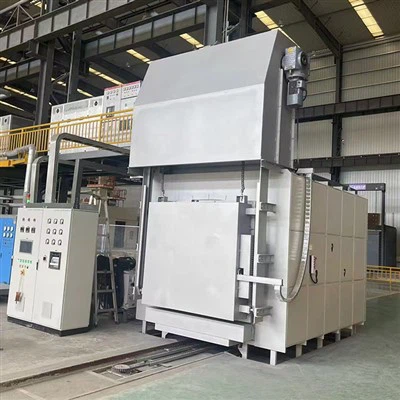
Optimizing the annealing process in a Bell Annealing Furnace is crucial for achieving high - quality results in metal heat treatment. As a leading supplier of Bell Annealing Furnaces, we have extensive experience in this field and are eager to share some insights on how to optimize this process.


Understanding the Bell Annealing Furnace
Before delving into the optimization strategies, it's essential to understand the basic working principles of a Bell Annealing Furnace. A Bell Annealing Furnace consists of a base, a bell - shaped cover, and a heating system. The metal coils or other workpieces are placed on the base, and the bell is lowered over them. The heating system, which can be electric or gas - fired, then heats the workpieces to the desired annealing temperature.
There are different types of Bell Annealing Furnaces available in the market. For instance, the Bell Type Bright Annealing Furnace is designed to provide a bright surface finish to the annealed workpieces. This type of furnace often uses a protective atmosphere to prevent oxidation during the annealing process. The Strong Convection Bell Furnace enhances the heat transfer efficiency through strong internal convection, ensuring more uniform heating of the workpieces. In contrast, the Mobile Bell Type Furnace offers flexibility in terms of location and can be easily moved to different work areas.
Key Factors in Optimizing the Annealing Process
Temperature Control
Temperature is one of the most critical factors in the annealing process. Precise temperature control ensures that the workpieces reach the appropriate annealing temperature and are held at that temperature for the right amount of time. To optimize temperature control:
- Calibrate the Temperature Sensors Regularly: Over time, temperature sensors can drift, leading to inaccurate temperature readings. Regular calibration ensures that the actual temperature in the furnace matches the setpoint.
- Use a Programmed Temperature Profile: Each type of metal has a specific annealing temperature range and time - temperature relationship. By programming the furnace to follow a precise temperature profile, you can ensure consistent and high - quality annealing results. For example, some metals may require a slow heating rate to prevent thermal stress, followed by a soaking period at the annealing temperature and then a controlled cooling rate.
Atmosphere Control
The atmosphere inside the Bell Annealing Furnace can significantly affect the quality of the annealed workpieces. In many cases, a protective atmosphere is used to prevent oxidation, decarburization, or other surface reactions.
- Select the Right Atmosphere: The choice of atmosphere depends on the type of metal being annealed. For example, for stainless steel, a mixture of hydrogen and nitrogen is often used. Hydrogen helps to reduce any surface oxides, while nitrogen provides a stable inert environment.
- Monitor and Control the Atmosphere Composition: Continuously monitor the atmosphere composition inside the furnace using gas analyzers. Adjust the gas flow rates as needed to maintain the desired atmosphere composition.
Convection and Heat Transfer
Efficient heat transfer is essential for uniform annealing of the workpieces. Strong convection within the furnace can improve heat transfer and reduce the temperature gradient between different parts of the workpieces.
- Optimize the Fan Design and Operation: The fans in the Bell Annealing Furnace play a crucial role in creating convection. Ensure that the fan blades are clean and in good condition. Adjust the fan speed according to the size and shape of the workpieces to achieve optimal convection.
- Arrange the Workpieces Properly: The way the workpieces are arranged on the furnace base can also affect heat transfer. Avoid overcrowding the workpieces, as this can impede the flow of hot air and lead to uneven heating.
Process Monitoring and Data Analysis
To continuously optimize the annealing process, it's important to monitor the process parameters and analyze the collected data.
- Install Monitoring Devices: Install sensors to monitor temperature, atmosphere composition, pressure, and other relevant parameters. Connect these sensors to a data acquisition system, which can record the data in real - time.
- Analyze the Data: Use data analysis tools to identify trends and patterns in the process data. For example, if you notice that the temperature in a particular area of the furnace is consistently higher or lower than the average, you can take corrective actions such as adjusting the heating elements or the fan operation.
Maintenance and Troubleshooting
Regular maintenance of the Bell Annealing Furnace is essential for its reliable operation and optimal performance.
- Clean the Furnace Regularly: Remove any scale, debris, or residues from the furnace interior, heating elements, and fans. This helps to maintain good heat transfer efficiency and prevents damage to the furnace components.
- Inspect and Replace Worn - Out Parts: Periodically inspect the furnace components such as heating elements, seals, and sensors. Replace any worn - out or damaged parts promptly to avoid process disruptions.
- Troubleshoot Problems Quickly: If you encounter any problems during the annealing process, such as abnormal temperature fluctuations or atmosphere leaks, use a systematic troubleshooting approach to identify and resolve the issues.
Conclusion
Optimizing the annealing process in a Bell Annealing Furnace requires a combination of proper equipment selection, precise process control, continuous monitoring, and regular maintenance. As a supplier of Bell Annealing Furnaces, we are committed to providing our customers with high - quality equipment and technical support to help them achieve optimal annealing results.
If you are interested in learning more about our Bell Annealing Furnaces or need assistance in optimizing your annealing process, we invite you to contact us for a detailed discussion. Our team of experts is ready to work with you to meet your specific requirements and improve your production efficiency.
References
- Smith, J. (2018). Heat Treatment Handbook. New York: Industrial Press.
- Jones, A. (2020). Advanced Furnace Technology. London: Elsevier.
- Brown, C. (2021). Optimizing Metal Annealing Processes. Journal of Materials Engineering, 45(3), 123 - 135.