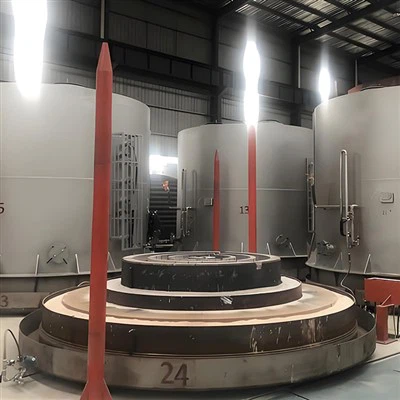
Hey there! As a supplier of annealing furnaces, I've got a ton of hands - on experience with these bad boys. Today, I wanna chat about the energy - consumption characteristics of an annealing furnace. Buckle up, 'cause it's gonna be an interesting ride!
First off, let's understand what an annealing furnace does. It's a crucial piece of equipment in the metal - working industry. Annealing is a heat - treatment process that involves heating metal to a specific temperature and then cooling it at a controlled rate. This process helps to relieve internal stresses, increase ductility, and improve the overall machinability of the metal.
Now, when it comes to energy consumption, there are several factors that come into play. One of the most significant factors is the type of annealing furnace. We've got different types out there, like the Pit Type Annealing Furnace, Trolley Type Vacuum Annealing Furnace, and Bell Type Annealing Furnace. Each type has its own unique energy - consumption characteristics.


Pit Type Annealing Furnace
The pit - type annealing furnace is a vertical furnace that's often used for large - scale annealing operations. It's designed to hold large workpieces, and it's pretty energy - intensive. The main reason for this is the large volume of the furnace. Heating up a big space requires a significant amount of energy.
These furnaces usually use gas or electricity as a heat source. Gas - fired pit - type annealing furnaces can be more cost - effective in the long run, especially if you have access to a cheap gas supply. However, they do require proper ventilation to ensure the safe combustion of gas. Electric pit - type annealing furnaces, on the other hand, are cleaner and easier to control. But they can be more expensive to operate, especially in areas where electricity rates are high.
Another factor that affects the energy consumption of a pit - type annealing furnace is the insulation. Good insulation can significantly reduce heat loss, which means less energy is needed to maintain the desired temperature. A well - insulated pit - type annealing furnace can save you a lot of money on energy bills over time.
Trolley Type Vacuum Annealing Furnace
The trolley - type vacuum annealing furnace is a bit different. It's designed to anneal workpieces in a vacuum environment. This type of furnace is often used for high - precision annealing operations, where the quality of the final product is crucial.
The energy consumption of a trolley - type vacuum annealing furnace is mainly determined by the vacuum system and the heating elements. The vacuum system needs to be running continuously to maintain the vacuum inside the furnace. This requires a significant amount of energy, especially if the furnace has a large volume.
The heating elements in a trolley - type vacuum annealing furnace also consume a lot of energy. Since the furnace operates in a vacuum, there's no air to transfer heat, so the heating elements need to be more powerful to heat the workpieces. However, the advantage of this type of furnace is that it can produce high - quality annealed products with minimal oxidation and contamination.
Bell Type Annealing Furnace
The bell - type annealing furnace consists of a stationary base and a removable bell - shaped cover. This type of furnace is often used for batch annealing operations. It's relatively energy - efficient compared to the pit - type and trolley - type vacuum annealing furnaces.
The bell - type annealing furnace uses a combination of radiant and convective heat transfer. The heating elements are usually located on the inside of the bell, and they radiate heat towards the workpieces. The hot air inside the furnace also circulates, which helps to distribute the heat evenly.
One of the key factors that contribute to the energy efficiency of a bell - type annealing furnace is the ability to reuse the heat. After the annealing process is complete, the hot bell can be used to pre - heat the next batch of workpieces. This reduces the amount of energy needed to heat up the new batch, resulting in significant energy savings.
Other Factors Affecting Energy Consumption
Apart from the type of furnace, there are other factors that can affect the energy consumption of an annealing furnace. One of these factors is the temperature and time of the annealing process. The higher the temperature and the longer the annealing time, the more energy is required. So, it's important to optimize the annealing process parameters to reduce energy consumption without compromising the quality of the final product.
The size and shape of the workpieces also play a role in energy consumption. Larger workpieces require more energy to heat up, and irregularly shaped workpieces can cause uneven heat distribution, which may require additional energy to ensure proper annealing.
The frequency of furnace operation is another factor. If the furnace is used continuously, it can be more energy - efficient than if it's started and stopped frequently. Starting up a furnace requires a large amount of energy to heat it up from room temperature, so minimizing the number of start - stops can save a lot of energy.
How to Reduce Energy Consumption
As an annealing furnace supplier, I'm always looking for ways to help my customers reduce their energy consumption. Here are some tips that can help:
- Upgrade the insulation: As I mentioned earlier, good insulation can significantly reduce heat loss. Consider upgrading the insulation of your furnace to improve its energy efficiency.
- Optimize the annealing process: Work with a metallurgist or a heat - treatment expert to optimize the annealing process parameters. This can help you reduce the temperature and time of the annealing process without sacrificing the quality of the final product.
- Use energy - efficient heating elements: There are many energy - efficient heating elements available on the market. These elements can heat up the workpieces more quickly and with less energy consumption.
- Implement a heat - recovery system: A heat - recovery system can capture the waste heat from the furnace and use it for other purposes, such as pre - heating the incoming air or water. This can significantly reduce the overall energy consumption of the furnace.
If you're in the market for an annealing furnace and want to learn more about how to reduce energy consumption, or if you have any questions about our products, don't hesitate to reach out. We're here to help you find the right annealing furnace for your needs and ensure that you get the most out of it.
References
- ASM Handbook Volume 4: Heat Treating. ASM International.
- Heat Treating Principles and Processes. ASM International.
So, that's a wrap on the energy - consumption characteristics of annealing furnaces. I hope this blog post has been helpful to you. If you're interested in purchasing an annealing furnace or have any questions, feel free to contact us for a consultation. We're eager to work with you and find the best solution for your heat - treatment needs.