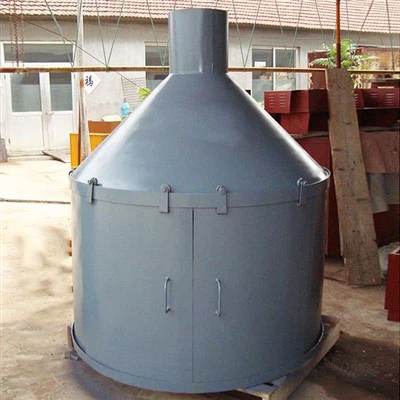
Hey there! I'm a supplier of Box Annealing Furnaces, and today I want to chat about the measurement methods for temperature in a Box Annealing Furnace. It's super important to get accurate temperature readings in these furnaces, as it directly affects the quality of the annealing process. So, let's dive in!
Why Accurate Temperature Measurement Matters
First off, why do we even care about accurate temperature measurement in a Box Annealing Furnace? Well, annealing is a heat treatment process that involves heating a material to a specific temperature and then cooling it at a controlled rate. This process can change the physical and mechanical properties of the material, like making it softer, more ductile, or improving its electrical conductivity.
If the temperature is too high or too low, it can lead to all sorts of problems. For example, if the temperature is too high, the material might over-anneal, which can make it too soft or cause it to lose some of its strength. On the other hand, if the temperature is too low, the material might not be fully annealed, and it won't have the desired properties. So, accurate temperature measurement is crucial for getting the best results from the annealing process.
Different Measurement Methods
Thermocouples
One of the most common methods for measuring temperature in a Box Annealing Furnace is using thermocouples. A thermocouple is a device that consists of two different metals joined together at one end. When there's a temperature difference between the joined end (the measuring junction) and the other end (the reference junction), it generates a small voltage. This voltage is proportional to the temperature difference, and by measuring this voltage, we can determine the temperature at the measuring junction.
Thermocouples are great because they're relatively inexpensive, can measure a wide range of temperatures, and are pretty durable. However, they do have some limitations. For example, they can be affected by electromagnetic interference, and over time, they can experience drift, which means their readings might become less accurate.
Resistance Temperature Detectors (RTDs)
Another popular method is using Resistance Temperature Detectors (RTDs). RTDs work based on the principle that the electrical resistance of a metal changes with temperature. As the temperature increases, the resistance of the metal also increases. By measuring the resistance, we can calculate the temperature.
RTDs are known for their high accuracy and stability. They're less affected by electromagnetic interference compared to thermocouples. However, they're usually more expensive and have a slower response time.
Infrared Thermometers
Infrared thermometers are non-contact temperature measurement devices. They work by detecting the infrared radiation emitted by an object and converting it into a temperature reading. This is really useful in situations where you can't directly touch the object, like when the object is moving or in a high-temperature environment.


Infrared thermometers are quick and easy to use. They can provide instant temperature readings without having to make physical contact with the object. However, their accuracy can be affected by factors like the emissivity of the object, the distance between the thermometer and the object, and the presence of any intervening materials.
Choosing the Right Measurement Method
So, how do you choose the right temperature measurement method for your Box Annealing Furnace? Well, it depends on a few factors.
First, you need to consider the temperature range you need to measure. Different measurement methods have different temperature ranges that they can accurately measure. For example, thermocouples can typically measure a wider range of temperatures compared to RTDs.
Second, you need to think about the accuracy requirements. If you need very precise temperature measurements, RTDs might be a better choice. However, if you can tolerate a slightly lower level of accuracy, thermocouples or infrared thermometers might be more suitable.
Third, you need to consider the environment in which the measurement will be taken. If there's a lot of electromagnetic interference, RTDs might be a better option because they're less affected by it. If the object is moving or in a hard-to-reach location, an infrared thermometer might be the way to go.
Other Considerations
In addition to choosing the right measurement method, there are a few other things to keep in mind when measuring temperature in a Box Annealing Furnace.
First, it's important to calibrate your temperature measurement devices regularly. Calibration ensures that your devices are providing accurate readings. You can use a reference thermometer or a calibration furnace to calibrate your devices.
Second, you need to make sure that your temperature measurement devices are properly installed. If the devices are not installed correctly, they might not provide accurate readings. For example, if a thermocouple is not properly positioned in the furnace, it might not measure the temperature of the material accurately.
Third, you should monitor the temperature continuously during the annealing process. This allows you to detect any changes in temperature and make adjustments if necessary. You can use a data logger to record the temperature readings over time.
Related Furnace Types
If you're interested in other types of annealing furnaces, we also offer Pit Type Annealing Furnace and Roller Annealing Furnace. Each type of furnace has its own advantages and is suitable for different applications.
Contact for Purchase
If you're in the market for a Box Annealing Furnace or have any questions about temperature measurement in these furnaces, don't hesitate to reach out. We're here to help you choose the right furnace and the best temperature measurement method for your needs.
References
- Smith, J. (2020). Heat Treatment Handbook. Publisher Name.
- Jones, A. (2019). Temperature Measurement Techniques. Journal of Thermal Science.