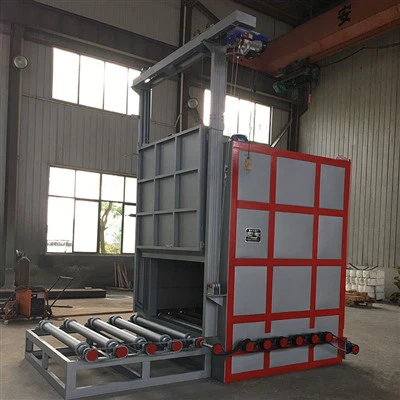
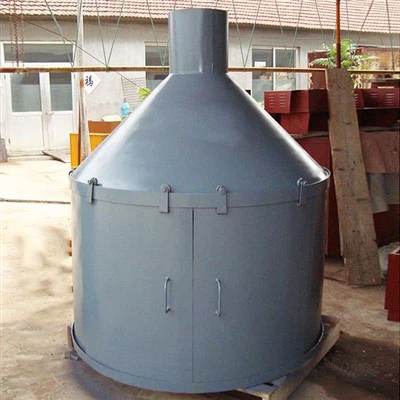
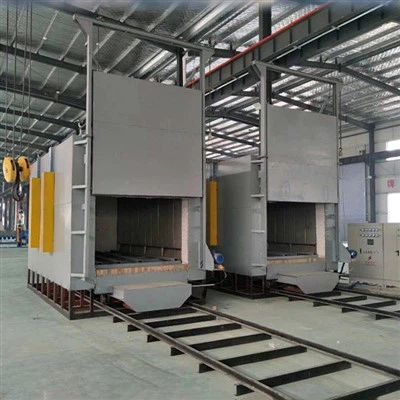
Bell annealing furnaces are essential equipment in various industries, particularly in the heat treatment of metals. These furnaces are designed to heat materials to a specific temperature and then cool them slowly, improving their mechanical properties. One of the critical components of a bell annealing furnace is the heating element, which directly affects the efficiency, performance, and reliability of the furnace. As a leading supplier of bell annealing furnaces, we have in - depth knowledge of the different types of heating elements commonly used in these furnaces.
Resistance Heating Elements
Resistance heating elements are the most widely used type in bell annealing furnaces. The principle behind resistance heating is based on Joule's law, which states that when an electric current passes through a conductor with resistance, electrical energy is converted into heat energy.
Nichrome Heating Elements
Nichrome, an alloy composed mainly of nickel and chromium, is a popular choice for resistance heating elements. It has several advantages that make it suitable for bell annealing furnaces. Firstly, nichrome has a high melting point, typically around 1400°C, which allows it to operate at high temperatures without melting. This is crucial in bell annealing processes where high - temperature heating is often required.
Secondly, nichrome has a relatively high electrical resistance, which means that it can generate a significant amount of heat with a relatively small amount of current. This results in energy - efficient operation. Additionally, nichrome is highly resistant to oxidation, which extends its service life. Oxidation can cause the heating element to deteriorate over time, reducing its performance and eventually leading to failure. The oxidation resistance of nichrome ensures that the heating element can maintain its performance for a long time.
However, nichrome heating elements also have some limitations. They are relatively expensive compared to some other types of heating elements. Also, at extremely high temperatures, the resistance of nichrome may change slightly, which could affect the accuracy of temperature control in the bell annealing furnace.
Induction Heating Elements
Induction heating is a non - contact heating method that uses electromagnetic induction to generate heat in the workpiece. In a bell annealing furnace, induction heating elements can be used to heat the metal directly or to heat a susceptor, which then transfers heat to the workpiece.


How Induction Heating Works
When an alternating current passes through an induction coil, it creates an alternating magnetic field. When a conductive material, such as a metal workpiece, is placed within this magnetic field, eddy currents are induced in the material. These eddy currents flow through the resistance of the metal, generating heat according to Joule's law.
Advantages of Induction Heating in Bell Annealing Furnaces
One of the main advantages of induction heating is its high heating efficiency. Since the heat is generated directly within the workpiece, there is minimal heat loss to the surrounding environment. This results in faster heating times and lower energy consumption compared to resistance heating methods.
Induction heating also allows for precise control of the heating process. The frequency of the alternating current can be adjusted to control the depth of penetration of the eddy currents, which in turn affects the heating pattern within the workpiece. This is particularly useful in bell annealing processes where different parts of the workpiece may require different heating profiles.
Another advantage is the cleanliness of the induction heating process. There is no direct contact between the heating element and the workpiece, which reduces the risk of contamination. This is important in industries where high - quality surface finish and material purity are required.
However, induction heating systems are more complex and expensive to install compared to resistance heating systems. They also require specialized power supplies and control equipment, which adds to the overall cost.
Gas - Fired Heating Elements
Gas - fired heating elements use the combustion of fuel gases, such as natural gas or propane, to generate heat. In a bell annealing furnace, gas - fired burners are typically used to heat the air or a heat - transfer medium, which then transfers the heat to the workpiece.
Working Principle of Gas - Fired Heating
When the fuel gas is mixed with air and ignited in the burner, a combustion reaction occurs, releasing a large amount of heat. The hot combustion products are then used to heat the furnace chamber or a heat exchanger, which in turn heats the workpiece.
Advantages of Gas - Fired Heating in Bell Annealing Furnaces
Gas - fired heating is often more cost - effective than electric heating, especially in regions where natural gas is abundant and inexpensive. The cost of natural gas is generally lower than the cost of electricity, which can result in significant savings in operating costs over the long term.
Gas - fired heating systems can provide a large amount of heat quickly, which is beneficial for large - scale bell annealing operations. They can also be easily adjusted to meet different heating requirements by controlling the flow rate of the fuel gas and air.
However, gas - fired heating also has some drawbacks. The combustion process produces exhaust gases, which need to be properly vented to the outside. These exhaust gases may contain pollutants such as carbon monoxide, nitrogen oxides, and particulate matter, which can have environmental and health impacts if not managed properly. Also, gas - fired heating systems require regular maintenance to ensure safe and efficient operation.
As a supplier of bell annealing furnaces, we offer a range of furnace models, including the Split Mobile Bell Furnace, Strong Convection Bell Furnace, and Mobile Bell Type Furnace. Each of these models can be customized with different types of heating elements to meet your specific annealing requirements.
If you are in the market for a bell annealing furnace or need to upgrade your existing furnace, we invite you to contact us for a detailed discussion. Our team of experts can help you select the most suitable heating element and furnace model based on your application, budget, and performance requirements. We are committed to providing high - quality products and excellent customer service to ensure your success in the heat - treatment process.
References
- ASM Handbook Volume 4: Heat Treating. ASM International.
- "Industrial Furnaces: Principles, Design, and Operation" by B. G. Thomas and M. G. Overfield.
- "Handbook of Induction Heating" by Yakov E. Latanision and David L. Bourell.