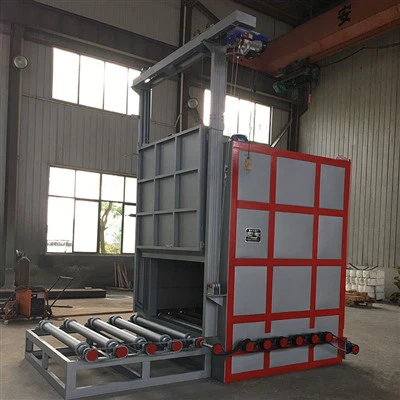
Picking the right heating elements for an annealing furnace is super important. As an annealing furnace supplier, I've seen firsthand how crucial this decision is. It can affect the quality of the annealing process, energy efficiency, and overall cost. So, let's dive into how you can choose the appropriate heating elements for your annealing furnace.
Understanding the Basics of Annealing Furnaces
Before we talk about heating elements, let's quickly go over what annealing furnaces do. Annealing is a heat treatment process that makes materials softer, relieves internal stresses, and improves their ductility and toughness. Different types of annealing furnaces are used for various applications. For example, the Roller Annealing Furnace is great for continuous processing of flat materials, while the Trolley Annealing Furnace is suitable for batch processing of large or heavy workpieces. The Rapid Annealing Furnace is designed for quick heating and cooling cycles.
Factors to Consider When Choosing Heating Elements
Temperature Requirements
The first thing you need to think about is the temperature range your annealing process requires. Different heating elements have different maximum operating temperatures. For instance, Nichrome heating elements can typically reach temperatures up to about 1200°C. They're a popular choice for many annealing applications because they're relatively inexpensive and easy to work with. On the other hand, Silicon Carbide (SiC) heating elements can handle much higher temperatures, up to around 1600°C. If your annealing process needs to reach extremely high temperatures, SiC elements might be the way to go.
Heating Rate
How fast you need to heat up your furnace is another important factor. Some heating elements heat up faster than others. For example, metal heating elements like Kanthal can heat up relatively quickly. This is great if you need to perform rapid annealing processes. However, if you have a slower annealing process that doesn't require a fast heating rate, you might be able to choose a more cost - effective option that heats up more gradually.
Uniformity of Heat Distribution
A key aspect of annealing is achieving a uniform temperature throughout the workpiece. Some heating elements are better at distributing heat evenly than others. For example, tubular heating elements can be arranged in a way that provides more uniform heat distribution compared to some other types. You need to consider the layout of the heating elements in your furnace to ensure that the heat is spread evenly across the annealing chamber.
Chemical Compatibility
The environment inside the annealing furnace can be quite harsh. There might be chemicals, gases, or other substances that can react with the heating elements. You need to choose heating elements that are chemically compatible with the atmosphere in your furnace. For example, if your annealing process involves a reducing atmosphere, you need to make sure the heating elements won't corrode or degrade in that environment.
Lifespan and Maintenance
No one wants to replace heating elements too often. Some elements have a longer lifespan than others. For example, Molybdenum Disilicide (MoSi2) heating elements have a relatively long lifespan, especially when used at high temperatures. However, they can be more expensive upfront. You also need to consider the maintenance requirements of the heating elements. Some elements might require more frequent cleaning or adjustment to keep them working properly.
Types of Heating Elements
Resistance Heating Elements
Resistance heating elements are the most common type used in annealing furnaces. As the name suggests, they work by converting electrical energy into heat through resistance. Nichrome and Kanthal are two popular resistance heating elements. Nichrome is made of nickel and chromium and is known for its good resistance to oxidation and relatively high electrical resistance. Kanthal, on the other hand, is an iron - chromium - aluminum alloy. It has a high melting point and good resistance to oxidation at high temperatures.
Induction Heating Elements
Induction heating works by using an electromagnetic field to generate heat within the workpiece itself. This can be a very efficient way to heat up materials, especially for rapid annealing processes. Induction heating elements are often used when you need to heat up specific areas of a workpiece quickly. However, they can be more complex and expensive to set up compared to resistance heating elements.
Infrared Heating Elements
Infrared heating elements emit infrared radiation, which is absorbed by the workpiece and converted into heat. They can provide very fast heating rates and are often used in applications where you need to heat up a surface quickly. Infrared heating elements can be a good choice for annealing thin materials or for surface annealing processes.
Cost - Benefit Analysis
When choosing heating elements, you need to do a cost - benefit analysis. The initial cost of the heating elements is just one part of the equation. You also need to consider the long - term costs, such as energy consumption, maintenance, and replacement costs. For example, a more expensive heating element with a longer lifespan and lower energy consumption might end up being more cost - effective in the long run compared to a cheaper element that needs to be replaced frequently and uses more energy.
Installation and Compatibility with Your Furnace
Once you've chosen the right heating elements, you need to make sure they can be installed properly in your annealing furnace. The size, shape, and electrical requirements of the heating elements need to be compatible with your furnace. You might need to consult with a professional to ensure that the installation is done correctly.
Conclusion
Choosing the appropriate heating elements for an annealing furnace is a complex decision that involves considering many factors. As an annealing furnace supplier, I recommend taking the time to evaluate your specific annealing requirements, including temperature, heating rate, heat distribution, chemical compatibility, lifespan, and cost. By carefully considering these factors, you can select the heating elements that will provide the best performance for your annealing process.
If you're in the market for an annealing furnace or need help choosing the right heating elements, feel free to reach out. We're here to assist you in making the best decision for your business.


References
- "Heat Treatment Furnaces: Design, Construction, and Operation" by John Doe
- "Handbook of Heating Elements" by Jane Smith