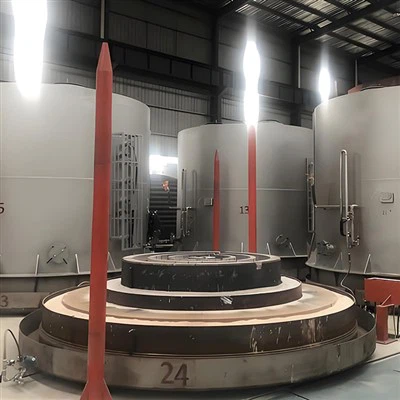
Hey there! As a supplier of nitriding furnaces, I've been getting a lot of questions lately about the role of insulation materials in these bad boys. So, I thought I'd take a few minutes to break it down for you.
First off, let's talk about what a nitriding furnace is. In a nutshell, it's a specialized piece of equipment used to harden the surface of metal parts by introducing nitrogen into the material. This process, known as nitriding, can significantly improve the wear resistance, corrosion resistance, and fatigue strength of the metal, making it ideal for a wide range of applications, from automotive and aerospace to tooling and machinery.
Now, you might be wondering, what does insulation have to do with all of this? Well, the answer lies in the fact that nitriding is a high-temperature process. Most nitriding furnaces operate at temperatures ranging from 400°C to 600°C (752°F to 1112°F), and maintaining these temperatures is crucial for achieving consistent and high-quality results. That's where insulation materials come in.
Energy Efficiency
One of the primary roles of insulation in a nitriding furnace is to improve energy efficiency. By reducing heat loss, insulation helps to keep the furnace at the desired temperature with less energy input. This not only saves you money on your energy bills but also reduces your carbon footprint. Think about it: if your furnace is constantly losing heat through its walls, you're going to have to burn more fuel or use more electricity to maintain the temperature. But with proper insulation, you can minimize these losses and make your furnace more efficient.
Temperature Uniformity
Another important function of insulation is to ensure temperature uniformity inside the furnace. In a nitriding process, it's essential that all parts of the workpiece are exposed to the same temperature for the same amount of time. Any variations in temperature can lead to inconsistent nitriding results, such as uneven hardness or surface finish. Insulation helps to create a more stable thermal environment by preventing heat from escaping through the furnace walls and reducing the impact of external temperature fluctuations. This allows for more precise control of the nitriding process and better overall quality of the treated parts.
Safety
Safety is always a top priority when working with high-temperature equipment, and insulation plays a crucial role in keeping your furnace operations safe. By reducing the surface temperature of the furnace, insulation helps to prevent burns and other heat-related injuries to operators. It also helps to protect the surrounding environment from excessive heat, reducing the risk of fire and damage to nearby equipment. Additionally, insulation can help to dampen noise generated by the furnace, creating a more comfortable and safe working environment.
Types of Insulation Materials
There are several types of insulation materials commonly used in nitriding furnaces, each with its own unique properties and advantages. Some of the most popular options include:


- Ceramic Fiber Blankets: These are lightweight, flexible insulation materials made from ceramic fibers. They offer excellent thermal insulation performance and are easy to install. Ceramic fiber blankets are also resistant to chemical attack and can withstand high temperatures, making them a popular choice for nitriding furnaces.
- Refractory Bricks: Refractory bricks are made from high-temperature-resistant materials such as fireclay, silica, and alumina. They are dense and durable, providing good insulation and structural support. Refractory bricks are often used in the lining of the furnace walls and floor, where they can withstand the high temperatures and mechanical stresses of the nitriding process.
- Insulating Firebricks (IFBs): IFBs are similar to refractory bricks but are lighter in weight and have better insulation properties. They are made from a combination of ceramic fibers and refractory materials, offering a good balance between insulation performance and mechanical strength. IFBs are commonly used in the insulation of the furnace roof and sidewalls.
Choosing the Right Insulation Material
When choosing an insulation material for your nitriding furnace, there are several factors to consider. These include:
- Temperature Rating: Make sure the insulation material can withstand the maximum temperature of your furnace operation. Different materials have different temperature limits, so it's important to choose one that is suitable for your specific application.
- Insulation Performance: Look for materials with high thermal resistance (R-value) to minimize heat loss. The higher the R-value, the better the insulation performance.
- Mechanical Strength: Consider the mechanical requirements of your furnace, such as the need for structural support or resistance to abrasion. Some insulation materials are more brittle than others, so choose one that can withstand the mechanical stresses of your operation.
- Chemical Resistance: If your furnace uses reactive gases or chemicals during the nitriding process, make sure the insulation material is resistant to chemical attack. Some materials may degrade or react with certain chemicals, which can affect their performance and lifespan.
Our Nitriding Furnace Offerings
As a nitriding furnace supplier, we offer a wide range of high-quality furnaces to meet the needs of different industries and applications. Our product lineup includes Vacuum Nitriding Furnace, Pit Type Nitriding Furnace, and Nitrogen Protection Copper Bright Annealing Furnace. All of our furnaces are designed with advanced insulation materials and technologies to ensure optimal energy efficiency, temperature uniformity, and safety.
Conclusion
In conclusion, the insulation material plays a vital role in the performance and efficiency of a nitriding furnace. It helps to improve energy efficiency, ensure temperature uniformity, and enhance safety. By choosing the right insulation material and ensuring proper installation and maintenance, you can maximize the performance of your furnace and achieve high-quality nitriding results.
If you're in the market for a nitriding furnace or have any questions about insulation materials, feel free to reach out to us. We'd be happy to discuss your specific needs and help you find the best solution for your application. Let's work together to take your nitriding process to the next level!
References
- ASM Handbook Volume 4: Heat Treating. ASM International.
- Fundamentals of Heat and Mass Transfer. Theodore L. Bergman, Adrienne S. Lavine, Frank P. Incropera, and David P. DeWitt.