Controlling the cooling rate of a resistance furnace is a critical aspect in various industrial applications, which can significantly affect the quality of heat - treated products and the overall efficiency of the production process. As a resistance furnace supplier, we understand the challenges and importance associated with this task. In this blog, we will delve into the key factors that influence the cooling rate and explore effective methods to control it.
Factors Affecting the Cooling Rate
Furnace Design
The design of the resistance furnace plays a fundamental role in determining the cooling rate. The insulation material used in the furnace walls can have a substantial impact. High - quality insulation materials with low thermal conductivity can slow down the heat transfer from the inside of the furnace to the outside environment, resulting in a slower cooling rate. For example, ceramic fiber insulation is often used in modern resistance furnaces due to its excellent thermal insulation properties.
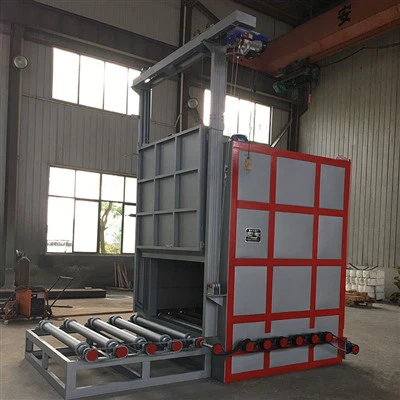
The size and shape of the furnace also matter. A larger furnace generally has a slower cooling rate because it has a larger heat capacity. Similarly, a furnace with a more compact shape may have a different cooling behavior compared to a more elongated one. Our Large Pit Type Resistance Furnace is designed with specific insulation and dimensions to meet different cooling requirements in industrial applications.


Cooling Medium
The choice of cooling medium is another crucial factor. Air cooling is one of the most common methods. It is relatively simple and cost - effective. However, the cooling rate can be adjusted by controlling the air flow rate. Increasing the air flow can speed up the cooling process, while reducing it can slow it down. Forced air cooling, using fans or blowers, can provide a more controllable cooling rate compared to natural air cooling.
Water cooling is a more efficient method for achieving a faster cooling rate. Water has a high specific heat capacity, which means it can absorb a large amount of heat from the furnace. By adjusting the water flow rate and temperature, we can precisely control the cooling rate. However, water cooling systems require more complex equipment and maintenance.
Load Characteristics
The nature of the load inside the furnace also affects the cooling rate. Different materials have different thermal properties, such as thermal conductivity and specific heat. Metals with high thermal conductivity, like copper and aluminum, will cool faster than materials with lower thermal conductivity, such as ceramics. The size and shape of the load also matter. A larger or more massive load will generally take longer to cool down.
Methods for Controlling the Cooling Rate
Ramp Control
Ramp control is a common method for controlling the cooling rate in a resistance furnace. It involves gradually reducing the power supply to the heating elements in a controlled manner. By programming the furnace controller, we can set a specific cooling ramp, such as a certain number of degrees Celsius per minute. This method allows for a smooth and controlled cooling process, which is particularly important for heat - treating processes that require specific cooling rates to achieve the desired material properties.
Air - Flow Regulation
As mentioned earlier, air - flow regulation is an effective way to control the cooling rate when using air cooling. By adjusting the speed of the fans or blowers, we can increase or decrease the amount of air flowing around the furnace. Some modern resistance furnaces are equipped with variable - speed fans, which can be precisely controlled by the furnace controller. This provides a high level of flexibility in adjusting the cooling rate according to different requirements.
Water - Flow and Temperature Control
In water - cooled resistance furnaces, controlling the water flow and temperature is essential. A flow meter can be used to measure and adjust the water flow rate accurately. By increasing the water flow, we can increase the cooling rate, and vice versa. Additionally, maintaining a constant water temperature within a specific range can also help to achieve a stable cooling rate. Water chillers or heat exchangers can be used to control the water temperature.
Insulation Adjustment
In some cases, adjusting the insulation of the furnace can also help to control the cooling rate. If a slower cooling rate is required, additional insulation can be added to the furnace walls. Conversely, if a faster cooling rate is needed, some of the insulation can be removed or replaced with a less insulating material. However, this method is more suitable for long - term adjustments and may not be as flexible as other methods.
Case Studies
Heat Treatment of Steel Components
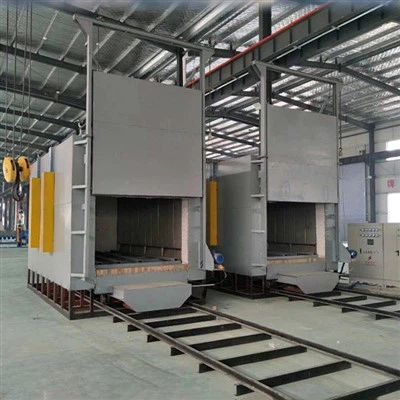
In the heat treatment of steel components, controlling the cooling rate is crucial to achieve the desired hardness and strength. For example, when quenching steel, a rapid cooling rate is required to transform the austenite phase into martensite, which results in high hardness. Our High Temperature Trolley Resistance Furnace can be equipped with a high - speed air - cooling or water - cooling system to achieve the required rapid cooling rate during quenching.
On the other hand, when tempering steel, a slower cooling rate is needed to relieve internal stresses and improve the toughness of the material. By using ramp control and adjusting the insulation of the furnace, we can ensure a controlled and slow cooling process during tempering.
Annealing of Glass
In the annealing process of glass, a precise and controlled cooling rate is necessary to prevent the formation of internal stresses and cracks in the glass. Our Box Type Resistance Furnace is designed to provide a uniform and controllable cooling environment for glass annealing. By using air - flow regulation and ramp control, we can achieve a slow and steady cooling rate, which is essential for producing high - quality glass products.
Conclusion
Controlling the cooling rate of a resistance furnace is a complex but essential task in industrial heat - treating processes. By considering factors such as furnace design, cooling medium, and load characteristics, and implementing appropriate control methods like ramp control, air - flow regulation, water - flow and temperature control, and insulation adjustment, we can achieve the desired cooling rate for different applications.
As a professional resistance furnace supplier, we are committed to providing high - quality furnaces with advanced cooling control systems. If you are interested in our products or need advice on controlling the cooling rate of your resistance furnace, please feel free to contact us for a procurement discussion. We have a team of experts who can help you choose the most suitable furnace and cooling control solution for your specific needs.
References
- Kou, S. (2003). Welding metallurgy. John Wiley & Sons.
- Liscic, B., & Totten, G. E. (2006). Quenching theory and technology. CRC Press.
- Salvati, M., & Tricarico, L. (2017). Heat treatment furnaces: Design, performance, and control. Woodhead Publishing.