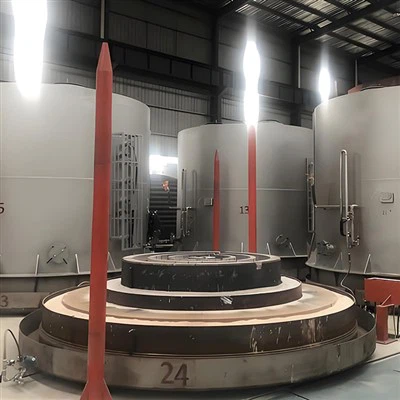
Hey there! As a supplier of Mold Roasting Furnaces, I've been getting a lot of questions lately about how to improve the surface finish of molds during the roasting process. It's a crucial aspect, especially for those in the manufacturing industry where the quality of the mold directly impacts the final product. So, let's dive right in and explore some practical tips and tricks.
First off, let's understand why the surface finish matters. A smooth and high - quality surface finish on the mold can lead to better part quality, reduced friction during the molding process, and longer mold life. It also makes the demolding process easier, which can save time and reduce the risk of damage to the molded parts.
1. Proper Mold Preparation
Before you even start the roasting process, proper mold preparation is key. Make sure the mold is clean and free of any debris, oil, or rust. You can use a suitable cleaning agent and a soft brush to clean the surface thoroughly. If there are any rough spots or burrs on the mold, use sandpaper or a grinding tool to smooth them out. This initial step can significantly improve the surface finish after roasting.
Another important aspect of mold preparation is pre - heating. Pre - heating the mold to a specific temperature before putting it into the Mold Roasting Furnace helps to reduce thermal shock. Thermal shock can cause cracks and uneven expansion, which will negatively affect the surface finish. You can use a pre - heating oven or a heating plate to gradually bring the mold to the desired temperature.
2. Optimize Roasting Parameters
The roasting parameters in the Mold Roasting Furnace play a huge role in achieving a good surface finish. Temperature is one of the most critical factors. You need to set the right temperature for your specific mold material. Different materials have different optimal roasting temperatures. For example, if you're roasting a steel mold, the temperature might be different from that of an aluminum mold.
It's also important to control the heating rate. A too - fast heating rate can cause uneven expansion and contraction, leading to a poor surface finish. On the other hand, a very slow heating rate can be time - consuming and may not be cost - effective. You should find the sweet spot for your mold and furnace combination.
The roasting time is another parameter to consider. Over - roasting can cause the mold to warp or develop a rough surface, while under - roasting may not achieve the desired hardness and finish. You need to refer to the material specifications and conduct some tests to determine the ideal roasting time.
3. Use of Protective Coatings
Applying a protective coating to the mold before roasting can help improve the surface finish. There are various types of coatings available, such as ceramic coatings, polymer coatings, and metal - based coatings. These coatings can act as a barrier between the mold and the roasting environment, preventing oxidation and reducing the formation of scale.


Ceramic coatings, for example, are known for their high - temperature resistance and excellent anti - oxidation properties. They can also provide a smooth surface, which can be transferred to the molded parts. Polymer coatings are more flexible and can be used in applications where the mold undergoes a lot of deformation. Metal - based coatings can enhance the hardness and wear resistance of the mold.
4. Furnace Atmosphere Control
The atmosphere inside the Mold Roasting Furnace can have a significant impact on the surface finish of the mold. In a normal air atmosphere, the mold may oxidize during roasting, leading to a rough and discolored surface. To prevent this, you can use a controlled atmosphere furnace.
There are two main types of controlled atmospheres: reducing atmospheres and inert atmospheres. A reducing atmosphere, such as a mixture of hydrogen and nitrogen, can remove oxygen from the surface of the mold, preventing oxidation. An inert atmosphere, like argon or nitrogen, simply displaces the oxygen, creating a non - reactive environment.
Our Box Type Roasting Furnace and Through - type Shell Baking Furnace are designed to allow for precise control of the furnace atmosphere. You can adjust the gas flow rate and composition to create the ideal environment for your mold roasting process.
5. Post - Roasting Treatment
After the roasting process is complete, post - roasting treatment is essential for achieving the best surface finish. One common post - roasting treatment is polishing. You can use different grades of sandpaper or polishing compounds to gradually smooth the surface of the mold. Start with a coarse - grit sandpaper to remove any major imperfections and then move on to finer - grit sandpapers for a mirror - like finish.
Another post - roasting treatment is passivation. Passivation is a chemical process that creates a thin, protective oxide layer on the surface of the mold. This layer can prevent further oxidation and corrosion, improving the long - term surface quality of the mold.
6. Regular Furnace Maintenance
The condition of the Mold Roasting Furnace itself can also affect the surface finish of the molds. Regular maintenance is crucial to ensure that the furnace is operating at its best. Clean the furnace regularly to remove any debris or scale that may have accumulated inside. Check the heating elements, thermocouples, and other components for any signs of wear or damage.
A well - maintained furnace will provide more consistent heating and a more stable roasting environment, which is essential for achieving a high - quality surface finish on the molds.
In conclusion, improving the surface finish of molds during roasting in a Mold Roasting Furnace requires a combination of proper mold preparation, optimized roasting parameters, the use of protective coatings, furnace atmosphere control, post - roasting treatment, and regular furnace maintenance. By following these tips, you can significantly enhance the quality of your molds and ultimately, the quality of your final products.
If you're interested in learning more about our Mold Roasting Furnaces or have any questions about improving mold surface finish, don't hesitate to reach out. We're here to help you achieve the best results in your manufacturing process. Let's start a conversation and see how we can work together to meet your needs.
References
- "Heat Treatment of Metals" by ASM International
- "Mold Design and Manufacturing Handbook" by Society of Plastics Engineers