Hey there! As a supplier of trolley furnaces, I often get asked about how to measure the thermal efficiency of these bad boys. It's a crucial aspect, especially if you're looking to optimize your operations and save on energy costs. So, let's dive right in and break it down.
First off, what exactly is thermal efficiency? In simple terms, it's the ratio of the useful heat output of a furnace to the total energy input. The higher this ratio, the more efficient your furnace is. And that means less wasted energy and more money in your pocket.
Understanding the Basics of Trolley Furnaces
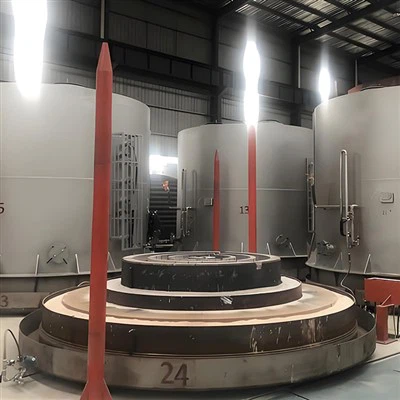
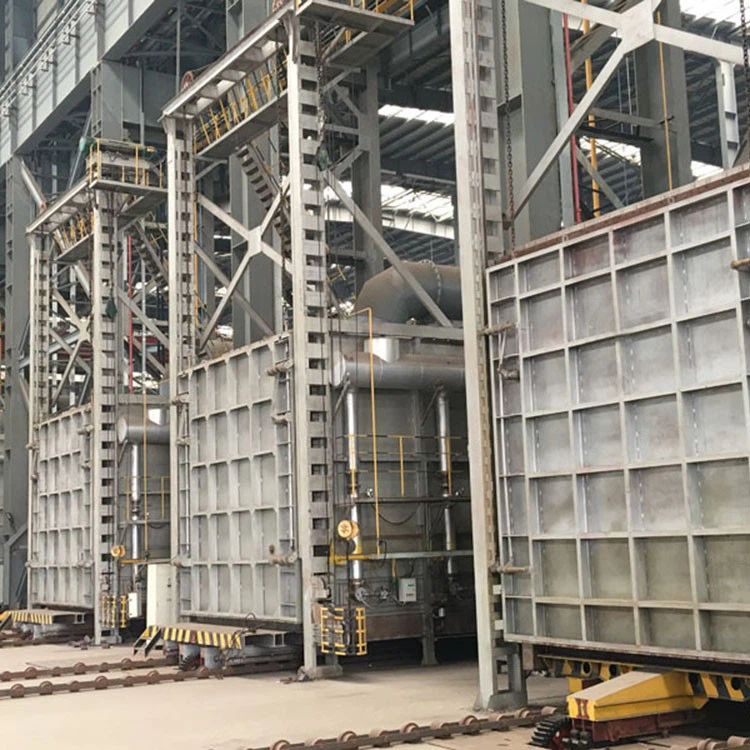
Before we get into the nitty - gritty of measuring thermal efficiency, let's quickly go over what trolley furnaces are. Trolley furnaces are versatile pieces of equipment used in various industries, like forging, heat treatment, and metalworking. They come in different types, such as the Trolley Type Forging Furnace, Large Trolley Furnace, and Double Door Trolley Furnace. Each type has its own unique features and applications, but they all share the common goal of heating materials effectively.
Measuring the Energy Input
The first step in measuring thermal efficiency is to figure out the total energy input. This usually comes from the fuel source, which could be natural gas, electricity, or oil.
For Gas - Fired Trolley Furnaces
If your trolley furnace runs on natural gas, you'll need to measure the volume of gas consumed over a specific period. You can use a gas meter for this. Once you know the volume, you can convert it to energy units (usually in joules or British thermal units - BTUs) using the gas's heating value. The heating value is the amount of energy released when a unit volume of gas is burned completely.
For example, if your gas meter shows that your furnace consumed 100 cubic meters of natural gas in an hour, and the heating value of the natural gas is 38 megajoules per cubic meter, then the energy input in an hour is 100 x 38 = 3800 megajoules.

For Electric Trolley Furnaces
For electric furnaces, it's a bit simpler. You just need to measure the electrical power consumption. You can use a watt - hour meter to record the energy used in kilowatt - hours (kWh). If your furnace runs at a power of 50 kilowatts for 2 hours, the energy input is 50 x 2 = 100 kWh. To convert kWh to joules, you can use the conversion factor: 1 kWh = 3.6 million joules. So, 100 kWh is equal to 100 x 3.6 million = 360 million joules.
Measuring the Useful Heat Output
The next step is to determine the useful heat output. This is the amount of heat that actually goes into heating the material you're processing in the furnace.
Measuring the Temperature Change
One way to measure the useful heat output is by measuring the temperature change of the material. You'll need to know the mass of the material, its specific heat capacity, and the initial and final temperatures.
The specific heat capacity is the amount of heat required to raise the temperature of a unit mass of a substance by one degree Celsius. For example, the specific heat capacity of steel is about 0.46 kilojoules per kilogram per degree Celsius.
Let's say you're heating 500 kilograms of steel in your trolley furnace. The initial temperature of the steel is 20°C, and you heat it to 800°C. Using the formula Q = m x c x ΔT (where Q is the heat energy, m is the mass, c is the specific heat capacity, and ΔT is the temperature change), we can calculate the useful heat output.
ΔT = 800 - 20 = 780°C
m = 500 kg
c = 0.46 kJ/kg°C
Q = 500 x 0.46 x 780 = 179400 kJ
Accounting for Heat Losses
However, in real - world scenarios, there are always heat losses. Heat can be lost through the furnace walls, the trolley, and through the openings when loading and unloading the material. To get a more accurate measurement of the useful heat output, you'll need to account for these losses.
One way to estimate heat losses is by measuring the temperature of the furnace walls and the surrounding environment. You can use infrared thermometers to measure the surface temperature of the walls. The greater the temperature difference between the walls and the environment, the more heat is being lost.
Calculating the Thermal Efficiency
Once you have the energy input and the useful heat output, you can calculate the thermal efficiency using the following formula:
Thermal Efficiency (%) = (Useful Heat Output / Energy Input) x 100
Let's say for our previous example, the energy input from the gas - fired furnace was 3800 megajoules (or 3800000 kJ), and the useful heat output was 179400 kJ.
Thermal Efficiency = (179400 / 3800000) x 100 ≈ 4.72%
This might seem low, but remember, we need to improve the efficiency by reducing heat losses and optimizing the furnace operation.
Tips to Improve Thermal Efficiency
- Insulation: Make sure your furnace is well - insulated. Good insulation reduces heat losses through the walls. You can use high - quality insulation materials like ceramic fiber blankets.
- Sealing: Check for any gaps or leaks in the furnace doors and other openings. A tight seal prevents hot air from escaping and cold air from entering.
- Proper Loading: Load the material in the furnace in an organized way to ensure uniform heating. This reduces the time and energy needed to reach the desired temperature.
Why Measuring Thermal Efficiency Matters
Measuring the thermal efficiency of your trolley furnace is not just about saving energy. It also has a significant impact on the quality of your products. A more efficient furnace can heat the material more evenly, resulting in better - quality products with fewer defects.
Moreover, in today's environmentally - conscious world, reducing energy consumption is not only good for your bottom line but also for the planet. By optimizing the thermal efficiency of your furnace, you're doing your part in reducing greenhouse gas emissions.
Conclusion
So, there you have it - a comprehensive guide on how to measure the thermal efficiency of a trolley furnace. It might seem like a lot of work, but the benefits are well worth it. If you're in the market for a new trolley furnace or looking to upgrade your existing one, we're here to help. Our team of experts can assist you in choosing the right furnace for your needs and ensuring that it operates at peak efficiency.
If you have any questions or are interested in purchasing a trolley furnace, don't hesitate to reach out. We're eager to start a conversation and help you find the perfect solution for your business.
References
- Incropera, F. P., & DeWitt, D. P. (2002). Fundamentals of Heat and Mass Transfer. John Wiley & Sons.
- Holman, J. P. (2002). Heat Transfer. McGraw - Hill.