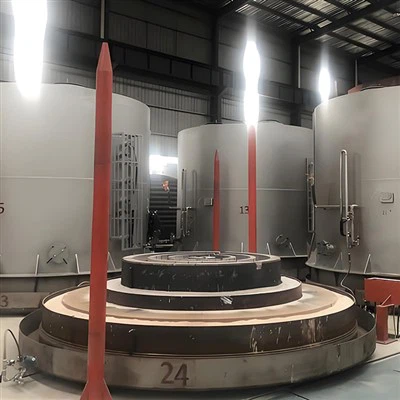
Optimizing the fuel consumption of a gas-fired annealing furnace is a crucial aspect for industries aiming to reduce operational costs and enhance environmental sustainability. As an annealing furnace supplier, I have witnessed firsthand the significance of efficient fuel usage in the annealing process. In this blog, I will share some practical strategies and insights on how to optimize the fuel consumption of a gas-fired annealing furnace.
Understanding the Annealing Process and Fuel Consumption
Before delving into optimization strategies, it is essential to understand the basic principles of the annealing process and how fuel consumption occurs. Annealing is a heat treatment process used to relieve internal stresses, increase ductility, and improve the overall mechanical properties of metals. Gas-fired annealing furnaces use natural gas or other gaseous fuels to generate the high temperatures required for the annealing process.
The fuel consumption of a gas-fired annealing furnace is influenced by several factors, including the furnace design, operating conditions, and the type of material being annealed. Inefficient furnace design, improper temperature control, and excessive air infiltration can all lead to increased fuel consumption. Therefore, optimizing fuel consumption requires a comprehensive approach that addresses these factors.


Furnace Design and Insulation
One of the most effective ways to optimize fuel consumption is to ensure that the annealing furnace is properly designed and insulated. A well-designed furnace will have a high thermal efficiency, which means that it can convert a larger percentage of the fuel's energy into useful heat. This can be achieved by using high-quality insulation materials, minimizing heat losses through the furnace walls, and optimizing the combustion chamber design.
Insulation plays a crucial role in reducing heat losses from the furnace. High-quality insulation materials, such as ceramic fiber blankets and refractory bricks, can significantly reduce the amount of heat that escapes from the furnace. This not only reduces fuel consumption but also improves the overall energy efficiency of the annealing process. Additionally, proper insulation can help maintain a more stable temperature inside the furnace, which is essential for achieving consistent annealing results.
Combustion Optimization
Another key factor in optimizing fuel consumption is combustion optimization. Efficient combustion ensures that the fuel is burned completely, releasing the maximum amount of energy. This can be achieved by controlling the air-to-fuel ratio, ensuring proper mixing of the fuel and air, and maintaining a stable flame.
The air-to-fuel ratio is a critical parameter that affects the efficiency of combustion. A proper air-to-fuel ratio ensures that there is enough oxygen for complete combustion of the fuel. If the air-to-fuel ratio is too high, excess air will carry away heat, reducing the furnace's efficiency. On the other hand, if the air-to-fuel ratio is too low, incomplete combustion will occur, resulting in the formation of carbon monoxide and other pollutants. Therefore, it is essential to monitor and adjust the air-to-fuel ratio regularly to ensure optimal combustion.
Proper mixing of the fuel and air is also crucial for efficient combustion. This can be achieved by using a well-designed burner system that ensures uniform distribution of the fuel and air throughout the combustion chamber. Additionally, maintaining a stable flame is essential for efficient combustion. A stable flame ensures that the fuel is burned continuously and evenly, maximizing the energy output.
Temperature Control
Accurate temperature control is essential for optimizing fuel consumption in a gas-fired annealing furnace. Maintaining a consistent temperature inside the furnace reduces the need for excessive heating and cooling cycles, which can waste fuel. This can be achieved by using advanced temperature control systems, such as programmable logic controllers (PLCs) and thermocouples.
PLCs allow for precise control of the furnace temperature by adjusting the fuel flow and air intake based on the desired temperature setpoint. Thermocouples are used to measure the temperature inside the furnace and provide feedback to the PLC, allowing for real-time adjustments. By using these advanced temperature control systems, it is possible to maintain a stable temperature within a narrow range, reducing fuel consumption and improving the quality of the annealing process.
Load Management
Proper load management is another important aspect of optimizing fuel consumption. Loading the furnace with the right amount of material and ensuring uniform distribution of the load can help improve the efficiency of the annealing process. Overloading the furnace can lead to uneven heating and increased fuel consumption, while underloading the furnace can result in wasted energy.
It is also important to consider the type of material being annealed when loading the furnace. Different materials have different heat transfer properties and require different annealing temperatures and times. By understanding the specific requirements of the material, it is possible to optimize the annealing process and reduce fuel consumption.
Regular Maintenance and Monitoring
Regular maintenance and monitoring are essential for ensuring the efficient operation of a gas-fired annealing furnace. This includes cleaning the burners, inspecting the insulation, and checking the temperature control systems. By performing regular maintenance, it is possible to identify and address any issues that may be affecting the furnace's efficiency, such as leaks, blockages, or malfunctioning components.
Monitoring the furnace's performance is also important for optimizing fuel consumption. This can be done by measuring the fuel consumption, temperature, and other operating parameters on a regular basis. By analyzing this data, it is possible to identify trends and make adjustments to the furnace operation to improve efficiency.
Conclusion
Optimizing the fuel consumption of a gas-fired annealing furnace requires a comprehensive approach that addresses furnace design, combustion optimization, temperature control, load management, and regular maintenance and monitoring. By implementing these strategies, it is possible to reduce fuel consumption, lower operational costs, and improve the environmental sustainability of the annealing process.
As an annealing furnace supplier, we are committed to providing our customers with high-quality, energy-efficient annealing furnaces and solutions. Our Stress Relief Annealing Furnace, Rapid Annealing Furnace, and Mesh Belt Annealing Furnace are designed to meet the specific needs of different industries and applications, offering excellent performance and energy efficiency.
If you are interested in learning more about our annealing furnaces or optimizing the fuel consumption of your existing furnace, please contact us for a consultation. Our team of experts will be happy to assist you in finding the best solution for your needs.
References
- Smith, J. (2018). Energy Efficiency in Industrial Furnaces. Journal of Industrial Heating, 85(3), 22-27.
- Jones, A. (2019). Optimizing Combustion in Gas-Fired Furnaces. Proceedings of the International Conference on Energy Efficiency and Renewable Energy, 45-50.
- Brown, C. (2020). Temperature Control Strategies for Industrial Furnaces. Industrial Heating Magazine, 92(4), 18-23.