Hey there! As a supplier of tempering furnaces, I've seen firsthand how crucial it is to optimize the tempering process parameters. In this blog, I'm gonna share some tips and tricks on how you can do just that.
First off, let's talk about what tempering is. Tempering is a heat treatment process that's used to reduce the hardness and brittleness of a metal while increasing its toughness and ductility. This is done by heating the metal to a specific temperature and then holding it there for a certain amount of time before cooling it down.
Now, when it comes to optimizing the tempering process parameters, there are a few key factors that you need to consider. These include the tempering temperature, the holding time, the cooling rate, and the atmosphere in the furnace.
Let's start with the tempering temperature. The tempering temperature is one of the most important factors in the tempering process. It determines the hardness and toughness of the metal. Generally speaking, the higher the tempering temperature, the lower the hardness and the higher the toughness. However, if the tempering temperature is too high, the metal may lose some of its strength. So, it's important to find the right balance.
The best way to determine the optimal tempering temperature is to conduct some tests. You can start by tempering some samples of the metal at different temperatures and then testing their hardness and toughness. Based on the results, you can then choose the tempering temperature that gives you the best combination of hardness and toughness.
Next up is the holding time. The holding time is the amount of time that the metal is held at the tempering temperature. This is also an important factor in the tempering process. If the holding time is too short, the metal may not be fully tempered, and if it's too long, the metal may become over-tempered.
The optimal holding time depends on a number of factors, including the type of metal, the tempering temperature, and the size and shape of the part. As a general rule, the holding time should be long enough to allow the metal to reach a uniform temperature throughout. You can use some guidelines or consult with a metallurgist to determine the appropriate holding time for your specific application.
Now, let's talk about the cooling rate. The cooling rate is the speed at which the metal is cooled down after tempering. This can also have a significant impact on the properties of the metal. A slow cooling rate can result in a more uniform microstructure and better toughness, while a fast cooling rate can lead to increased hardness.
The choice of cooling rate depends on the desired properties of the metal. If you want a more ductile and tough metal, a slow cooling rate is usually preferred. On the other hand, if you need a harder metal, a faster cooling rate may be more appropriate. You can control the cooling rate by using different cooling media, such as air, oil, or water.
Another important factor to consider is the atmosphere in the furnace. The atmosphere can affect the surface quality of the metal during tempering. For example, if the atmosphere contains oxygen, the metal may oxidize, which can lead to a loss of surface quality and potentially affect the mechanical properties.
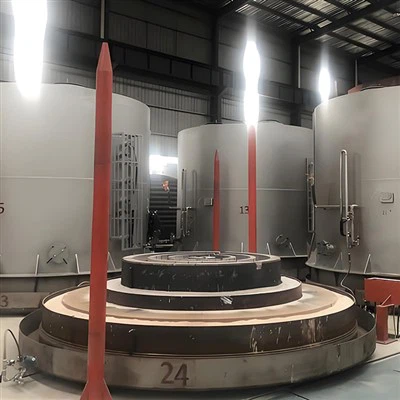
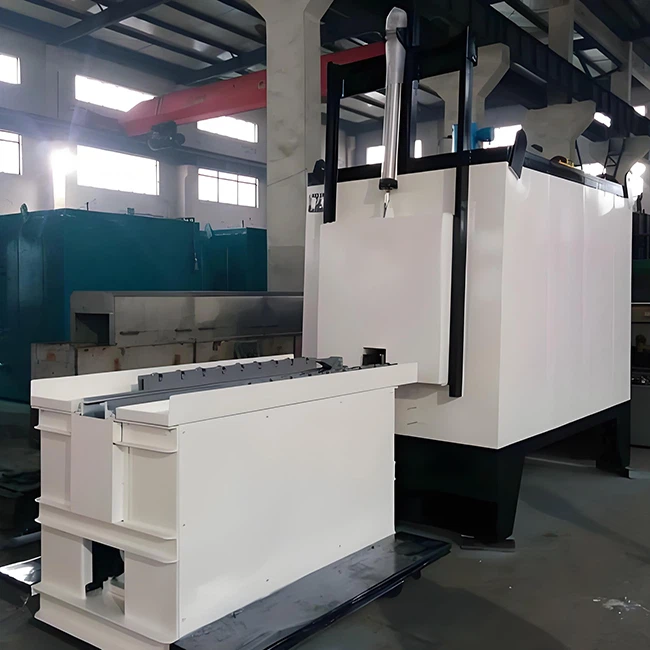
To prevent oxidation, you can use a protective atmosphere in the furnace. We offer different types of tempering furnaces that can provide a suitable atmosphere for your process. For instance, our Atmosphere Protection Box Type Tempering Furnace is designed to create a controlled atmosphere to protect the metal from oxidation. Our Trolley Tempering Furnace and Nitrogen Protection Pit Tempering Furnace also offer options for creating a protective environment.
In addition to these factors, it's also important to maintain the furnace properly. Regular maintenance can ensure that the furnace operates at its best and provides consistent results. This includes checking the heating elements, the insulation, and the control systems on a regular basis.

Now, let's talk about some practical steps you can take to optimize the tempering process parameters. First, make sure you have accurate temperature measurement devices in the furnace. This will help you to monitor and control the tempering temperature precisely. You can also use a data logger to record the temperature and other process parameters over time, which can be useful for analysis and troubleshooting.
Second, keep good records of your tempering processes. Note down the tempering temperature, holding time, cooling rate, and any other relevant information for each batch of parts. This will allow you to track the performance of your process and make adjustments as needed.
Third, train your operators properly. They should understand the importance of the tempering process parameters and how to control them. Provide them with clear instructions and guidelines on how to operate the furnace and handle the parts during tempering.
Finally, don't be afraid to experiment. Every application is different, and what works for one type of metal or part may not work for another. By conducting some small-scale experiments, you can find the optimal process parameters for your specific needs.
In conclusion, optimizing the tempering process parameters is essential for achieving the desired properties of the metal. By considering factors such as the tempering temperature, holding time, cooling rate, and atmosphere, and by following the practical steps I've mentioned, you can improve the quality and performance of your tempering process.
If you're in the market for a tempering furnace or need more advice on optimizing your tempering process, don't hesitate to reach out. We're here to help you get the most out of your heat treatment operations.
References
- ASM Handbook Volume 4: Heat Treating. ASM International.
- Heat Treater's Guide: Practices and Procedures for Nonferrous Metals. Society of Manufacturing Engineers.