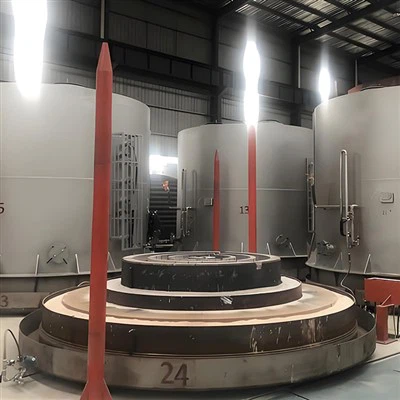
As a seasoned supplier of bell type furnaces, I've had the privilege of witnessing the transformative impact these remarkable pieces of equipment have on various industries. In this blog, I'll delve into the distinct characteristics of vacuum bell type furnaces, shedding light on their unique features and advantages.
1. Vacuum Environment
One of the most defining characteristics of a vacuum bell type furnace is its ability to create and maintain a vacuum environment. This is crucial for a variety of heat treatment processes, as it eliminates the presence of oxygen and other reactive gases. By removing these elements, the furnace prevents oxidation, decarburization, and other surface reactions that can compromise the quality of the treated materials.
In a vacuum environment, the heat transfer mechanism changes from convection to radiation, which allows for more uniform heating of the workpiece. This results in better control over the heat treatment process, leading to improved mechanical properties and dimensional accuracy of the treated parts. Additionally, the absence of oxygen reduces the risk of contamination, making vacuum bell type furnaces ideal for applications where high purity and cleanliness are required, such as in the aerospace, medical, and electronics industries.
2. Bell Design
The bell design is another key feature of vacuum bell type furnaces. The furnace consists of a stationary base and a removable bell-shaped cover. The workpiece is placed on the base, and the bell is lowered over it to create a sealed chamber. This design allows for easy loading and unloading of the workpiece, as well as quick access for maintenance and inspection.


The bell is typically made of high-quality steel or other heat-resistant materials to withstand the high temperatures and pressures inside the furnace. It is also equipped with insulation to minimize heat loss and improve energy efficiency. The sealing mechanism between the bell and the base is crucial to maintaining the vacuum environment, and it is usually designed to provide a reliable and leak-free seal.
3. Temperature Control
Precise temperature control is essential for achieving consistent and high-quality heat treatment results. Vacuum bell type furnaces are equipped with advanced temperature control systems that allow for accurate regulation of the heating and cooling rates. These systems typically use thermocouples or other temperature sensors to monitor the temperature inside the furnace and adjust the power input accordingly.
The temperature control system can be programmed to follow a specific heating and cooling profile, which is tailored to the requirements of the workpiece and the heat treatment process. This ensures that the workpiece is heated and cooled at the optimal rates to achieve the desired mechanical properties and microstructure. Additionally, the temperature control system can provide real-time feedback and alarms to alert the operator in case of any deviations from the set parameters.
4. Heating Elements
The heating elements in a vacuum bell type furnace are responsible for generating the heat required for the heat treatment process. These elements are typically made of high-resistance materials, such as nichrome or molybdenum, which can withstand the high temperatures and vacuum environment inside the furnace.
The heating elements are arranged in a specific pattern to ensure uniform heating of the workpiece. They can be located on the walls, floor, or ceiling of the furnace, depending on the design and application. The power output of the heating elements can be adjusted to control the heating rate and temperature inside the furnace.
5. Cooling System
After the heat treatment process is complete, the workpiece needs to be cooled down to room temperature. Vacuum bell type furnaces are equipped with cooling systems that can rapidly cool the workpiece while maintaining the vacuum environment. These systems typically use a combination of forced air cooling and water cooling to achieve the desired cooling rate.
The cooling system can be programmed to follow a specific cooling profile, which is tailored to the requirements of the workpiece and the heat treatment process. This ensures that the workpiece is cooled at the optimal rate to achieve the desired mechanical properties and microstructure. Additionally, the cooling system can provide real-time feedback and alarms to alert the operator in case of any deviations from the set parameters.
6. Safety Features
Safety is a top priority in any industrial setting, and vacuum bell type furnaces are no exception. These furnaces are equipped with a variety of safety features to protect the operator and the equipment. Some of the common safety features include:
- Over-temperature protection: This feature automatically shuts off the power to the heating elements if the temperature inside the furnace exceeds a pre-set limit.
- Pressure relief valve: This valve is designed to release excess pressure inside the furnace in case of a malfunction or overpressure situation.
- Emergency stop button: This button allows the operator to quickly shut down the furnace in case of an emergency.
- Interlock system: This system prevents the bell from being opened while the furnace is operating or under vacuum, ensuring the safety of the operator.
7. Energy Efficiency
Energy efficiency is an important consideration in today's industrial environment, and vacuum bell type furnaces are designed to be as energy-efficient as possible. The insulation in the bell and the base helps to minimize heat loss, and the advanced temperature control system allows for precise regulation of the power input. Additionally, the use of a vacuum environment reduces the need for excessive heating, as the heat transfer mechanism is more efficient in a vacuum.
Some vacuum bell type furnaces are also equipped with regenerative heating systems, which capture and reuse the heat from the exhaust gases to preheat the incoming air or gas. This further improves the energy efficiency of the furnace and reduces operating costs.
8. Versatility
Vacuum bell type furnaces are highly versatile and can be used for a wide range of heat treatment processes, including annealing, hardening, tempering, brazing, and sintering. They can handle a variety of workpieces, from small components to large industrial parts. The ability to customize the furnace design and the heating and cooling profiles makes them suitable for a variety of applications in different industries.
Conclusion
In conclusion, vacuum bell type furnaces offer a unique combination of features and advantages that make them an ideal choice for a wide range of heat treatment applications. Their ability to create a vacuum environment, precise temperature control, bell design, and energy efficiency make them a reliable and cost-effective solution for industries that require high-quality and consistent heat treatment results.
If you're interested in learning more about our vacuum bell type furnaces or would like to discuss your specific heat treatment requirements, please don't hesitate to [initiate a conversation with our team]. We're here to provide you with the information and support you need to make an informed decision.
References
- ASM Handbook, Volume 4: Heat Treating, ASM International, 1991.
- Heat Treater's Guide: Practices and Procedures for Irons and Steels, ASM International, 2002.
- Vacuum Furnaces: Design, Construction, and Operation, John Wiley & Sons, 2008.