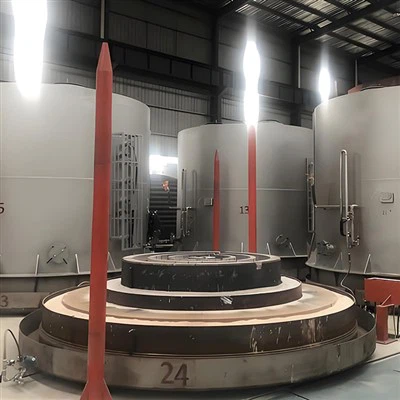
As a supplier of Mold Roasting Furnaces, I am often asked about the various control systems available for these essential pieces of equipment. In this blog post, I will delve into the different types of control systems that can be used with Mold Roasting Furnaces, their features, and how they contribute to the overall efficiency and performance of the furnace.
1. Manual Control Systems
Manual control systems are the most basic type of control for Mold Roasting Furnaces. In a manual system, the operator is responsible for adjusting the various parameters of the furnace, such as temperature, airflow, and fuel supply, based on their experience and judgment. This type of control system is relatively simple and inexpensive, making it a popular choice for small - scale operations or for furnaces with less complex requirements.
However, manual control systems have several limitations. The accuracy of temperature and other parameter settings depends entirely on the operator's skill and attention. This can lead to inconsistencies in the roasting process, which may affect the quality of the molds. Additionally, manual control requires constant monitoring and adjustment, which can be time - consuming and labor - intensive.
2. Programmable Logic Controller (PLC) Systems
PLC systems are widely used in industrial applications, including Mold Roasting Furnaces. A PLC is a digital computer that is designed to control and automate industrial processes. In the context of a Mold Roasting Furnace, a PLC can be programmed to control the temperature, airflow, and other critical parameters based on a pre - defined set of instructions.
One of the main advantages of a PLC system is its flexibility. The programming can be easily modified to accommodate different roasting requirements, such as different mold sizes or materials. PLCs also offer high accuracy in controlling the furnace parameters, which helps to ensure consistent quality of the roasted molds. Moreover, PLC systems can be integrated with other automation systems, such as conveyor belts or robotic handling systems, to create a fully automated roasting process.
Another benefit of PLC systems is their reliability. They are designed to operate in harsh industrial environments and are less prone to failures compared to other types of control systems. PLCs also provide diagnostic capabilities, which allow operators to quickly identify and troubleshoot any issues that may arise during the roasting process.
3. Distributed Control Systems (DCS)
Distributed Control Systems are more advanced than PLC systems and are typically used in large - scale Mold Roasting Furnace installations. A DCS consists of multiple controllers that are distributed throughout the furnace system, each responsible for controlling a specific part of the process. These controllers are connected to a central control station, where operators can monitor and manage the entire roasting process.
The main advantage of a DCS is its ability to handle complex and large - scale processes. It can manage multiple variables simultaneously and optimize the roasting process for maximum efficiency. DCS systems also offer better redundancy and fault tolerance compared to PLC systems. In case of a failure in one controller, the other controllers can continue to operate, minimizing the impact on the overall process.
DCS systems also provide advanced data logging and analysis capabilities. Operators can collect and analyze data on various process parameters, such as temperature profiles, energy consumption, and roasting times. This data can be used to improve the process, reduce energy costs, and enhance the quality of the roasted molds.
4. Supervisory Control and Data Acquisition (SCADA) Systems
SCADA systems are often used in conjunction with PLC or DCS systems to provide a higher level of monitoring and control for Mold Roasting Furnaces. A SCADA system consists of a central computer that is connected to the controllers in the furnace system. The central computer provides a graphical user interface (GUI) that allows operators to monitor the status of the furnace in real - time and make adjustments as needed.
One of the key features of a SCADA system is its ability to collect and display data from multiple sources. Operators can view temperature charts, pressure readings, and other process variables on a single screen, which makes it easier to monitor the overall performance of the furnace. SCADA systems also offer remote access capabilities, which allow operators to monitor and control the furnace from a remote location.


SCADA systems can also generate alarms and notifications when certain process parameters exceed predefined limits. This helps operators to quickly respond to any issues and prevent potential problems from occurring. Additionally, SCADA systems can store historical data, which can be used for trend analysis and process optimization.
5. Advanced Process Control (APC) Systems
Advanced Process Control systems are the most sophisticated type of control systems for Mold Roasting Furnaces. APC systems use advanced mathematical models and algorithms to optimize the roasting process based on real - time data. These systems can take into account multiple variables, such as mold properties, furnace conditions, and environmental factors, to adjust the process parameters in real - time.
The main advantage of an APC system is its ability to improve the efficiency and quality of the roasting process. By continuously optimizing the process parameters, APC systems can reduce energy consumption, shorten roasting times, and improve the consistency of the roasted molds. APC systems can also adapt to changes in the process conditions, such as variations in mold size or material, to ensure optimal performance.
However, APC systems are more complex and expensive to implement compared to other types of control systems. They require a high level of expertise in process modeling and control engineering. Additionally, the effectiveness of an APC system depends on the quality of the data used for modeling and the accuracy of the algorithms.
Choosing the Right Control System
When choosing a control system for a Mold Roasting Furnace, several factors need to be considered. The size and complexity of the furnace, the required level of accuracy and consistency, the budget, and the available technical expertise are all important considerations.
For small - scale operations or furnaces with relatively simple requirements, a manual or PLC control system may be sufficient. These systems are more affordable and easier to operate and maintain. On the other hand, large - scale installations or furnaces with complex processes may require a DCS, SCADA, or APC system to ensure optimal performance.
As a supplier of Mold Roasting Furnaces, we offer a range of control systems to meet the diverse needs of our customers. Our Box Type Roasting Furnace and Through - type Shell Baking Furnace can be equipped with different control systems, from basic manual controls to advanced APC systems.
If you are in the market for a Mold Roasting Furnace and need help in choosing the right control system, we are here to assist you. Our team of experts can provide you with detailed information about the different control systems available and help you make an informed decision based on your specific requirements. Contact us today to start the procurement and negotiation process, and let us work together to find the best solution for your roasting needs.
References
- Dorf, R. C., & Bishop, R. H. (2016). Modern Control Systems. Pearson.
- Seborg, D. E., Edgar, T. F., & Mellichamp, D. A. (2011). Process Dynamics and Control. Wiley.
- Ogunnaike, B. A., & Ray, W. H. (1994). Process Dynamics, Modeling, and Control. Oxford University Press.