Aging is a natural process that affects various materials in numerous ways, including their corrosion resistance. As a supplier of aging furnaces, I've witnessed firsthand how the aging process can both positively and negatively influence a material's ability to withstand corrosion. In this blog, we'll explore the impacts of aging on material corrosion resistance, delving into the scientific mechanisms behind these changes and how our aging furnaces play a role in this process.
The Basics of Aging and Corrosion
Before we dive into the impacts, let's briefly define aging and corrosion. Aging, in the context of materials science, refers to the time - dependent changes in a material's properties. These changes can occur due to various factors such as temperature, stress, and environmental exposure. Corrosion, on the other hand, is the deterioration of a material due to chemical reactions with its environment, typically involving the oxidation of metals.


Positive Impacts of Aging on Corrosion Resistance
Precipitation Hardening
One of the most significant positive impacts of aging on corrosion resistance is through precipitation hardening. Many alloys, such as aluminum alloys, can undergo a heat - treatment process called aging, which involves heating the material to a specific temperature and then holding it there for a certain period. During this process, fine particles, or precipitates, form within the alloy matrix.
These precipitates can act as barriers to the movement of dislocations and also influence the electrochemical behavior of the alloy. In terms of corrosion resistance, the precipitates can help to form a more uniform and protective oxide layer on the surface of the material. For example, in aluminum alloys, the aging process can lead to the formation of magnesium - silicon precipitates. These precipitates can enhance the stability of the aluminum oxide layer, making it more resistant to breakdown by corrosive agents in the environment.
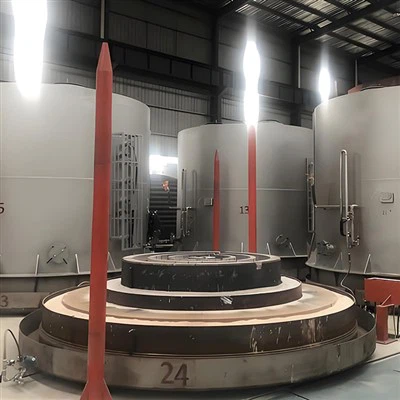
Our Aluminum Wire Aging Furnace is specifically designed to provide precise temperature control during the aging process, ensuring that the aluminum wire undergoes optimal precipitation hardening. This results in improved corrosion resistance, making the wire suitable for applications in harsh environments.
Stress Relief
Aging can also relieve internal stresses within a material. When a material is formed or processed, internal stresses can be introduced, which can make the material more susceptible to corrosion. For instance, in welded structures, the rapid cooling during the welding process can create high - stress regions. These stressed areas can act as preferential sites for corrosion initiation.
By subjecting the material to an aging process, the internal stresses can be relaxed. This is because the atoms within the material have more time to rearrange themselves into a more stable configuration. As a result, the material becomes more homogeneous, and the likelihood of corrosion at stress - concentrated areas is reduced. Our Pit Type Aluminum Alloy Aging Furnace is ideal for large - scale aluminum alloy components. It can effectively relieve internal stresses through controlled aging, thereby enhancing the corrosion resistance of the components.
Negative Impacts of Aging on Corrosion Resistance
Microstructural Changes
While aging can have positive effects, it can also lead to microstructural changes that reduce corrosion resistance. Over - aging, for example, can cause the precipitates in an alloy to coarsen. Coarse precipitates are less effective at providing barriers to corrosion and can even act as sites for corrosion initiation.
In some cases, the aging process can also lead to the formation of intermetallic compounds at grain boundaries. These intermetallic compounds can have different electrochemical properties compared to the surrounding matrix, creating galvanic cells within the material. Galvanic corrosion can then occur, where one phase acts as an anode and the other as a cathode, accelerating the corrosion process.
Environmental Interactions
Aging can also affect how a material interacts with its environment. As a material ages, its surface properties can change, making it more or less reactive to corrosive agents. For example, aging can cause the surface of a metal to become more porous, allowing corrosive substances to penetrate more easily.
In addition, the aging process can alter the composition of the oxide layer on the surface of the material. If the oxide layer becomes less protective due to aging, the material will be more vulnerable to corrosion. Our Aluminum Aging Furnace is designed to minimize these negative effects by providing a precisely controlled aging environment. The furnace ensures that the aluminum material undergoes aging within the optimal parameters, reducing the risk of over - aging and other detrimental microstructural changes.
The Role of Our Aging Furnaces in Controlling Corrosion Resistance
As an aging furnace supplier, we understand the delicate balance between the positive and negative impacts of aging on material corrosion resistance. Our aging furnaces are equipped with advanced temperature control systems, allowing for precise control of the aging process. This precision is crucial in ensuring that materials achieve the desired microstructural changes without experiencing detrimental effects.
For example, our furnaces can maintain a stable temperature within a very narrow range, which is essential for achieving consistent precipitation hardening in alloys. They also have excellent insulation properties, reducing heat loss and ensuring uniform heating throughout the material. This uniformity is important in preventing the formation of localized areas with different microstructures, which could lead to variations in corrosion resistance.
Conclusion
The impacts of aging on material corrosion resistance are complex and multifaceted. Aging can both enhance and reduce a material's ability to withstand corrosion, depending on various factors such as the aging process parameters and the material's composition. As a supplier of high - quality aging furnaces, we are committed to helping our customers optimize the aging process to achieve the best possible corrosion resistance for their materials.
If you are looking to improve the corrosion resistance of your materials through controlled aging, we invite you to contact us for further discussions. Our team of experts can provide you with detailed information about our aging furnaces and how they can be tailored to your specific needs. Let's work together to ensure that your materials perform at their best in even the most challenging environments.
References
- Jones, D. A. (1992). Principles and Prevention of Corrosion. Prentice - Hall.
- ASM Handbook Committee. (1996). ASM Handbook: Volume 13A: Corrosion: Fundamentals, Testing, and Protection. ASM International.
- Davis, J. R. (Ed.). (2001). Aluminum and Aluminum Alloys. ASM International.