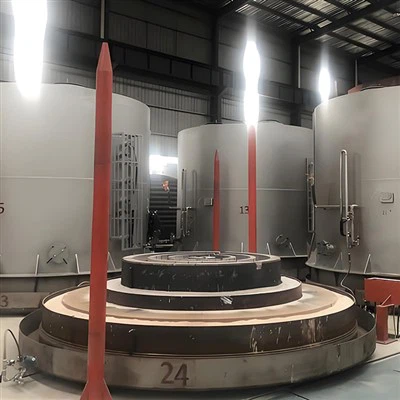
A pit furnace is a specialized type of industrial furnace that is installed partially or entirely below the floor level. This design offers several advantages, including better heat retention, reduced floor space requirements, and the ability to handle large or heavy workpieces. As a leading pit furnace supplier, we have witnessed firsthand the diverse range of applications where pit furnaces excel. In this blog post, we will explore the main applications of pit furnaces and how they contribute to various industries.
Heat Treatment
One of the primary applications of pit furnaces is heat treatment. Heat treatment is a process used to alter the physical and mechanical properties of materials, such as metals and alloys, by heating and cooling them in a controlled manner. Pit furnaces are well-suited for heat treatment processes due to their ability to provide uniform heating and precise temperature control.
Annealing
Annealing is a heat treatment process that involves heating a material to a specific temperature and then cooling it slowly. This process is used to relieve internal stresses, improve ductility, and refine the grain structure of the material. Pit furnaces are commonly used for annealing large or heavy workpieces, such as steel forgings, castings, and bars. The vertical design of the pit furnace allows for easy loading and unloading of the workpieces, and the uniform heating ensures consistent results.
Normalizing
Normalizing is a heat treatment process similar to annealing, but it involves cooling the material in air instead of slowly in a furnace. This process is used to improve the mechanical properties of the material, such as strength and hardness. Pit furnaces can be used for normalizing large or heavy workpieces, just like in annealing. The ability to control the heating and cooling rates in a pit furnace ensures that the workpieces are normalized to the desired specifications.
Hardening
Hardening is a heat treatment process that involves heating a material to a high temperature and then quenching it rapidly in a liquid, such as oil or water. This process is used to increase the hardness and strength of the material. Pit furnaces are often used for hardening large or heavy workpieces, such as gears, shafts, and tooling. The vertical design of the pit furnace allows for easy immersion of the workpieces in the quenching medium, and the uniform heating ensures that the workpieces are hardened evenly.
Tempering
Tempering is a heat treatment process that involves heating a hardened material to a specific temperature below its critical point and then cooling it slowly. This process is used to reduce the brittleness of the hardened material and improve its toughness and ductility. Pit furnaces are commonly used for tempering large or heavy workpieces, such as springs, bolts, and nuts. The uniform heating in the pit furnace ensures that the workpieces are tempered evenly, and the controlled cooling rate helps to achieve the desired mechanical properties.
Metal Melting and Pouring
Pit furnaces are also used for metal melting and pouring applications. The design of the pit furnace allows for efficient melting of metals and alloys, and the vertical arrangement makes it easier to pour the molten metal into molds or other containers.
Aluminum Melting
Aluminum is a widely used metal in various industries, such as automotive, aerospace, and construction. Pit furnaces are commonly used for melting aluminum and its alloys. The high heat transfer efficiency of the pit furnace ensures rapid melting of the aluminum, and the controlled temperature environment helps to prevent oxidation and other impurities. Our Pit Type Aluminum Alloy Quenching Furnace is specifically designed for aluminum alloy quenching and can also be used for aluminum melting applications.
Steel Melting
Steel is another important metal that is often melted in pit furnaces. The ability of the pit furnace to reach high temperatures and provide uniform heating makes it suitable for melting steel and its alloys. Pit furnaces can be used for small-scale steel melting operations, such as in foundries or metalworking shops. The vertical design of the pit furnace allows for easy removal of the molten steel from the furnace and pouring it into molds.
Heat Treatment of Long or Large Workpieces
Pit furnaces are ideal for heat treating long or large workpieces that cannot be easily accommodated in other types of furnaces. The vertical design of the pit furnace allows for the heat treatment of workpieces that are several meters long or have a large diameter.
Pipe Heat Treatment
Pipes are commonly used in various industries, such as oil and gas, construction, and manufacturing. Pit furnaces can be used for heat treating pipes to improve their mechanical properties, such as strength and corrosion resistance. The vertical design of the pit furnace allows for the heat treatment of long pipes without the need for bending or cutting them. The uniform heating in the pit furnace ensures that the pipes are heat treated evenly along their entire length.
Shaft Heat Treatment
Shafts are important components in many mechanical systems, such as engines, turbines, and transmissions. Pit furnaces can be used for heat treating shafts to improve their hardness, strength, and fatigue resistance. The vertical design of the pit furnace allows for the heat treatment of long shafts without the need for special fixtures or supports. The uniform heating in the pit furnace ensures that the shafts are heat treated evenly, resulting in consistent mechanical properties.
Low Temperature Applications
In addition to high temperature applications, pit furnaces can also be used for low temperature applications. Low temperature pit furnaces are designed to operate at temperatures below 600°C and are commonly used for processes such as drying, curing, and stress relieving.
Drying
Drying is a process used to remove moisture from materials, such as wood, paper, and textiles. Low temperature pit furnaces can be used for drying large or heavy materials that require a controlled temperature environment. The uniform heating in the pit furnace ensures that the materials are dried evenly, and the low temperature prevents damage to the materials.
Curing
Curing is a process used to harden or set materials, such as paints, coatings, and adhesives. Low temperature pit furnaces can be used for curing large or heavy workpieces that require a controlled temperature and time. The uniform heating in the pit furnace ensures that the materials are cured evenly, resulting in a high-quality finish.
Stress Relieving
Stress relieving is a process used to reduce internal stresses in materials, such as metals and alloys. Low temperature pit furnaces can be used for stress relieving large or heavy workpieces that have been subjected to machining, welding, or other processes that can cause internal stresses. The uniform heating in the pit furnace ensures that the workpieces are stress relieved evenly, reducing the risk of cracking or distortion. Our Low Temperature Pit Furnace is specifically designed for low temperature applications and can provide precise temperature control and uniform heating.
Conclusion
As a pit furnace supplier, we understand the diverse range of applications where pit furnaces are used. From heat treatment to metal melting, and from low temperature applications to the heat treatment of long or large workpieces, pit furnaces offer many advantages over other types of furnaces. Their vertical design, uniform heating, and precise temperature control make them suitable for a wide variety of industrial processes.
If you are in need of a pit furnace for your specific application, we invite you to contact us for a detailed discussion. Our team of experts can help you select the right pit furnace for your needs and provide you with the necessary support and service. Whether you need a Pit Type Aluminum Alloy Quenching Furnace, a Pit Type Heat Treatment Furnace, or a Low Temperature Pit Furnace, we have the expertise and experience to meet your requirements.


References
- ASM Handbook Volume 4: Heat Treating. ASM International.
- Industrial Furnaces: Principles, Design, and Operation. John Wiley & Sons.
- Metal Heat Treatment: Principles and Practice. Butterworth-Heinemann.