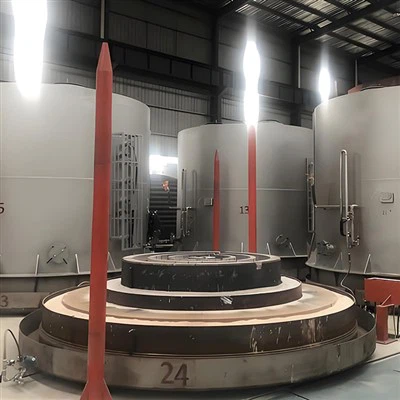
Hey there! As a supplier of Pit Quenching Furnaces, I often get asked about the maintenance costs associated with these industrial workhorses. So, let's dive right in and break down what you can expect when it comes to keeping your Pit Quenching Furnace in top - notch condition.
1. Regular Inspections
First things first, regular inspections are a must. You can't just let your furnace run wild without checking up on it. These inspections should be done at least once a month, if not more frequently. A quick visual inspection can help you spot any obvious issues like loose wires, damaged insulation, or leaks.
The cost of these inspections can vary. If you have an in - house maintenance team, the cost will mainly be the labor. Let's say an experienced technician charges around $30 - $50 per hour. A thorough inspection might take about 2 - 3 hours, so you're looking at $60 - $150 per inspection.
If you outsource the inspections to a professional service, the cost could be a bit higher. You're not just paying for the technician's time but also for the company's overheads. On average, an external inspection service might charge anywhere from $200 - $400 per visit.
2. Refractory Maintenance
The refractory lining in a Pit Quenching Furnace is crucial. It helps to insulate the furnace, keeping the heat inside and protecting the outer shell. Over time, the refractory lining can wear out due to high temperatures, chemical reactions, and mechanical stress.
When it comes to replacing the refractory lining, the cost depends on the size of the furnace and the type of refractory material used. Basic refractory materials can cost around $50 - $100 per cubic foot. For a medium - sized Pit Quenching Furnace, you might need 10 - 20 cubic feet of refractory material, which means the material cost alone could be $500 - $2000.
Labor costs for refractory installation are also significant. Installing a new refractory lining is a specialized job, and it can take a team of technicians a few days to complete. Labor costs can range from $1000 - $3000, depending on the complexity of the job. So, in total, a refractory lining replacement could set you back anywhere from $1500 - $5000.
3. Heating Element Replacement
The heating elements are what make the furnace hot. They're constantly exposed to high temperatures, and eventually, they'll burn out. The lifespan of heating elements can vary depending on the type of element and how often the furnace is used.
Common heating elements include resistance wires and silicon carbide rods. Resistance wires are relatively inexpensive, costing around $50 - $100 each. However, a Pit Quenching Furnace might have multiple heating elements, so if you need to replace all of them, the material cost could be a few hundred dollars.
Silicon carbide rods are more expensive, costing around $200 - $500 each. But they're also more durable and can withstand higher temperatures. Replacing heating elements also involves labor costs. It usually takes a couple of hours for technicians to replace the elements, and at a rate of $30 - $50 per hour, you're looking at an additional $60 - $100 in labor.
4. Cooling System Maintenance
A Pit Quenching Furnace has a cooling system to prevent overheating. This system includes pumps, pipes, and heat exchangers. Regular maintenance of the cooling system is essential to ensure its efficiency.
The cooling water needs to be treated to prevent scale and corrosion. Water treatment chemicals can cost around $100 - $300 per month, depending on the size of the cooling system.
Pump maintenance is also important. Pumps need to be lubricated, and their seals need to be checked regularly. Replacing a pump can be quite expensive, with costs ranging from $500 - $2000, depending on the pump's size and capacity.


5. Control System Upkeep
The control system of a Pit Quenching Furnace is like its brain. It regulates the temperature, pressure, and other parameters. A malfunctioning control system can lead to inaccurate heating and cooling, which can affect the quality of the quenching process.
Software updates for the control system are sometimes necessary to ensure compatibility with the latest technology and to fix any bugs. These updates might be provided free of charge by the manufacturer, but in some cases, you might have to pay a licensing fee, which could be around $500 - $1000.
Replacing control system components like sensors and controllers can also be costly. A high - quality temperature sensor can cost around $200 - $500, and a controller might cost $1000 - $3000.
Comparing with Other Furnaces
It's worth noting how the maintenance costs of a Pit Quenching Furnace stack up against other types of quenching furnaces. For example, a Mesh Belt Quenching Furnace has a different design. Its maintenance might involve more work on the mesh belt, which can wear out due to constant movement.
An Aluminum Alloy Solution Treatment Furnace is specialized for treating aluminum alloys. It might require specific maintenance for handling the unique properties of aluminum, such as preventing oxidation.
A Box Type Quenching Furnace has a different shape and structure compared to a Pit Quenching Furnace. Its maintenance might focus more on the box - shaped enclosure and its insulation.
Overall Cost Estimate
When you add up all these maintenance costs, you're looking at an annual maintenance cost of around $5000 - $15000 for a medium - sized Pit Quenching Furnace. This is a rough estimate, and the actual cost can vary depending on factors like the furnace's age, usage frequency, and the quality of the initial installation.
Why Choose Our Pit Quenching Furnaces
Despite the maintenance costs, our Pit Quenching Furnaces are a great investment. We use high - quality materials in our furnaces, which means they're more durable and require less frequent maintenance. Our team is also always available to provide support and advice on maintenance.
If you're in the market for a Pit Quenching Furnace, or if you have an existing furnace and want to discuss maintenance options, don't hesitate to reach out. We're here to help you make the best decisions for your business.
References
- Industrial Furnace Handbook: Principles, Design, and Operation.
- Heat Treatment Furnace Maintenance Guide.