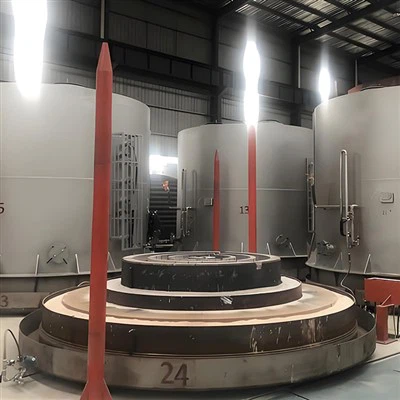
Hey there, fellow heat treatment enthusiasts! I'm a supplier of Pit Quenching Furnace, and today I'm gonna share some tips on how to set the pre-heating parameters in a Pit Quenching Furnace.
Why Pre-heating Matters
First off, let's talk about why pre-heating is so important. Pre-heating helps to reduce thermal stress on the workpiece. When you suddenly expose a cold workpiece to the high temperatures of the quenching process, it can cause cracks and other defects. By pre-heating, you gradually bring the workpiece up to a temperature closer to the quenching temperature, which makes the whole process much smoother and safer.


Factors to Consider for Pre-heating Parameters
There are several factors you need to take into account when setting the pre-heating parameters.
Material of the Workpiece
The type of material you're working with is a major factor. Different materials have different thermal properties, such as specific heat capacity and thermal conductivity. For example, steel has different pre - heating requirements compared to aluminum. Steel usually needs a relatively high pre - heating temperature because it has a high melting point and low thermal conductivity. On the other hand, aluminum alloys have a lower melting point and higher thermal conductivity, so they can be pre - heated at a lower temperature.
Size and Shape of the Workpiece
The size and shape of the workpiece also play a crucial role. A large and thick workpiece will take longer to heat up than a small and thin one. If you have a big, bulky piece, you might need to set a lower pre - heating rate to ensure that the heat penetrates evenly throughout the material. Complex shapes can also pose challenges, as some parts might heat up faster than others. You may need to adjust the pre - heating time and temperature accordingly.
Quenching Process Requirements
The specific quenching process you're using will also influence the pre - heating parameters. Some quenching methods, like oil quenching, require a different pre - heating approach compared to water quenching. Oil quenching is generally a slower cooling process, so you may not need as high a pre - heating temperature as you would for water quenching, which is much more rapid.
Setting the Pre - heating Temperature
Now, let's get into the nitty - gritty of setting the pre - heating temperature.
Research and Standards
First, do your research. Look up the recommended pre - heating temperatures for the specific material you're working with. There are industry standards and guidelines that can give you a good starting point. For example, for common carbon steels, a pre - heating temperature in the range of 200 - 400°C (392 - 752°F) is often recommended. But remember, these are just general guidelines, and you may need to adjust based on the factors we mentioned earlier.
Trial and Error
If you're dealing with a new material or a unique workpiece, you might have to do some trial and error. Start with a conservative pre - heating temperature and gradually increase it if needed. Monitor the workpiece during the pre - heating process and look for any signs of overheating or uneven heating. You can use thermocouples or infrared thermometers to measure the temperature accurately.
Determining the Pre - heating Time
The pre - heating time is just as important as the temperature.
Calculation Based on Thickness
A common way to estimate the pre - heating time is based on the thickness of the workpiece. As a general rule of thumb, for every 25 mm (1 inch) of thickness, you can estimate about 1 hour of pre - heating time. However, this is a very rough estimate and can vary depending on the material and the pre - heating equipment.
Monitoring the Temperature
It's also important to monitor the temperature of the workpiece during the pre - heating process. Once the workpiece reaches the desired pre - heating temperature, you need to hold it at that temperature for a certain period to ensure that the heat is evenly distributed. This holding time can range from 30 minutes to a few hours, depending on the size and material of the workpiece.
Other Considerations
Heating Rate
The heating rate is another important factor. A too - fast heating rate can cause thermal shock, while a too - slow rate can be inefficient. You need to find the right balance. For most materials, a heating rate of 50 - 100°C (90 - 180°F) per hour is a good starting point, but again, this can vary.
Furnace Efficiency
The efficiency of your Pit Quenching Furnace also affects the pre - heating process. Make sure your furnace is well - maintained and calibrated. A furnace with poor insulation or malfunctioning heating elements will not be able to heat the workpiece effectively, which can lead to inaccurate pre - heating.
Related Furnace Types
If you're also interested in other types of quenching furnaces, we also offer Mesh Belt Quenching Furnace and Aluminum Alloy Solution Treatment Furnace. These furnaces have their own unique features and pre - heating requirements, but the basic principles we've discussed here still apply.
Let's Connect
If you're in the market for a Pit Quenching Furnace or have any questions about setting pre - heating parameters, don't hesitate to reach out. We're here to help you get the most out of your heat treatment process. Whether you're a small - scale workshop or a large industrial facility, we can provide the right solutions for you.
References
- ASM Handbook Volume 4: Heat Treating. ASM International.
- Heat Treatment Principles and Techniques. CRC Press.