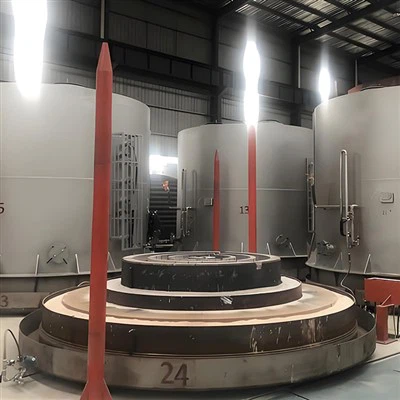
Hey there! As a nitriding furnace supplier, I've seen my fair share of nitriding furnaces in action. And let me tell you, when these bad boys start acting up, it can be a real headache. So, I thought I'd share some signs that your nitriding furnace might be malfunctioning.


1. Temperature Fluctuations
One of the most obvious signs of a malfunctioning nitriding furnace is temperature fluctuations. If you notice that the temperature inside the furnace is constantly going up and down, it could be a sign of a problem. This could be caused by a faulty temperature sensor, a malfunctioning heating element, or a problem with the furnace's control system.
Temperature is crucial in the nitriding process. It affects the rate of nitriding and the quality of the nitride layer. If the temperature is too high, it can cause the nitride layer to become too thick and brittle. On the other hand, if the temperature is too low, the nitriding process may not occur at all.
If you're experiencing temperature fluctuations, the first thing you should do is check the temperature sensor. Make sure it's properly installed and functioning correctly. You can also try recalibrating the sensor to see if that fixes the problem. If the sensor is working fine, then the issue may be with the heating element or the control system. In this case, it's best to call in a professional technician to diagnose and fix the problem.
2. Uneven Nitriding
Another sign of a malfunctioning nitriding furnace is uneven nitriding. This means that the nitride layer on the surface of the workpiece is not uniform. You may notice that some areas of the workpiece have a thicker nitride layer than others, or that there are spots where the nitride layer is completely missing.
Uneven nitriding can be caused by a number of factors, including improper gas flow, uneven temperature distribution, or a dirty furnace chamber. To fix this problem, you need to make sure that the gas flow is evenly distributed throughout the furnace chamber. You can do this by checking the gas flow meters and adjusting the valves as needed.
You also need to ensure that the temperature is evenly distributed inside the furnace. This can be achieved by using a furnace with a good insulation system and a well-designed heating element. If the furnace chamber is dirty, it can also affect the nitriding process. Make sure to clean the furnace chamber regularly to remove any dirt, debris, or contaminants.
3. Excessive Gas Consumption
If you notice that your nitriding furnace is consuming more gas than usual, it could be a sign of a malfunction. Excessive gas consumption can be caused by a leak in the gas supply system, a problem with the gas flow control valves, or a faulty burner.
A gas leak is a serious safety hazard, so it's important to address this issue immediately. If you suspect a gas leak, turn off the gas supply to the furnace and call a professional technician to inspect the system. They will be able to locate and repair the leak.
If the problem is with the gas flow control valves, you may need to adjust or replace them. A faulty burner can also cause excessive gas consumption. In this case, the burner may need to be repaired or replaced.
4. Strange Noises
Strange noises coming from your nitriding furnace can also indicate a problem. If you hear rattling, banging, or hissing sounds, it could be a sign of a loose component, a blocked gas line, or a problem with the burner.
If you hear rattling or banging sounds, it could be a sign that a component inside the furnace is loose. Check the furnace for any loose parts and tighten them if necessary. If you hear hissing sounds, it could be a sign of a gas leak. As mentioned earlier, turn off the gas supply and call a professional technician to inspect the system.
A blocked gas line can also cause strange noises. Check the gas lines for any blockages and clean them if necessary. If the problem is with the burner, it may need to be repaired or replaced.
5. Poor Quality Nitride Layer
The quality of the nitride layer is another important indicator of a malfunctioning nitriding furnace. If you notice that the nitride layer on the surface of the workpiece is rough, porous, or has a poor adhesion, it could be a sign of a problem.
Poor quality nitride layers can be caused by a number of factors, including improper gas composition, incorrect process parameters, or a dirty furnace chamber. To improve the quality of the nitride layer, you need to make sure that the gas composition is correct. This can be achieved by using a gas analyzer to measure the gas composition and adjusting the gas flow rates as needed.
You also need to ensure that the process parameters, such as temperature, time, and gas pressure, are correct. Follow the manufacturer's recommendations for the specific workpiece and material you're nitriding. If the furnace chamber is dirty, it can also affect the quality of the nitride layer. Make sure to clean the furnace chamber regularly to remove any dirt, debris, or contaminants.
Conclusion
In conclusion, there are several signs that your nitriding furnace may be malfunctioning. These include temperature fluctuations, uneven nitriding, excessive gas consumption, strange noises, and poor quality nitride layers. If you notice any of these signs, it's important to address the problem as soon as possible to avoid further damage to the furnace and to ensure the quality of the nitriding process.
At our company, we offer a wide range of nitriding furnaces, including Vacuum Nitriding Furnace, Nitrogen Protection Copper Bright Annealing Furnace, and Pit Type Nitriding Furnace. Our furnaces are designed to provide reliable and efficient performance, and we offer excellent after-sales service to ensure that your furnace is always in top condition.
If you're experiencing any problems with your nitriding furnace or if you're interested in purchasing a new furnace, please don't hesitate to contact us. We'd be happy to help you find the right solution for your needs.
References
- "Nitriding Furnace Troubleshooting Guide" - Industry Handbook
- "Heat Treatment Furnace Maintenance and Repair" - Technical Manual