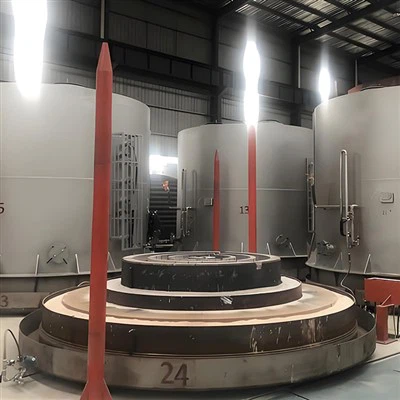
Hey there! As a supplier of carburizing furnaces, I've been getting a lot of questions lately about how the location of a furnace can impact its performance. So, I thought I'd take a deep dive into this topic and share my insights with you.
First off, let's talk about what a carburizing furnace does. In simple terms, it's a crucial piece of equipment in the heat - treatment process. It's used to increase the carbon content of the surface of a metal, which can enhance its hardness, wear resistance, and other mechanical properties.
Now, onto the main question: What's the impact of the furnace location on its performance?
Temperature and Humidity Conditions
The ambient temperature and humidity of the location where the furnace is placed play a huge role. If you install the furnace in a place with high humidity, it can cause corrosion to the external parts of the furnace. The moisture in the air can seep into the electrical components, leading to short - circuits or other electrical malfunctions. For example, in coastal areas where the air is often humid, extra precautions are needed to protect the furnace.
On the other hand, extreme temperatures can also be a problem. In a very hot environment, the furnace has to work harder to maintain the required internal temperature for the carburizing process. This not only increases energy consumption but also puts more stress on the heating elements, potentially reducing their lifespan. Conversely, in extremely cold conditions, the startup time of the furnace may be longer, and the temperature control may become less accurate.
Ventilation
Proper ventilation is a must - have for a carburizing furnace. The carburizing process involves the use of gases, and some of these gases can be toxic or flammable. If the furnace is located in a poorly ventilated area, these gases can accumulate, posing a serious safety risk.
Moreover, good ventilation helps in heat dissipation. The furnace generates a significant amount of heat during operation, and if this heat can't be effectively removed, it can cause the surrounding environment to overheat. This, in turn, can affect the performance of the furnace and other nearby equipment. For instance, if you place the furnace in a small, enclosed room without proper vents, the temperature inside the room can rise to a level where it becomes difficult to control the furnace's internal temperature accurately.
Floor Stability
The floor where the furnace is installed needs to be stable. Carburizing furnaces are heavy pieces of equipment, and an unstable floor can lead to problems. If the floor sags or shifts over time, it can cause misalignment of the furnace components. This misalignment can result in uneven heating, which is a big no - no in the carburizing process. Uneven heating can lead to inconsistent carbon penetration in the metal parts being treated, affecting their quality.
Proximity to Other Equipment
The location of the furnace relative to other equipment in the workshop is also important. If it's too close to other heat - sensitive equipment, the heat radiated from the furnace can damage them. For example, electronic control panels or measuring instruments can be affected by the high temperatures.
Also, consider the workflow. If the furnace is placed in an inconvenient location, it can disrupt the production process. Workers may have to travel long distances to load and unload parts, which is not only time - consuming but also increases the risk of accidents.
Types of Carburizing Furnaces and Location Considerations
We offer different types of carburizing furnaces, each with its own location requirements.
The Box Type Gas Carburizing Furnace is a popular choice. It's relatively compact and can be used for small - to medium - sized production batches. When placing this type of furnace, you need to ensure that there is enough space around it for easy access for maintenance and loading/unloading. It also needs a stable power supply nearby, and the ventilation should be arranged in a way that the exhaust gases are properly removed.
The Carburizing Pit Furnace is another option, especially for larger parts. Since it's a pit - type furnace, the floor where it's installed needs to be reinforced to support its weight. Also, because the loading and unloading are often done from the top, there should be enough vertical space above the furnace to accommodate the lifting equipment.
How to Choose the Right Location
When you're looking for a place to install your carburizing furnace, here are some steps you can follow. First, assess the environmental conditions of the potential locations. Check the temperature and humidity levels throughout the year. If possible, choose a location with a relatively stable climate.
Next, evaluate the ventilation options. Make sure there are natural or mechanical ventilation systems in place that can effectively remove the exhaust gases and dissipate the heat.


Also, think about the floor. Have it inspected by a professional to ensure its stability. And don't forget about the proximity to other equipment and the overall workflow in your workshop.
Conclusion
In a nutshell, the location of a carburizing furnace has a significant impact on its performance, safety, and the quality of the products it processes. By carefully considering factors like temperature, humidity, ventilation, floor stability, and proximity to other equipment, you can ensure that your furnace operates at its best.
If you're in the market for a carburizing furnace or need more advice on furnace location and performance, don't hesitate to reach out. We're here to help you make the right decisions and get the most out of your heat - treatment process.
References
- Smith, J. (2020). Heat Treatment Handbook. Publisher X.
- Johnson, A. (2019). Furnace Installation and Operation Guide. Publisher Y.